Celebrating the Early History of our Area
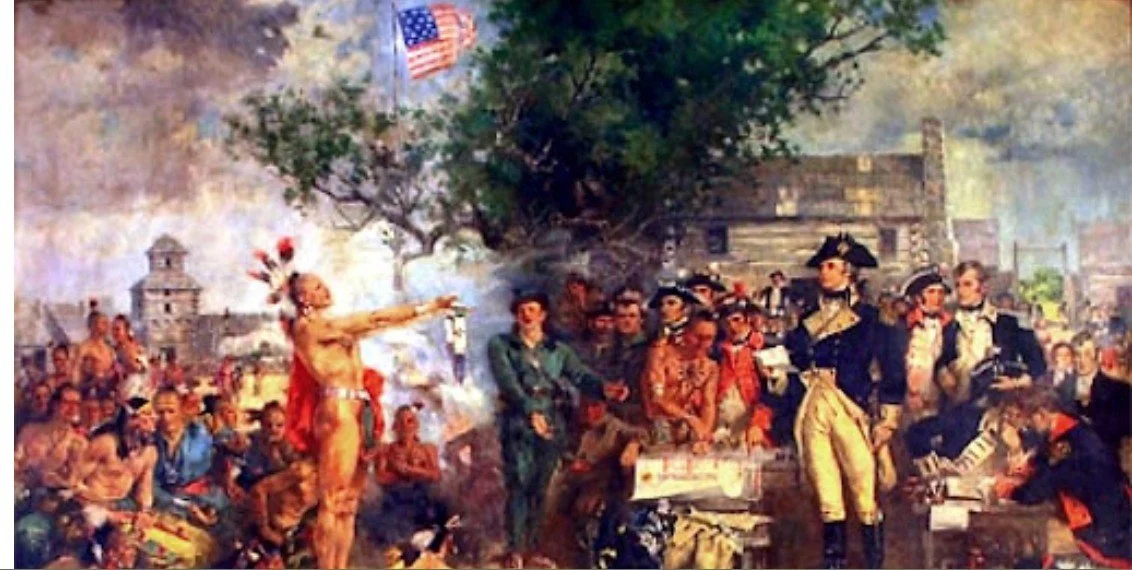
Christy, H.C. Signing of the Treaty of GreenVille (oil on canvas) Nottawasepp:Huron Bend of the Potawatomi
Happy New Year to everyone. Not for the past January 1 holiday, but for the whole year as we celebrate year 250 or the 250th anniversary of our nation’s founding. While a group of brave representatives of 13 independent Colonies boldly signed a document on July 4, 1776 declaring, among other revolutionary concepts (we should all read it) that we were a free and independent nation. We, all over the country in 2026 are celebrating the birth and growth of a nation dedicated to the concept that government rules by the consent of the governed. Most of the states and many local communities are taking part in this yearlong celebration by emphasizing their role in many facets of our nation’s growth. I am sure most of us have already seen “Ohio Year 250” signs in various media so the celebration has begun. The Society and the City also plan to have displays related to various topics in the Wakeman Hall for the public to view. Watch for the announcements. Let us all celebrate year 250.
We may question where the Waterville area fits in the growth of our great nation. The answer perhaps is that “small town America” is the growth of America, as much or more than our great cities. With that in mind we at WHS Archives will use this space to present stories on early beginnings to present. We hope all of you who follow us on Facebook or on our website will feel free to comment or ask questions. Better yet, visit us at the archives where the information can be found in for more detail than we can present in an article.
We are familiar with the story of our founder John Pray and his party from New York arriving here in the Maumee River Valley in 1817 but why did they come here? Let’s examine some of the back story to understand our early history.
Our fledgling United States government now owned vast tracts of land as a result of the peace treaty with England. They also owned vast amounts of debt. The government had no power to levy taxes so the main source of revenue available was to sell land to settlers who had been eager to move westward even before the war.
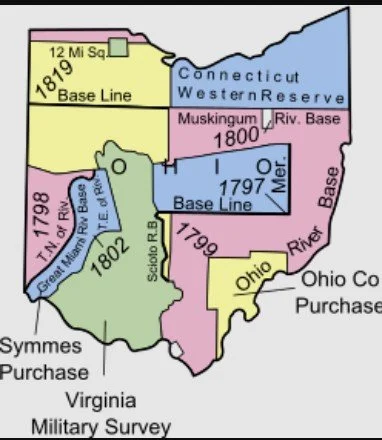
The 1794 Battle of Fallen Timbers, which we have studied extensively at the museum in the first floor of our Wakeman Hall for the past two years (Hope you all went to see it) opened the land north of the Ohio River (The Northwest Territory) to settlement. The northern part of what became the State of Ohio in 1803 remained Indian Territory according to the Treaty of Greenville signed by General Anthony Wayne and the warring Indian tribes in 1895. The Indians returned to their tribal towns and villages and all was peaceful up and down our beautiful Maumee River Valley. The tribes living in the lower valley lived in harmony with a small number of white settlers in the area. Why were White settlers in Indian Territory? The Greenville Treaty provided for something called the Twelve Mile Square Reserve centered at the foot of the rapids near present day Perrysburg. This was done to give the United States space to control any movement up the river. We did not trust the British. The 1795 imaginary line marking off a 12 mile square territory can still be found on land maps even today.
The War of 1812 destroyed the tranquility as the British and a confederation of hostile Indians tribes led by Tecumseh swept up the valley destroying all settlements in their path. The white settlers fled and their cabins were burned. We all know how that war ended and we are left with Fort Meigs and the British Fort Miami and the memory of the Battle of Lake Erie as our part in that war. The net result of these events and various treaties made was that the Maumee Valley and all of northwest Ohio was now open for settlement and the U.S. government lost no time advertising throughout the east of the Ohio lands for sale. Various Indian tribes were still there in towns or villages along the river as white settlers began to move back in.