The Tumultuous Creation of a Great Railroad
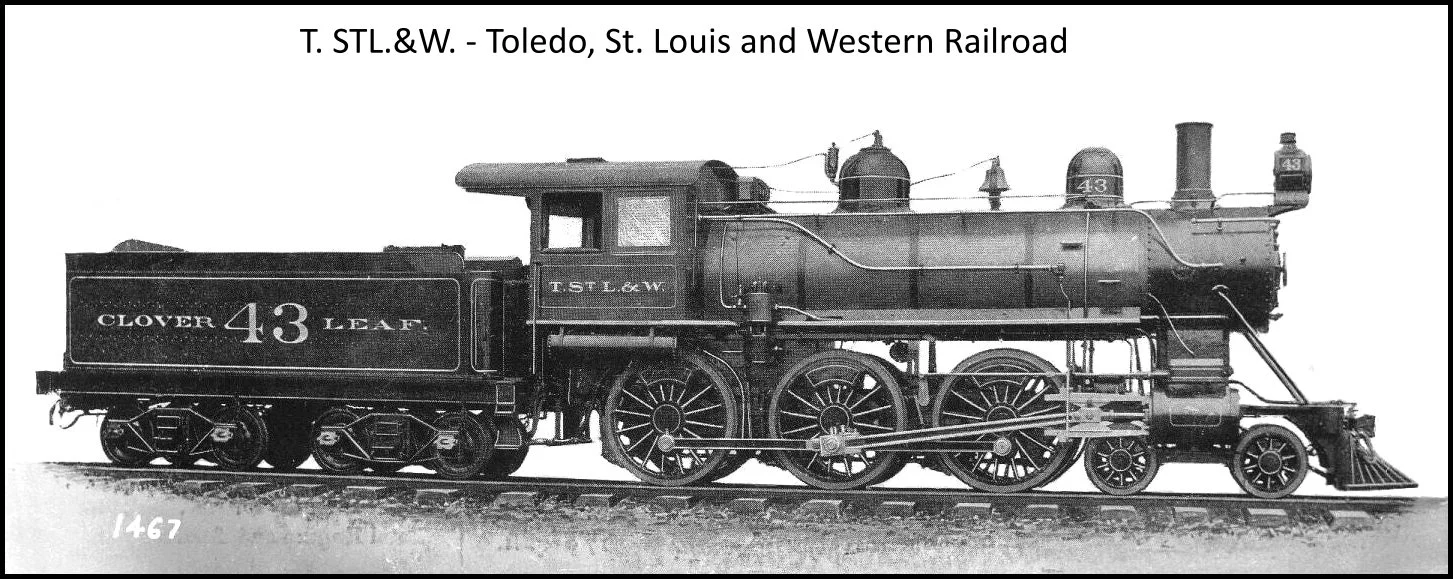
Toledo, St. Louis and Western Railroad 4-6-0 No. 43 (W. Lenheim Collection)
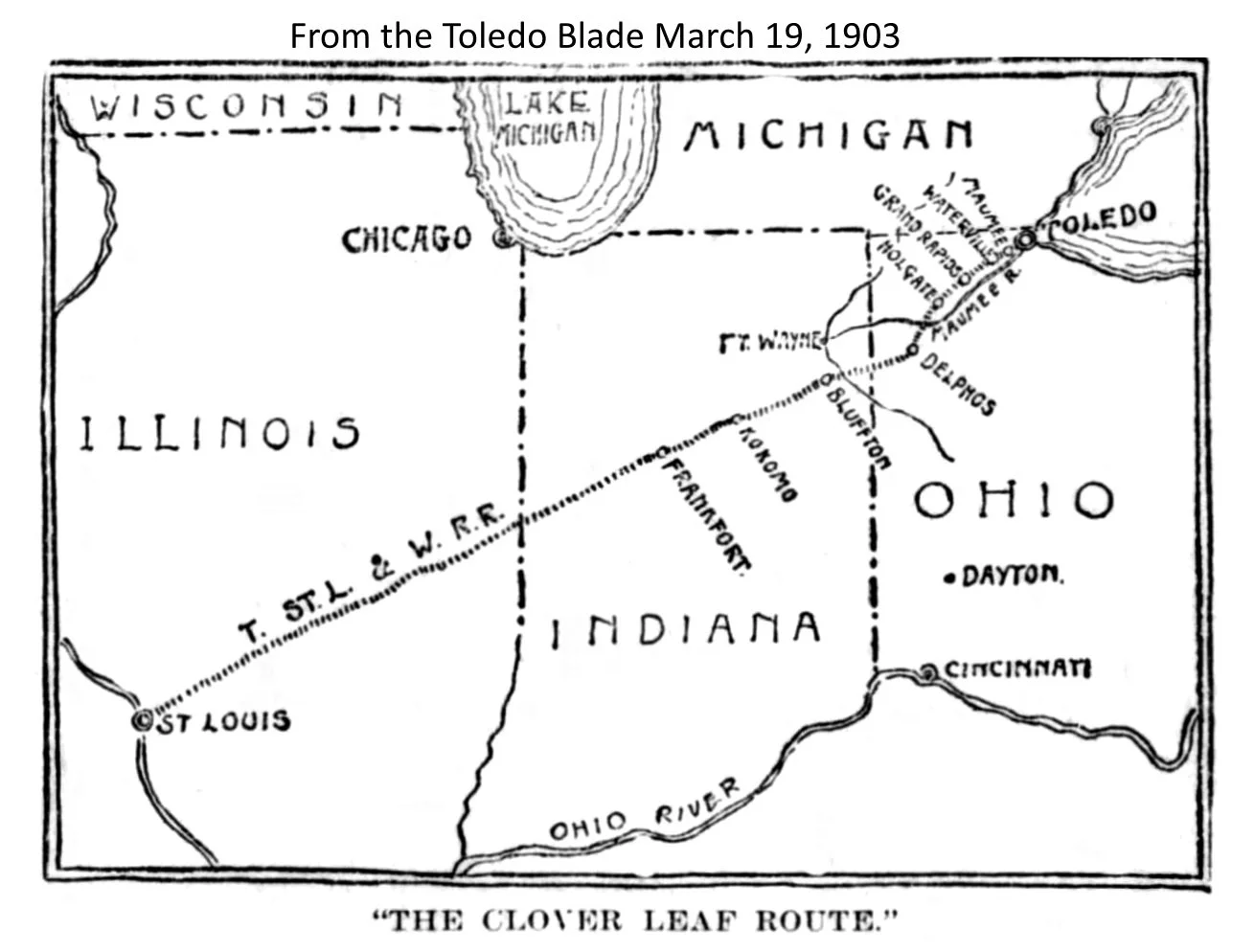
The invention of land transportation powered by the steam engine happened in the early 1800s but efficient railroads were slow to develop. It was the canal system that opened the Ohio interior but the railroads, far more efficient, had their day later in the century. Our Waterville Railroad, the “Cloverleaf,” is the subject of this story as researched by Randy Studer primarily from a 1903 Toledo Blade story.
It seems that by 1870 business between Maumee and Toledo (also Waterville) was strong but transportation was slow and problematic. In 1873 G.W. Reynolds formed the Toledo-Maumee Narrow Gage Railroad Company and set about building a railroad. Note that building a railroad takes a large amount of capital. The right of way must be surveyed and purchased, graded, rails and ballast purchased and laid then rolling stock purchased. This railroad ran into trouble right away. The Toledo City Council would not permit the locomotive into the city as it might frighten the horses, so they had to uncouple the cars at the city line and haul them into town with horses.
One year later in 1874 another company was incorporated to build a narrow gage railroad from Toledo to Grand Rapids, Ohio running through Maumee and Waterville. Our Waterville railroad was born. The owners and money behind this road were ex-governor James M. Ashley and D. Howard. Perhaps the ex-governor’s clout was enough to change the minds of the Toledo Council for they soon built a depot on Erie Street. These short rail lines and many more throughout the state were conceived primarily for passengers, as were the electric railways two decades later. Most of these railroads were deeply in debt and their assets in poor condition. By 1879, four of the Toledo area roads decided to, or were forced to, consolidate operations and extend their reach to Cincinnati and Indianapolis. There was of course much wrangling between parties and a third Toledo railway, The Toledo, Delphos and Burlington which had built track to Kokomo, Indiana with plans to extend to St. Louis. Then much was resolved when a Calvin S. Brice of Lima purchased two thirds of Mr. Ashley’s stock under terms favorable to Ashley and the Toledo, Cincinnati and St. Louis Narrow Gage Railroad was formed. However this road found itself over extended in debt and soon went into court ordered receivership and was sold. The new owners reorganized and decided to name the road the Toledo, Kokomo and St Louis” and promote it as “the Kokomo Route.” Their plan “went off the rails” when a Toledo “entrepreneur” caught wind of this plan, hurried to Columbus and filed articles of incorporation for that name, then offered to sell the name to the railroad owners for a considerable sum. The owners would have none of this nonsense and changed their plans. The railroad was named the “Toledo, St. Louis and Kansas City” and adopted the promotional name as “The Clover Leaf route.” The owners deemed it necessary to abandon the narrow gage track and converted the entire line to standard gage between 1880 and 1887 and purchased all new rolling stock and locomotives. Narrow gage tracks are 3 to 3 ½ feet apart, cheaper to build and require lighter equipment. Standard gage tracks are 4 feet, 8.5 inches apart, standard for all railroads in the country and built for much heavier duty. Over extended in debt again, it was put in receivership. Litigation continued for seven - and one-half years in multiple courts and emerged in another sale in 1900 as “The Toledo, St. Louis and Western” which seemed to finally become a prosperous business. So it is the Toledo, St. Louis and Western on our Waterville maps as it was in our 1903 Toledo Blade article. We know that more changes were to come but that, as they say “is another story.”