
THE FOUNDING
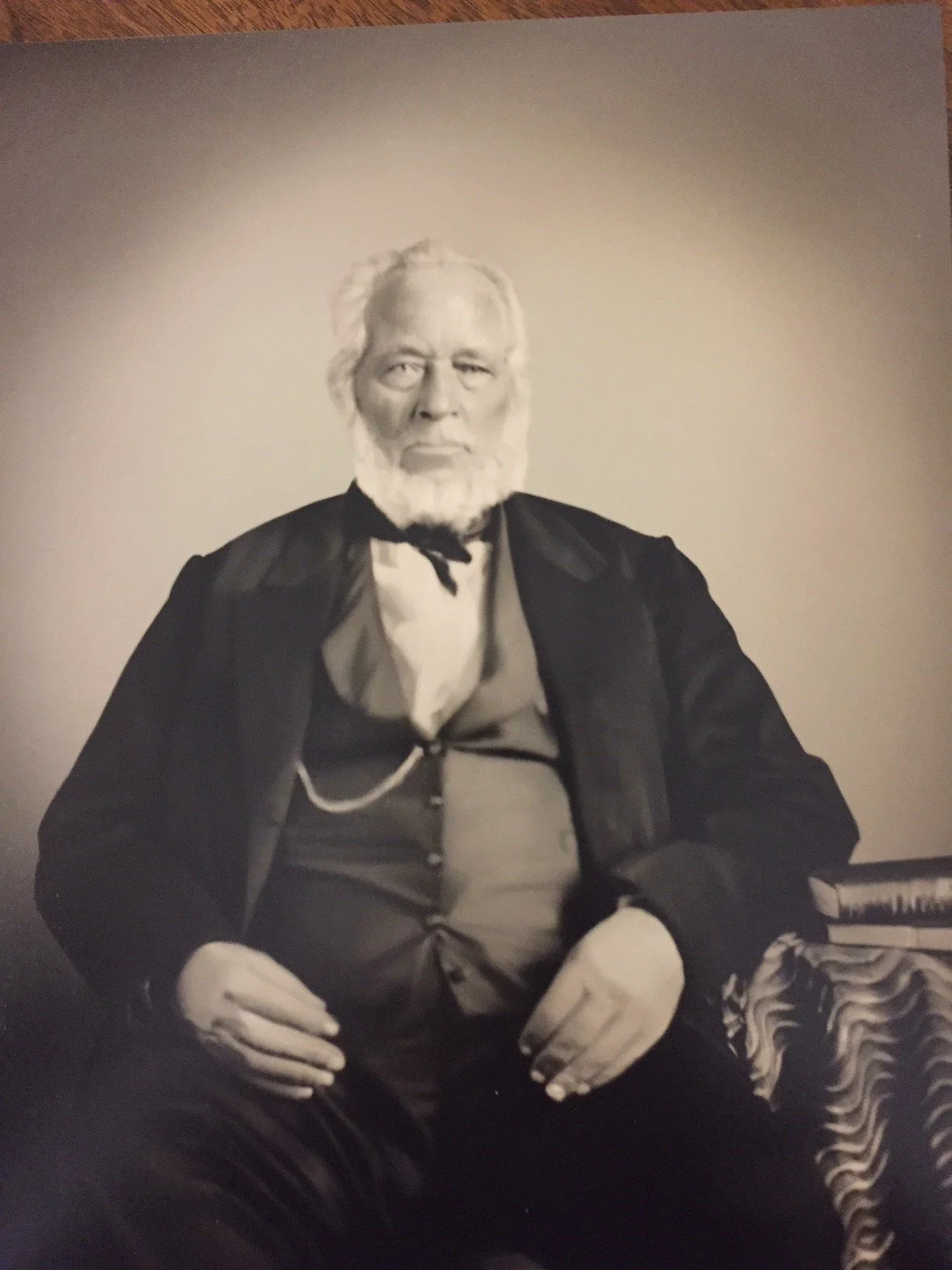
John Pray from a tintype from Squire Young
We have pointed out in our previous America 250 article, some of the families who settled in our vicinity before John Pray. Perhaps they came for adventure, cheap government land ($1.50 to $2.50 per acre) or for a new start. Maybe all of the above. John Pray, however, came basically as a land speculator. Now there were many land speculators investing in newly opened government land, most of who never saw the land they purchased. They stayed in the comfortable east and invested blindly, fingers crossed, or sent an agent to choose investment property for them. John sold his Smithfield, New York home and moved his entire family here and lived as the rest of the pioneers. He purchased large amounts of property and then invested a great amount of time and energy (and money) making his property more valuable and attractive to new settlers. He lived here the rest of his life. This is his story.
John Pray age 34, wife Lucy 28, four young children ages 11 months to 7 years and an 8 year old nephew living in his charge left Smithfield May 3, 1818 by horse and wagon with all necessary household goods they could carry, traveling overland to Buffalo, N.Y. From Buffalo they hired a small schooner under a Captain Charter. The story, published years later, is that the ship was so ill equipped that the Prays had to use some of their own cloth for sail. In any event the schooner safely deposited the family in the fledgling village of Maumee at the foot of the rapids in the Maumee River. We should note that Maumee and Perrysburg developed as lake ports early since the ships of that day were of shallow draft and could easily make it upriver to the “foot of the rapids” From there the Pray party made their way about four miles upriver and were welcomed into one of the cabins built by the James C. Adams family in 1817. The settlers were always glad to see more settlers arrive.
Records of John Pray’s activities are scarce but we know that he, like the others, had to secure their families with shelter, food, etc. first of all. We know he visited the Federal land office in the Canton-Wooster area on August 17, 1818 so he went right to work. We know that the State of Ohio created Wood County February 12, 1820 (Split from Logan Co. far to our south) and John Pray was elected one of the County Commissioners. The Commissioners decided that Perrysburg would be the county seat and it remained so until 1868 when it was moved to Bowling Green. At this time we were placed in Waynesfield Township as was Maumee. Just to clarify a point, to buy land from the government a person had to visit a Federal Land Office. To buy land from another resident individual required a title transfer done at a county court at the local county seat. That would have been Perrysburg at that time.
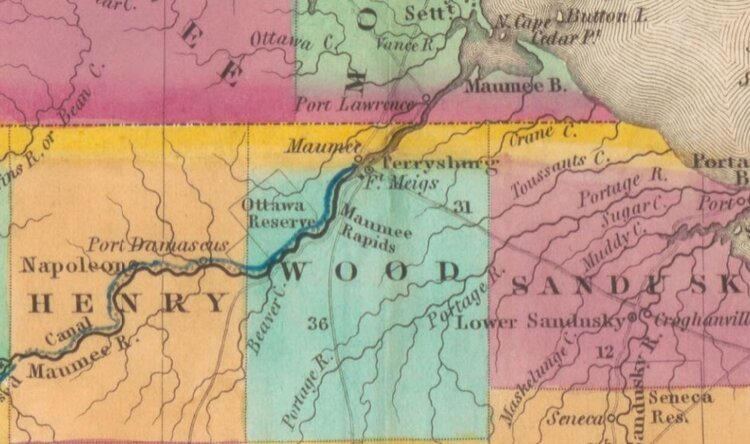
1833 Wood County map
The following year (1821) John seemed ready to continue his work. Knowing that the farmers, now flowing into the valley needed a grist mill, he proceeded to build a dam across the river from north shore to Granger Island (after having to evict the squatter named Granger) and then built a mill powered by the water of the Maumee as he envisioned on his first visit. All by himself? Of course not. His investments by now making returns, he could hire the engineer and labor and import needed equipment. Why on the island? My guess is that the current was stronger or water deeper there but we don’t really know. Finding the water power more than adequate he then added a sawmill, carding mill and later a distillery. Some may question why good Christian people would build a distillery. I think it was a matter of economics. A bulky wagonload of corn could not be shipped anywhere at a profit but a barrel of corn liquor could turn a tidy profit. There is some thought that John and family lived on the island during construction of his mill.
Author: John Rose -- We will continue the saga of John Pray and the founding of Waterville in our next issue.