A NEW VILLAGE
Our previous articles highlighted how John Pray saw his dream come to fruition with the August 10, 1831 recording of his 50 lot Village Plat. It is important to note that he first, in April of 1831, as a Wood County Commissioner organized the formation of Waterville Township. At first the Village and Township were almost a single entity with the village providing the shops and tradespeople needed by the farmers in the township. The government over both was the Township and remained so for fifty-one years. Waterville did not decide to incorporate until 1882. (We will cover that event in a later article)
The first township government election was held April 4, 1831 with the following results: Jonas Cleveland, William Meeker and James C. Adams Commissioners; Ralph Farnsworth, Clerk; Willard Gunn and Jeremiah Johnson, Overseers of the Poor; George Evans, Treasurer; David Robbins, Constable; Richard Gunn and Jacob Eberly, Fence Viewers; John VanFleet and Whitcomb Haskins, Supervisors of Highway. Later, on June 21, 1831 John VanFleet and Daniel Larkins were elected Justices of the Peace. Elections were held every year with new and old names cycling in and out of these offices. John Pray’s name does not appear until 1833 when he was elected treasurer.
A number of noteworthy events occurred in 1835, in Waterville and other places in the Maumee Valley. First, John Pray moved his mills to the mainland end of his dam and sold Granger Island and the milling business to Theophilus Short and Ira Wilder for $7000 (per real estate transfer records) which was a considerable sum in those days.
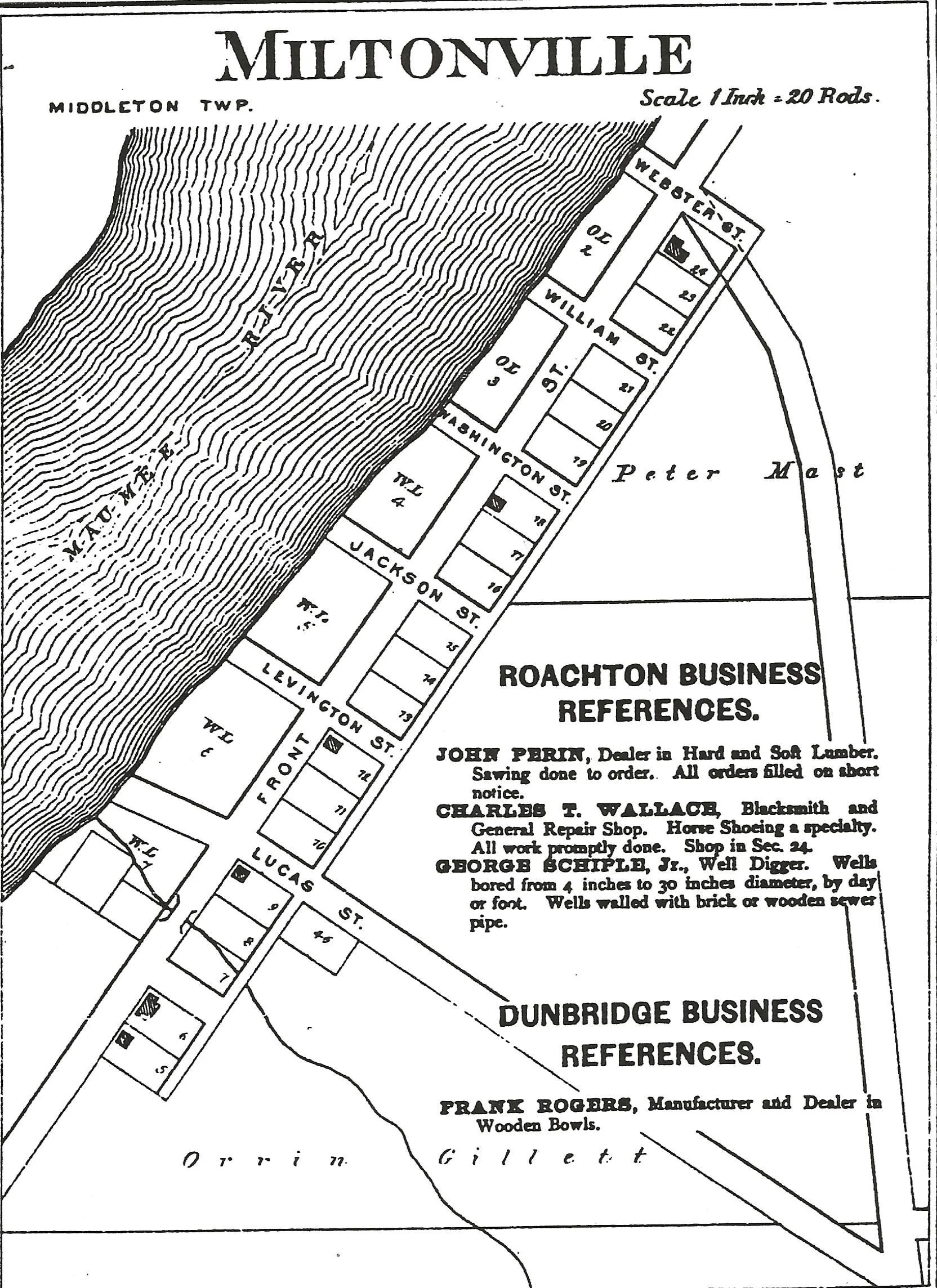
Also in 1835 two small down river towns, Vistula and Port Lawrence, decided to merge to form Toledo and the Michigan-Toledo “War” occurred. That conflict was settled when the Federal Government granted Ohio the strip of land where Toledo was formed and compensated the Michigan Territory with the Upper Peninsula. Ohio in turn split all of the land north and west of the Maumee River from Wood County to create the new Lucas County. This meant that Waterville, Village and Township, were now a part of Lucas County, as we still are to this day. John Pray did not seek to become a commissioner in this new county. Maumee City was the county seat at that time and for many years until it was moved to Toledo. Then in August 24, 1835 the Village of Miltonville was officially formed in Wood County directly across the river from Waterville. Today it is a ghost town but in the early 1800s those folks were important to our community. There was much back and forth traffic by boat, cable ferry and eventually a bridge.
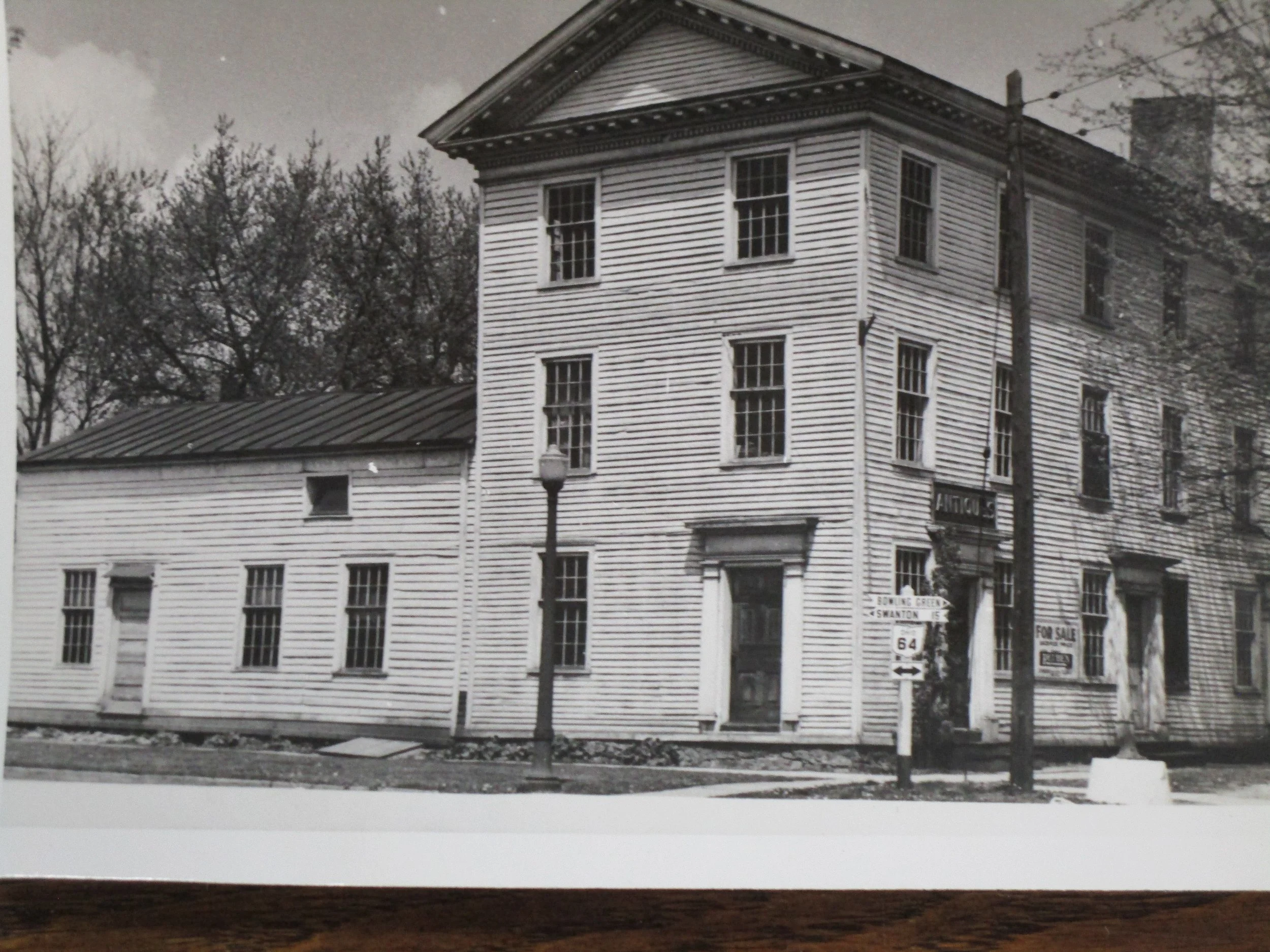
The year 1837 seems to have been a great building year for our young village. John Pray built (or completed) his grand three story addition to his 1828 “hotel” called the Columbian House. Not only did this increase the number of guests he could accommodate but with the grand ballroom on the 3rd floor, it quickly became the social center of Waterville. The grand opening drew people from far and wide. We also find a number of the houses on our historic homes walking tour were built in 1837. The rapid growth of the entire area prompted John Pray to make a dramatic addition to the village, expanding from 50 lots to about 200 lots, mostly to the west and south. The village added numbered strets 2nd, 3rd, 4th and 5th streets extended west, up and over the bluff above the flood plain of the early village and three east-west streets to the south (see our 1840 map). Also by 1837 there were rumors of a canal to be built through the young village. We will discuss canals in our next article.
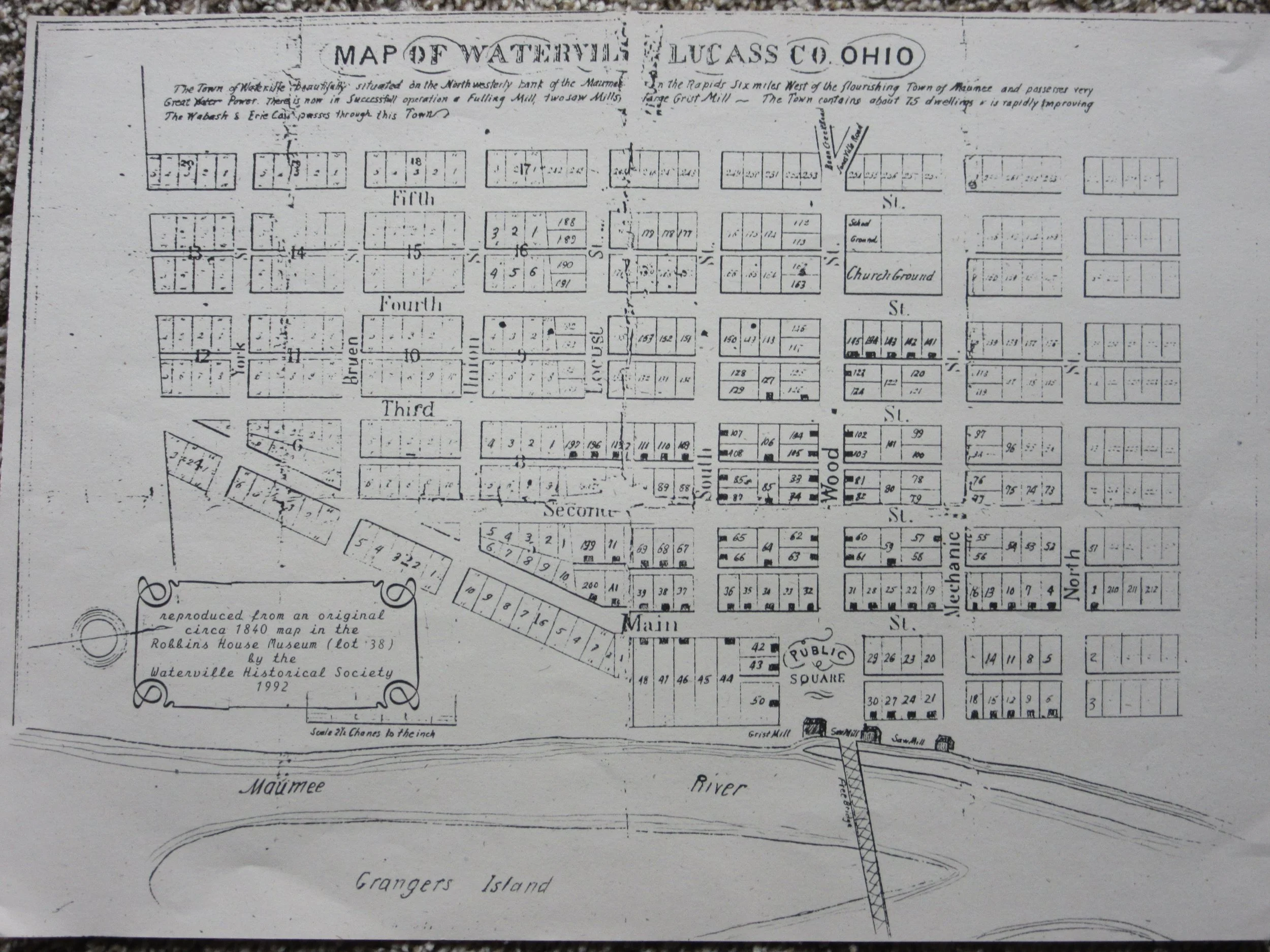
ca. 1840 map