WHY ARE WE CELEBRATING A ROCK?
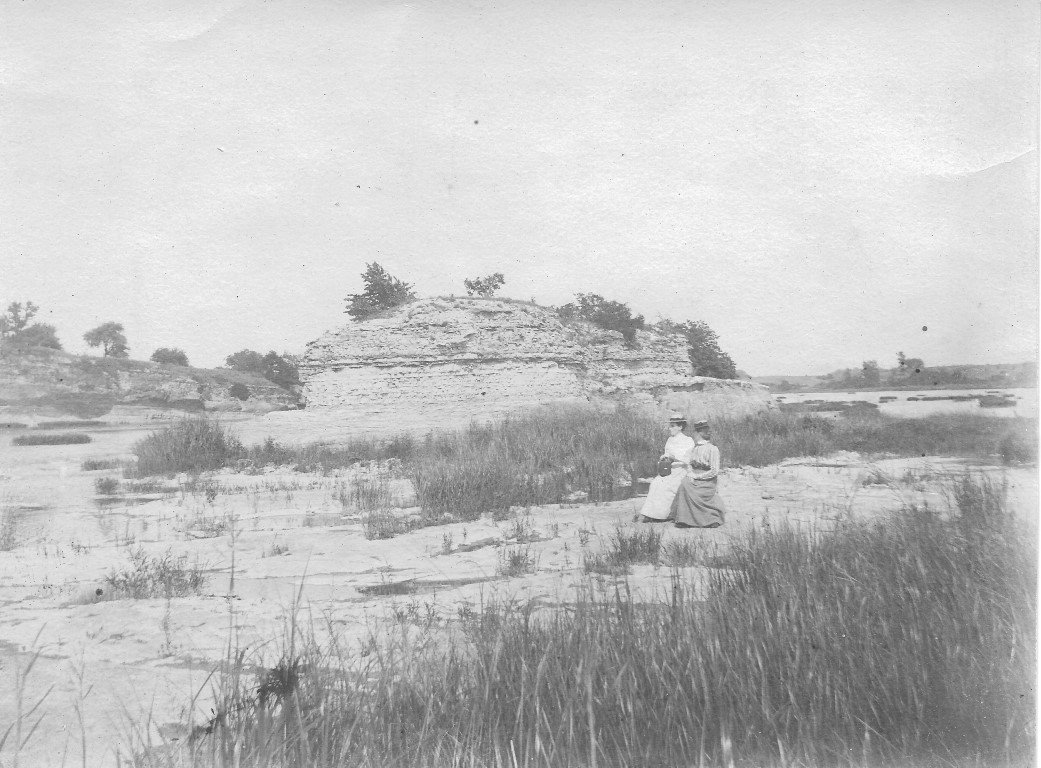

If you have been following our series on Waterville festivals, you know we are about to celebrate the 50th Roche de Boeuf festival, which to all Waterville folks means the “Rock of Beef” or Buffalo Rock”. The “rock” is an outcrop of erosion resistant limestone that has been in the river since the last glacier melted but is now unique to Waterville and forever a part of our history. If you have seen a photograph of the “rock” before the interurban bridge was built (1907-1908) this big hulking island of limestone can be imagined to look like a buffalo standing in the river. Note: Photos and paintings of the rock can be viewed on our website: www.watervillehistory.org and then click the tab online photos and there will be a link to click on.
Since the European name for this landmark came from the French explorers, we are stuck with a French name which we try to interpret. I have included a previous website article called “The Big Rock” to explain the various interpretations of the name, much of which was borrowed from Midge Campbell’s book “Watervillore”.
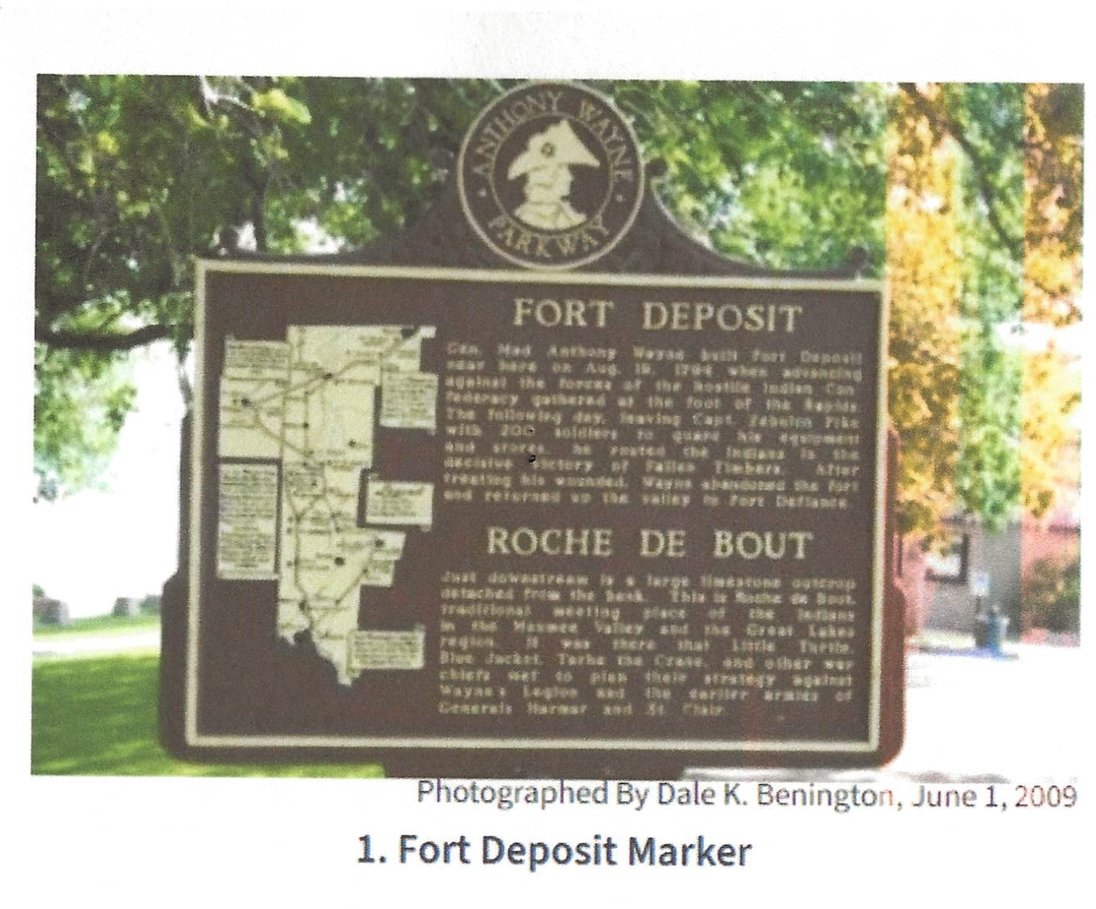
“Waterville’s Roche de Boeuf, has many spellings and pronunciations. Some say “Roche de Bout,” many say “Roche de Boeuf” and many of the old timers in the area call it “Rush de Boo.” The rock was named by French fur traders and the English pronunciation and interpretation is the source of all the confusion. The rock is the limestone rock in the Maumee River near the old Interurban Bridge. When they built the bridge in 1908 they destroyed at least 1/3 of the Rock. American Indians used it as a place to meet and hold council and met there before the Battle of Fallen Timbers in 1794. Anthony Wayne camped two nights before the battle near here at Fort Deposit which was on the high bank opposite the rock. At one time an early French village and a cemetery were located at Roche de Boeuf where the stone quarry is today. The earliest recorded birth in what is now Waterville, that of James Knaggs, took place in that little village about 1780. Later Jane (Dilts) Richardson was deeded land on River Tract #39 known as the Roch de Boote farm. She was the widow of Isaac Richardson whose tavern was located on her father’s land. The Roche de Boote/Roche de Bout/Roche de Boeuf Farm was later owned by Elijah Dodd and long referred to as the Dodd Farm. Watervillians seem to prefer Roche de Boeuf and interpret that as Rock of Beef or Buffalo Rock thinking those early French thought it looked like a big buffalo in the river. Historians seem to prefer Roche de Bout, interpreted as Rocky Point.” Check out the historical marker at the trailhead of Farnsworth Park overlooking the “big rock” which was commissioned by W.H.S. and placed there by the Ohio Historical Society.
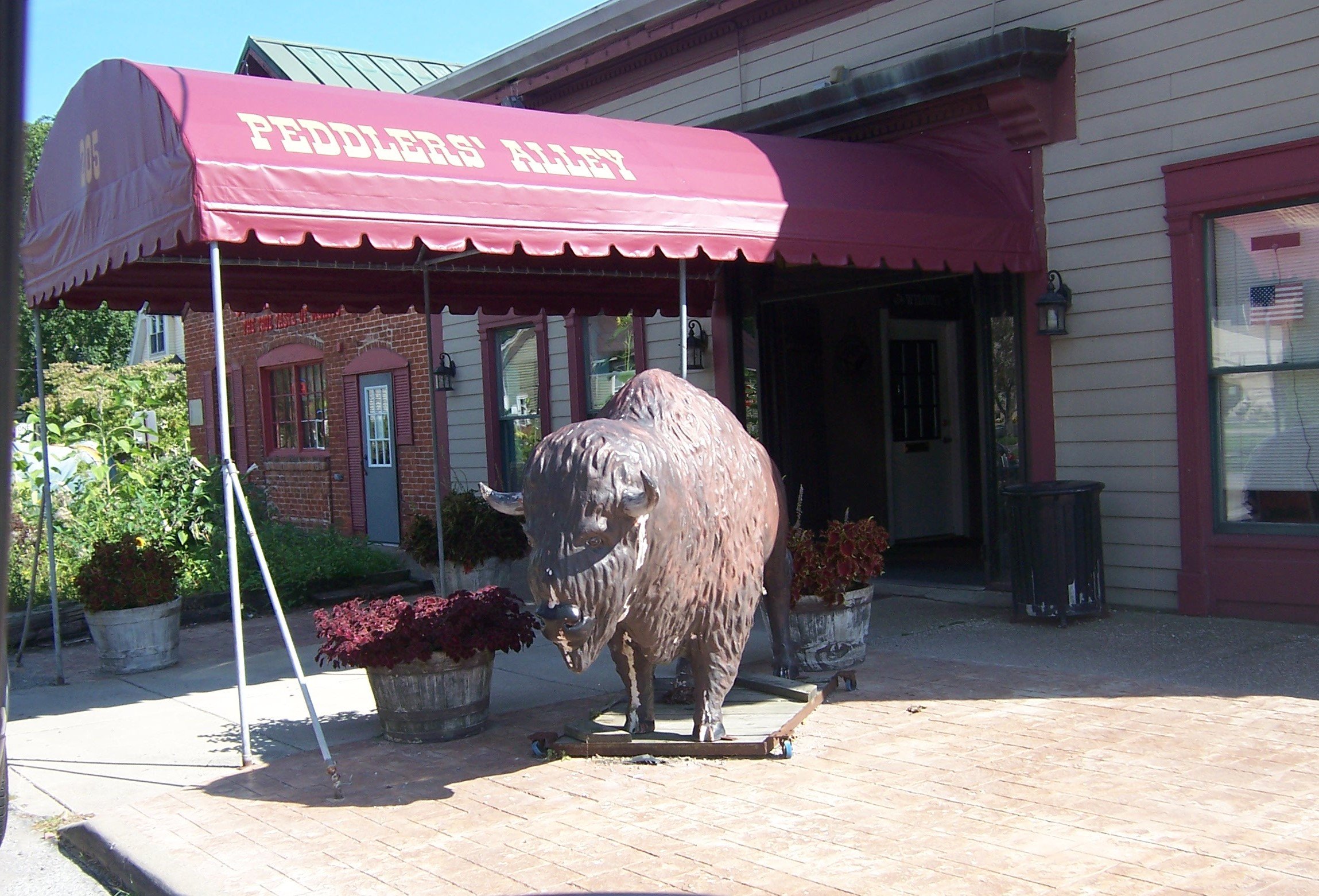
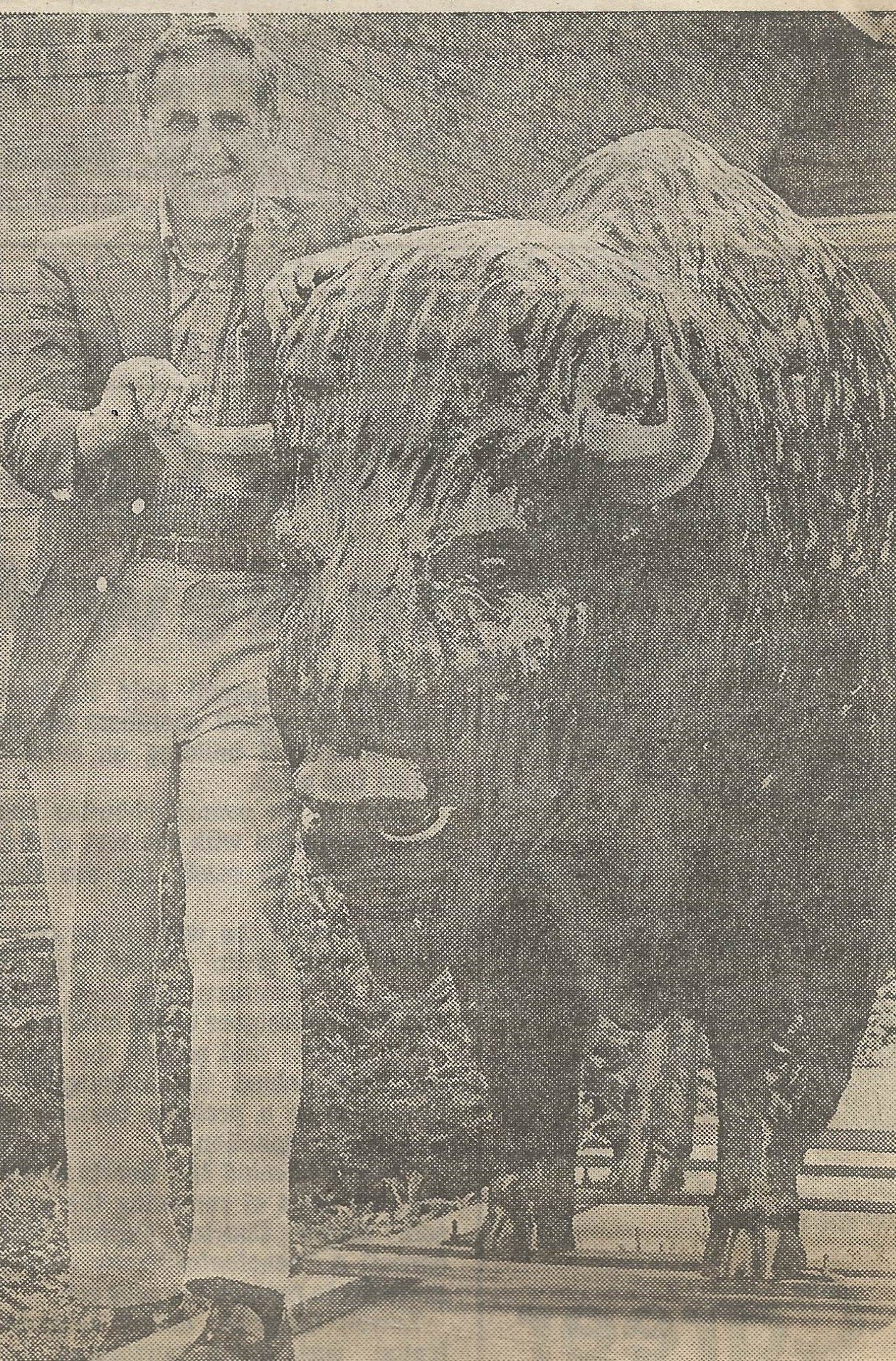
So it is that we celebrate with many references to the buffalo, as can be seen on the publicity posters. For years buffalo burgers have been sold during the festival. Prior to the 1984 annual Roche de Boeuf Festival Ferd Seipel, a Waterville businessman, found and purchased a 200 lb. plastic replica of a buffalo which was used in many festival parades besides our own to publicize the Roche de Boeuf Festival in 1984 and forward. Today the buffalo resides outside Seipel’s Peddler’s Alley development. We even have our local craft brewery called the Buffalo Rock Brewery. So come to the festival and celebrate the buffalo. Pet the plastic buffalo as you go by, have a buffalo burger and enjoy yourselves at Waterville’s unique Roche de Boeuf Festival.
THE FIRST ROCHE DE BOEUF FESTIVAL 1974
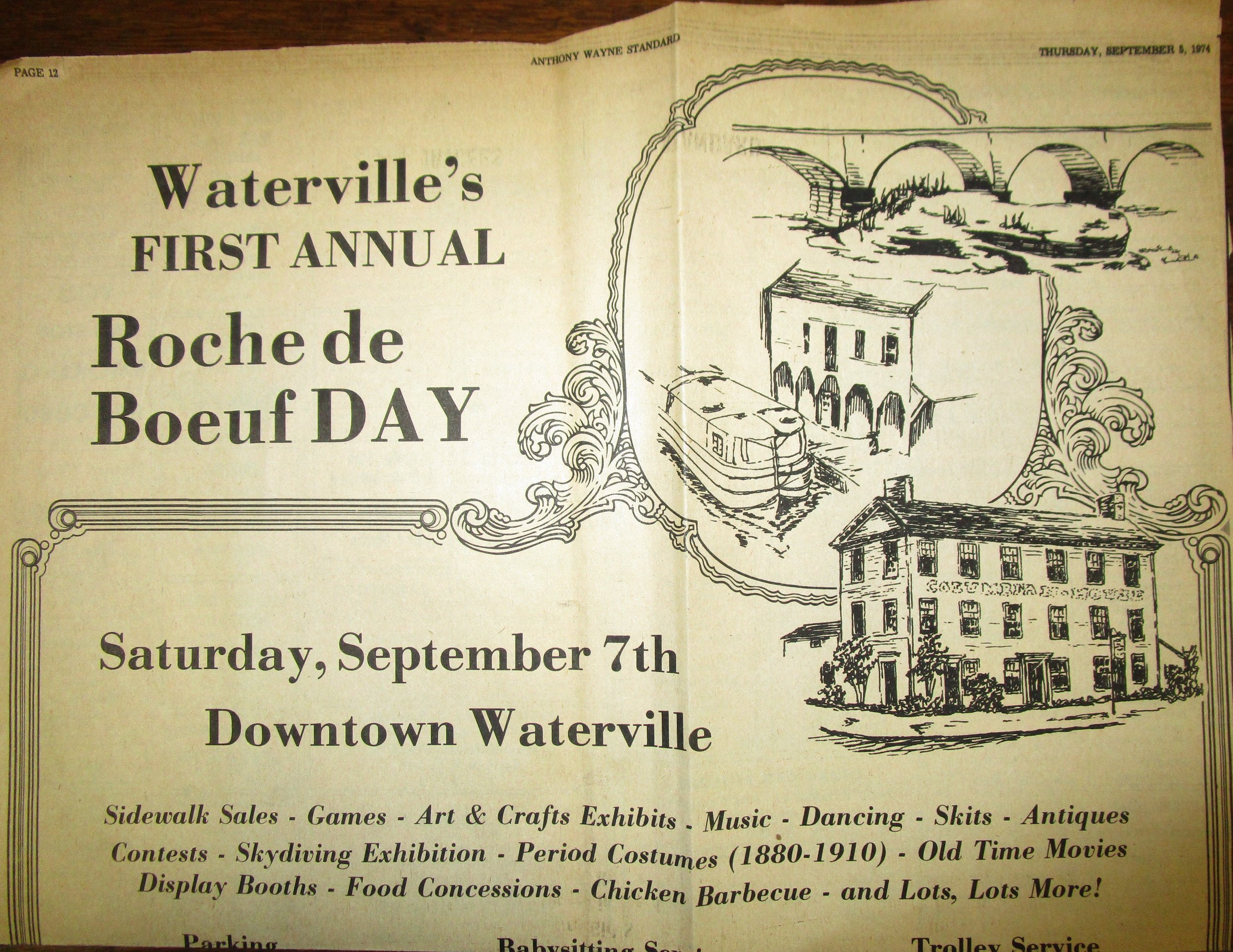

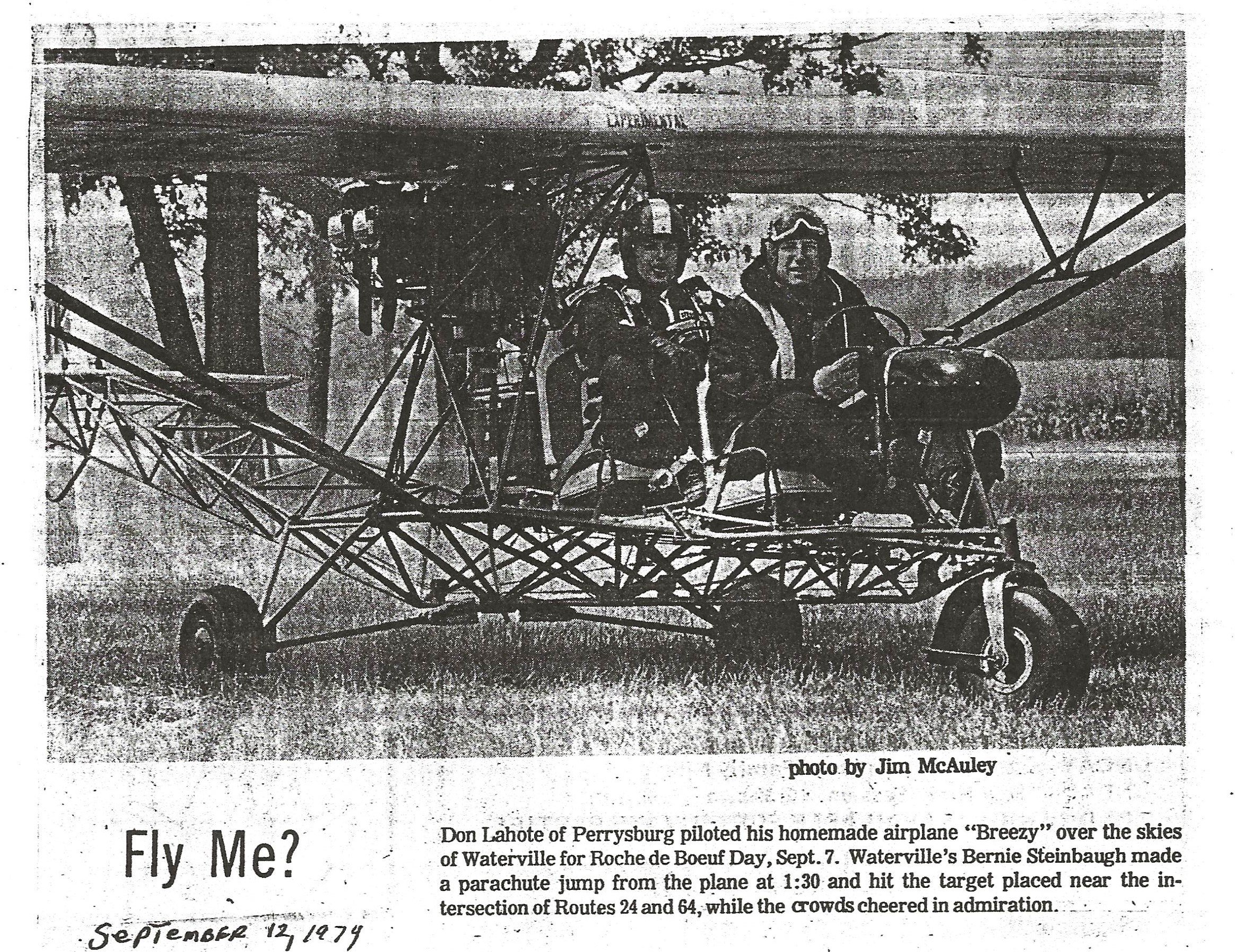
The festival was named for the large out cropping of rock in the Maumee River. The rock was called Buffalo Rock by the Indians and translated by the French as “Rock of Beef.” The festival salutes the Roche de Boeuf or Rock of the Buffalo. So people would remember how to spell Boeuf they were taught the rhyme “Buffalo Over Eat Until Full.”
The festival all started at the kitchen table with Gary and Diana Waugh. They along with Kenny and Annabelle Blair decided to add a new event to the Village of Waterville community events.
The First Roche de Boeuf Festival was to be held on the first Saturday after Labor Day, September 7, 1974. It was started by the Jaycees which included Gary Waugh, Don Blewett, Rick Young and Ken Blair as the chairmen and coordinators. Some of the others that helped were Bill Lommatzsch, Alan Porath, Bill Price, Walt Seymour, Dave Myerholtz, Ed Plante, Bill LaRue and Mike Dehner. The festival was supposed to be a day of celebration and merriment in downtown Waterville with singing, dancing, craft booths and a barbeque, etc. with Waterville history tied to the river, canal and railroad, village government and service organizations. The official costume was to be 1880 to the 1910s. The purpose was to establish a day for Waterville people to get to know each other and their town, and bridge the past with the future. They wanted to establish an annual event different from a carnival type that was happening here and in other towns. Of course it was also a way for the Jaycees to increase membership and have the business community participate. Also much of the money that left town with the carnival would now stay in the community.
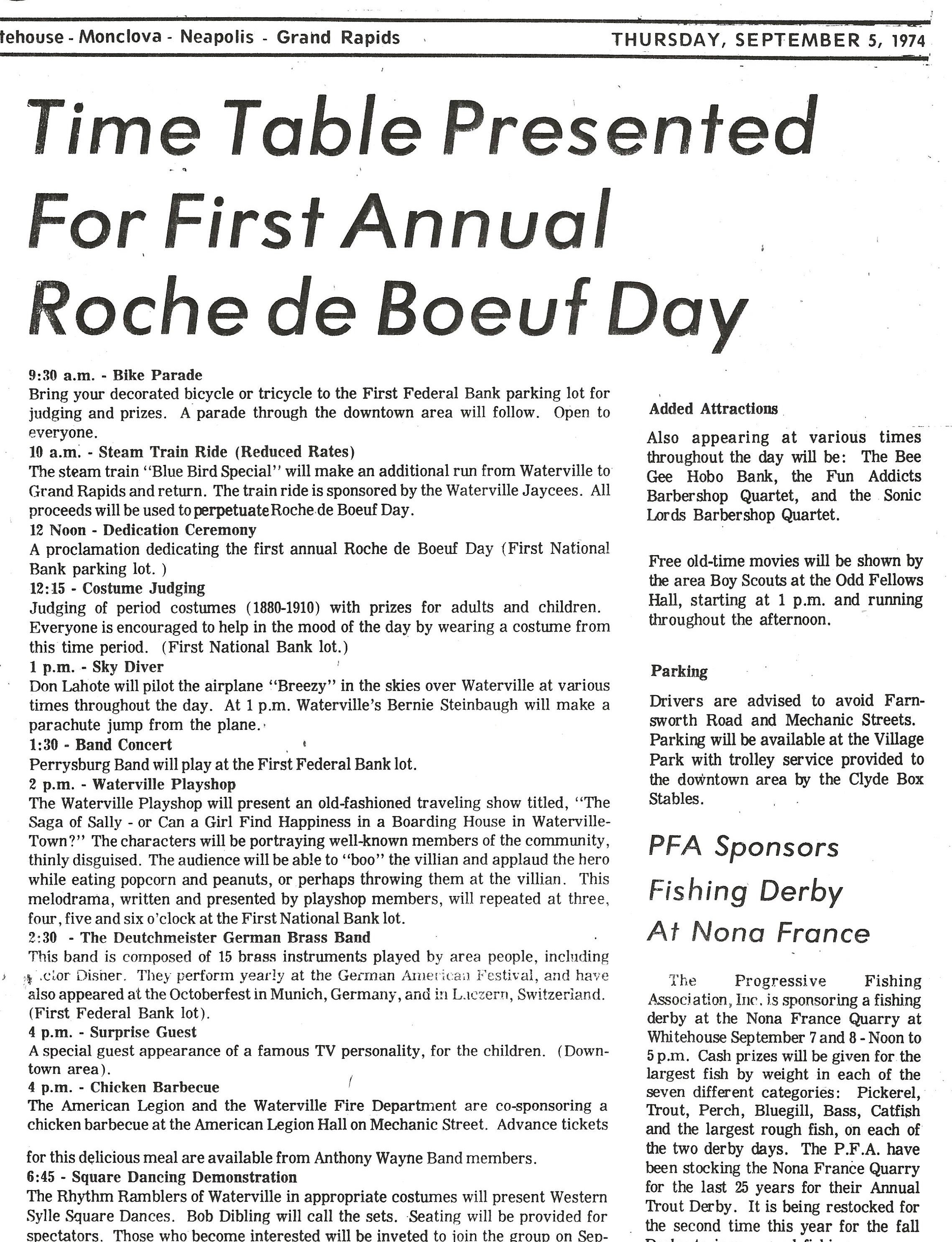
The first festival had a bike decorating contest and parade with 30 children participating. They had special rides to Grand Rapids and back on the Bluebird Special, picking up people in a hay wagon and tram ride. They had tours of historical sites in downtown Waterville. At 12 noon a special meeting of the Village Council was held with reading a proclamation honoring Roche de Boeuf Day as an annual event and dedication of a plaque for the Roche de Boeuf Bridge Society. They also announced that the old power plant would be turned over to the Waterville Historical Society for a museum.
Don Lahote of Perrysburg piloted the homemade plane “Breezy” over Waterville and Bernie Steinbaugh parachuted from the plane and landed on his target at Route 24 and 64 at the point where Mechanic Street and AW Trail meet. He was still jumping from the plane in 1990 at the festival. The AW band was unable to play at the first festival so the Perrysburg Band was invited and played.
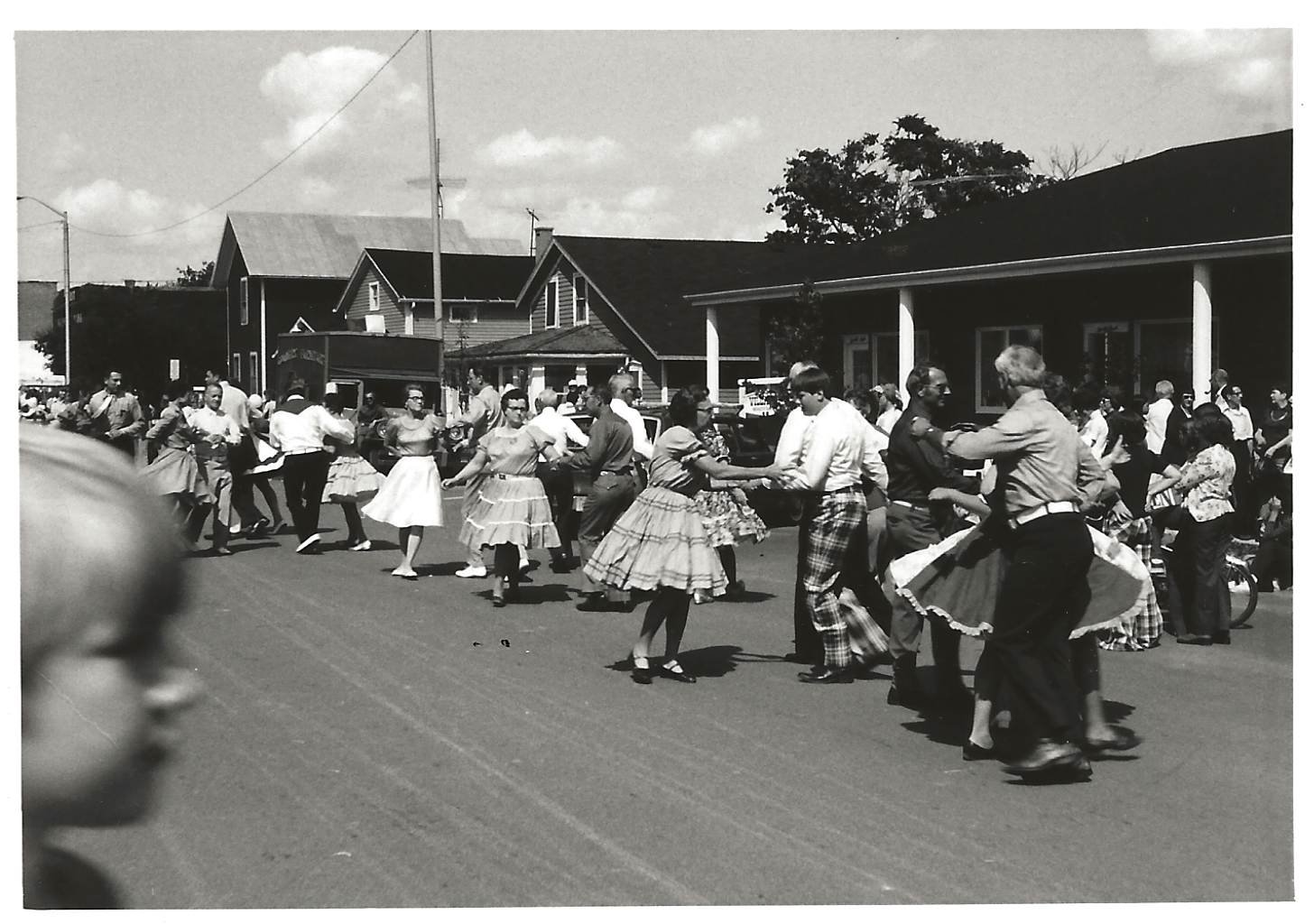
About 60 people dressed in 1890s attire. They had the sky diver at 1:00 p.m. that landed on his target. The Waterville Playshop put on an old fashion melodrama and the Rhythm Rambler’s, a western square dance group, demonstrated. That was followed by street dancing. There were craft booths on Second and Third Street. It was a big day and lasted all day and into the night. They even had a rock band.
The Roche de Boeuf Mission Statement said it was to be a family affair, promote local business and bring people to Waterville, then to encourage visitors to come back to visit and shop. It looks like they did a good job as we are now celebrating the 50th festival this year and it is bigger and better than anyone could imagine. Only the 47th Annual Festival was canceled due to Covid-19 concerns, adhering to the health department restrictions during the Covid pandemic and the best interest of the community.
The Early Founder's Days

Mrs. Carl Conrad, Treasurer; Mrs. Howard Kraus, secretary; Mr. Sieczkowski, president; and John Amstutz, vice president.
In 1964 a meeting was called by Mayor Richard Farnsworth and the manager of the Waterville Bank, Alvin Sieczkowski for the possible founding of a historical society. They had heard people were interested in preserving Waterville history. Al was elected President of the newly formed Waterville Historical Society and James Baldwin Vice President, Sec’y, Mrs. R.M. Memmer and Mrs. Carl Conrad, Treasurer. Mrs. Howard Krause was elected scrapbook custodian. The directors were John Amstutz, Mrs. Robert Lowrie, Mrs. Charles Swope, Mrs. Harry Witte and Charles Weaver.
One year later they held their first Founder’s Day to honor John Pray who laid out the village with the first 50 lots in 1831. Movies and exhibits of early Waterville were shown in the Waterville school gymnasium. Walking tours around town were conducted at 2, 3 and 4 p.m. and there were historic home tours. They also had a tea at the Columbian House. Then after the home tours they had a buffet supper at Zion Lutheran Church with Dr. Randolf Downs, professor of history at T.U as speaker. The first year of the Founder’s Day was just a one day affair but the 2nd year they held it for two days on May 14 and 15.
The aim of the society was the preservation of the history of Waterville. Founder’s Day was a way of calling the past to the attention of our citizens in hopes that everyone will give to or aid the society in preserving as much as possible the treasures for the future. It was hoped it would be a yearly trek back into the history of Waterville. In 1965 fifteen hundred people attended. In 1966 Founder’s Day was two days, both Saturday and Sunday, ending with a costume ball held at the Waterville School and the banquet held at the Zion Lutheran Church. WHS produced a Founder’s Day booklet and a Junior Historical Society was organized in Waterville.
The public responded and soon the historical society started looking for a place to put their collection of historic artifacts of interest to the area. In 1967 Mr. and Mrs. Charles Swope gave permission to use the upstairs apartment they owned at 19 ½ Third Street. In August of that year they opened that space to the public as a way to preserve and display these items of historical interest.
In 1968 they made Apple Butter and sold it to raise funds and in 1969 they had more house tours, showing six homes and WHS planned to make this an annual event. The organization was also having families research the history of their homes and WHS gave the first historic home plaque to Mrs. and Mrs. Earl Potter for the Oliver Pray House at 144 N. River Road, built in 1837. The purpose of this was to identify and encourage restoration and preservation of homes that were built prior to 1900.
In 1980 they acquired the Robbins House at 114 South River Road and began remodeling it into a museum. This enabled them to participate in the Roche de Boeuf festival with bake sales, antique and collectible sales, demonstrations of pioneer arts and crafts, as well as tours of the museum where all their exhibits had been moved. Founder’s Day dinners continued to be held in the spring at the Columbian House, the Toledo Club and other locations.
With the acquisition of the Sargent House Museum at 118 South River Road, which opened to the public on Founder’s Day, 1992 and Wakeman Hall in 1999, much time and effort was required toward fund-raising and restoration of these properties. Founder’s Day was neglected until renewed with a celebration of Waterville heritage, a day when small town values and civic pride are emphasized. In 2001 the village of Waterville had been in existence for 170 years and at that time the Waterville Historical Society, possibly along with the Chamber of Commerce, organized the Founder’s Day Festival. It was stated that it was the Third Annual Founder’s Day. In 2004 they had the sixth annual festival as an outdoor activity in Conrad Park.
On May 18, 2003 an Ohio Bicentennial Marker obtained by the Waterville Historical Society, honoring “John Pray Founder of Waterville” was dedicated at Pray Park. It was attended by 35 of his descendants from throughout the United States.
Stone Age People in the Great Black Swamp
We had a capacity crowd Wednesday evening July 26th, at the Waterville Historical building for our event; "Stone age people in the Great Black Swamp"! Many of the attendees were behind the cameraman getting food, or upstairs in the archives, but were able to capture many of them seated.
Our speaker, Mason Brown, brought a small sampling of the rare artifacts that he's found while "Surface Hunting" local fields in our area. Mason also spoke for about 45 minutes on the history surrounding his finds and the documentation he's done. All of his work has been personally hand illustrated, and is kept in a thick binder, with an associated map identifying the locations of his finds.
Thank you, Mason, for sharing the decades of your work with us, and thank you to everyone who attended!
Waterville Blossom Festival

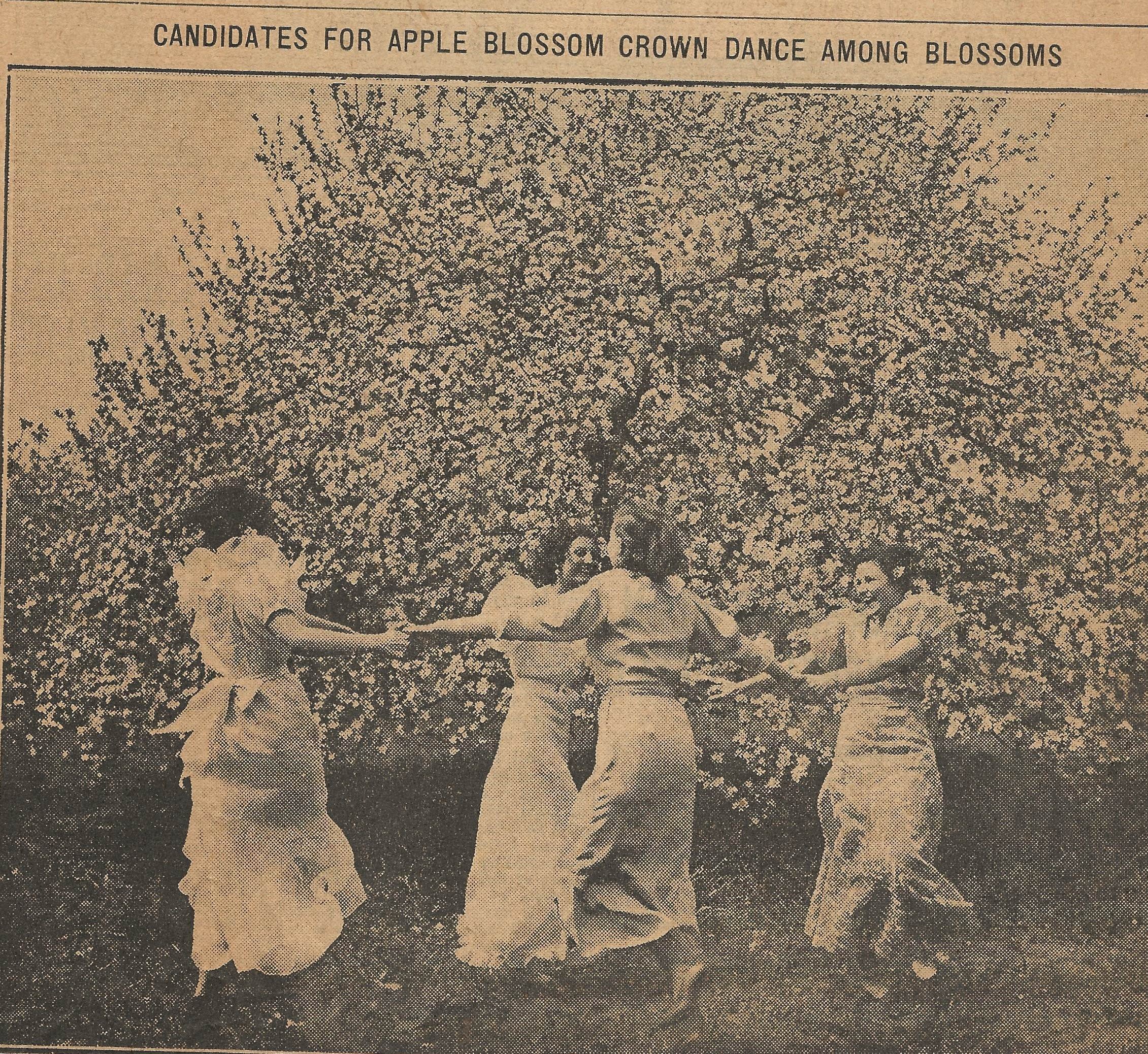


History of the Apple Blossom Festival and Waterville Festival
The Apple Blossom Festival was suggested at the Waterville Chamber of Commerce as noted in the Whitehouse Standard on April 29, 1933. This was just coming out of the Depression and the Chamber of Commerce was probably trying to find a way to increase business for the people of Waterville plus it was way to throw dull cares away and celebrating. Of course people were beginning to travel more and this was a short drive to Waterville to see the apple blossoms and other trees in bloom. This would help get the people back then to buy the apples and other produce. The May 6, 1933 date was selected. Everyone interested in seeing the trees in bloom met at the Waterville school and the Whitehouse Band played. They traveled in the parade from the school house at 1 p.m., in a caravan of trucks and cars lead by the band and the Boy Scouts where they traveled up the river to the Byrum and the Utz Fruit Farm on River Road, then to the Boyer Fruit Farm on Waterville-Neapolis and Schadel Road and finally to the Farnsworth Orchards on Farnsworth Road. At the Farnsworth Orchards they had a program and crowning of the first Blossom Queen, Theresa Walbolt. Her attendants were Merita Witte and Marilyn Baldwin. It was raining at the 1st Festival so the program and dancing was held at the Graf Garage where now Peddler’s Alley is located. They removed the three Model T Ford fire trucks, four yellow school buses and parked them outside so the floor could be cleaned for square and round dancing.
The 2nd year (1934) they had blossom covered floats. The people took a tour of the 500 acre Farnsworth Orchards where most of the proceedings after parade were held. The queen and her attendants were seen dancing under the apple blossoms in 1934. In 1937 the Waterville Blossom Festival was held on May 8th with parade, floats, bands and the Queens Ball with single admission tickets to the ball at 35 cents and 15 cents for children. Waterville was advertised in a brochure at that time as a city suburb and an agricultural town. It stated that the village owns and operate its own water and electric plants, has three churches, good school system, has a bank, garages, restaurants, barber shop and stores sufficient to care for its needs. The population of Waterville in 1934 was 976. A map was provided so you could travel to see the apple blossoms. The night before the festival three million bees Mr. Farnsworth rented from a man in Shelby County were released to fertilize the apple orchards of the village. The flight of the bees was an annual event at the Farnsworth Farms, usually the night before the Festival. He keeps the bees all summer and the owner come later to take them home.
The last Blossom Festival was 1940 by our records when the festival was discontinued during the war years of WW II.
The first Post War Waterville Festival was held June 1947 and it replaced the old Waterville Blossom Festival and now it was sponsored by the American Legion Post and the Waterville Volunteer Fire Department, dropping the word “Blossom.” They said they wanted to continue to sponsor the festival annually with enough money is raised for building of a community house or building. It was a four day event ending with an hour long parade on Saturday and later in the evening with square dancing. They had carnival rides all taking place in Waterworks Park, now Conrad Park. It was a fun filled time! It was a money maker for the sponsors. In 1955 there were 12 bands, 6 marching groups, 9 queen candidates and by 1963 there were 30 marching units in the parade. Prizes were given to the bands and floats.
In 1981 they mentioned what they had purchased with festival funds which were a rescue truck and equipment, material for the Village Park Shelter House, Christmas lights, steel grills in the park, flags and poles for street display and flags for the park and local schools, sponsorship of teams and Scout troop.
Author’s Note: We are looking for more information on the Waterville Festival to add to our records. Do you have pictures or information you would like to share?
The Demise of the Miami and Erie Canal


We have written extensively about opening of the canal through Waterville and the benefits we enjoyed because of it. We enjoyed these benefits for forty to fifty years but the canal had a long, slow decline. Railroads came into being at nearly the same time the canal was opened and expanded over the years. Rail had the advantage of operating the year around and was faster. No steam railroad reached Waterville until 1876-77 when the Toledo and Grand Rapids narrow gauge railroad was built. The canals were built and operated by the State of Ohio and never generated much income, mostly due to maintenance costs. A plan to lease the canal to private contractors didn’t work either as the contractors neglected maintenance and retuned the canal back to the state in severely run-down condition. By 1900 the state wanted to close the canals and get out of the canal business but met a great deal of push-back. Much of what was left of the canal boat traffic was now local and passenger service was entirely owned by the railroads. There were, however, a large number of mills and other businesses paying the state for water rights to use for power. These businesses did not want to lose their relatively cheap power source, so they were adamantly opposed to closing the canal. The final straw came in 1913. The disastrous flood, due to storms which dumped 6 to 12 inches of rain over much of the state, wiped out large sections of the canal making repair nearly impossible. Some sections closed completely and some sections were repaired enough to serve a local area. Note that the old wooden dam at Providence was replaced with a new concrete roller dam in 1908 by John Weckerly and company (paid for by the state) which survived the flood and is still in place today. Locally then, our canal survived the flood and continued to be used for power and recreation, from the dam to Swan Creek in Toledo. The State of Ohio continued to push for the end of the canal business and finally, after surviving court challenges, passed legislation called the Tom Act in 1927 ending canal navigation and then officially closed all of the canal in 1929. Toledo, by 1929, had for some time been planning to turn the canal into a roadway for automobiles. The Mayor and public officials had made plans to drain the canal, with a big ceremony and program to be held on Saturday, July 6 at 2:30 P.M. Thes plans were spoiled, however, when unknown persons on the night of July 3rd created, by blast or shovel, a huge hole in the canal bank on the Utz farm three and one half miles above Waterville. On the morning of July 4 they found the canal rapidly draining to the river (Article in the Toledo News-Bee, July 4, 1929). Mission accomplished but not as planned. So, as we celebrated the opening of the canal on May 8th, we Waterville folks may take some credit for the demise of the same canal by this dastardly act. Toledo then gained the Canal Boulevard which eventually became Rt. 24 and the Anthony Wayne Trail through Waterville..
Authors Note: We Watervillians may also take pride in the fact that our own W. W. Farnsworth, orchardist, State Senator, and first executive secretary of the Toledo Metropark System and having served four two-year terms in the Ohio State Senate, convinced the State to turn portions of the canal lands over to local park boards, thus our local park which bears his name came to be.
Waterville's Canal Builders
Some of our prominent families arrived in Waterville to take part in the construction of the Wabash and Erie Canal.
1. Cornelius Van Fleet, the eldest son of Mathias Van Fleet was already here. The family arrived in Waterville in 1831 when Cornelius was only 13 years old. A bright young man, he learned the art of civil engineering so that by 1837 he contracted with the State of Ohio to be the civil engineer for the northern section of the canal from Providence to Manhattan. Now a canal cannot be built until the best route has been determined and surveyed and location of necessary locks determined. The engineer then must see that contractors build their section to specifications and solve any construction problems that may occur. This was an awesome responsibility for such a young man. When construction was complete Cornelius was appointed superintendent of the Waterville section of the canal, a position he held for eight years. Since Cornelius was one of 14 Van Fleet siblings, we were blessed with many generations of Van Fleet family.
2. John George Isham was born in Sharon New York in 1815. He came to Waterville from Monroe, Michigan in 1840 to serve as construction superintendent for a good friend who had the contract for a section of canal from Dutch Road to Maumee. When the canal opened in 1843, John was appointed maintenance superintendent for the entire northern portion of the canal. John found love along with work in Waterville. He married a young Eliza Daggett in 1843, bought a farm on River Tract 42 and the couple settled into a log cabin on the farm. There he could work his farm in the summer and attend to repair work on the canal in the winter months when the canal was closed to boat traffic. Eliza tragically died in 1848 leaving John with two young children to care for. He soon married Sarah Cooper, daughter of Waterville pioneer Henry Augustus Cooper. Three more children were born to the couple and John completed his large Greek Revival farm house in 1853. John and Sarah raised their family there as well as five other children of close relatives. His youngest son, John F. . (Torry) Isham took over the farm when John became ill and retired. Isham descendants owned and lived in this house, located just across from the (now) Farnsworth Park shelter house, until recently.
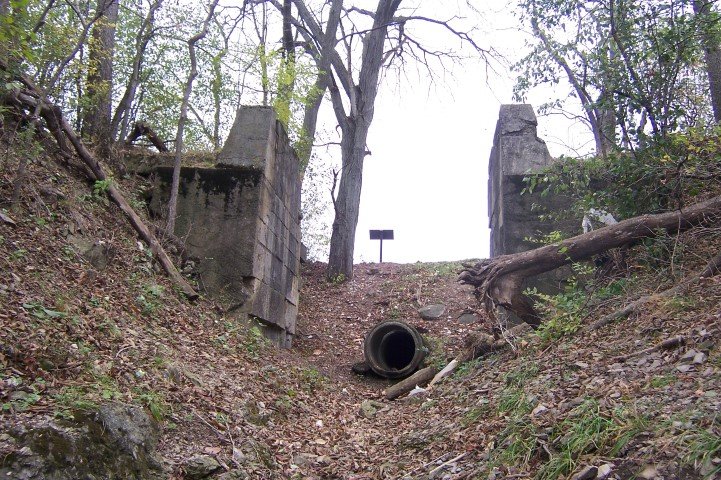
3. Contracting partners Elijah Dodd and James B. Steedman. James is the publisher, politician and Civil War hero. He became the brother in-law to Elijah when James married Sarah Miranda Stiles a sister to Dodd’s wife. Elijah Dodd was an experience contractor having completed a section of canal near Harrisburg, PA. The portion of the canal in their contract included the critical dam at Providence that created the slack water pool to provide water to the level stretch of canal between Providence and Toledo. The original dam was of wooden crib design, with stone abutments similar to the dam upstream near Defiance. This dam remained in place until the current concrete dam was built in 1908 by John Weckerly of Whitehouse. Dodd and Steedman were also paid $300 to build the canal overflow near Roche de Boeuf, sometimes called “the cascades.” The remains of this overflow can be seen at the east end of Farnsworth Park along the walking path.
Opening of the Canal 180 Years Ago
The Canal through Waterville opened 180 years ago. Why is this important? Why should we celebrate? On May 8, 1843 the Canal boat “Albert White” passed through Waterville on its way from Fort Wayne to Toledo where it was met with great fanfare. This event marked the opening of the Wabash and Erie Canal which connected the Ohio River via the Wabash River through Indiana to Lake Erie. The connection south at Junction to the Ohio River at Cincinnati, which formed the Miami and Erie Canal, did not open until 1845,
The impact of this event was immense! Waterville area farmers were blessed with amazingly fertile soil and a local grist mill (thanks to John Pray) but markets for their grain was limited. The major population centers of the east coast were blocked by mountains and transportation to existing water routes was by horse drawn wagon. The canal system brought a water route, capable of transporting bulk cargo, to the interior of Ohio and Indiana and, of course, to the Waterville farmer. The east coast and the southern port of New Orleans were open markets for our products and, by extension, world wide markets. This pipeline was also a two way system. Our local merchants could receive manufactured goods from distant places for local consumption. Our interior was now open for business.
The effect of the canal in Waterville was almost immediate. The business center of town moved from Main Street (River Road) to 3rd Street to be near the canal. Our business men found the cities of Maumee and Toledo a relatively short hour or two canal ride away and soon trade between Waterville and these two centers of commerce blossomed. Two canal stores were bult on the west bank of the canal to trade directly with canal boat operators as well as the public. These soon became the J.E. Hall store and the Haskins Brothers store, which much later became Rupp Canal Store. The Ostrander store on Third Street found the newly built canal at their back door and built a dock for the boats to stop there. David Hall and Lewis Eastwood built a hotel building at the canal and Wood Street, later owned by Abe Frederick. By 1846 businessmen Lorenzo L. Morehouse and James Brigham built a large three story grain mill on the canal at the north end of Third Street, using water from the canal to power the mill. The millrace ran down the north side of Mechanic Street to the river. Known as the Pekin Mill, it soon made Waterville the grain center of Ohio. Even the local hardware and grocery merchants could easily obtain goods from eastern manufacturing centers for sale to their Waterville customers.
Very few of the contractors who built the canal became rich, but everyone benefitted from it. So why should we celebrate? It put our town on the map? Our citizens were better off and some of our business people became quite wealthy. Our town, now a city, survived and grew to what we are today in large part because of the kick-start we received from the opening of the canal system, represented by the passing of the canal boat “Albert White”. Unfortunately, the art of photography did not exist here in 1843.
Authors Note: A number of articles about the canal and the canal builders have appeared in this space over the years. These may be found in the Wakeman Archives or by scrolling down through our past writings on the website. It is also possible to google the articles online.
CIVIL DEFENSE DURING WORLD WAR II

When Germany invaded Poland in 1939, Europe was facing a new war with the constant threat of air strikes. Perhaps the greatest threat to civilians, these air strikes posed a problem for life not only in cities but rural areas as well. Leaders began implementing ways to help prevent major devastation and loss of life. One of these planned strategies was the use of dim-outs and blackouts in order to minimize the light created indoors that would allow the enemy to identify targets from the air. After Pearl Harbor, Roosevelt was more aware than ever that a civilian defense front similar to the UK’s was needed because of the threat of air forces. On May, 20 1941 he created the Office of Civilian Defense (OCD) appointing NYC mayor Fiorello LaGuardia as head. LaGuardia was tasked with appointing watchers, auxiliary police, decontamination squads, emergency food and housing, and air raid wardens.
By day, the air raid wardens educated the public on the importance of dim-outs/blackouts and what to do if an air strike occurred. Blackouts/dim-outs required people to shut off appliances and electricity, along with gas and water. Driving at night was highly discouraged during planned blackouts. The use of blackout curtains was encouraged. People were directed to seek a bomb shelter or basement until the strike threat was dismissed. At night, the air raid wardens were in full uniform, wearing helmets, gas masks, and carried flashlights. They had sirens and patrolled neighborhoods to enforce the blackout. Some took the role very seriously, in some instances shooting outdoor lights that were left on. Ernest Graf was the Waterville Civilian Defense member and Air Raid Warden Chairman. He announced that four blasts of the fire siren at half minute intervals will be used for the warning signal and that the “all clear” signal will be a single long drawn-out blast steadily for two minutes.
On July 14, 1942, Waterville conducted a dim-out and a total of 32 infractions were reported by Ernest Graf. The next dim-out was conducted on August 12, 1942 and it was hoped there would be no infractions. Locally, it was reported that more air raid wardens were needed in Waterville for a planned dim-out in April of 1943. The air raid wardens were hoping to have a more successful experience than the one they had in the past. The strategy was to have at least two at each post, sometimes three. Multiple wardens were needed in case one needed to leave. Nineteen air raid wardens with assistants were on duty in Waterville. The air raid wardens were J.B Stickney, Scott Barman, Tom Billiard, H.H. Dudrow, Paul Bersee, L.E. Wynocker and others. The Civilian Defense control room was in Graf’s Garage which was equipped with phones and tables.
The dim-out occurred on April 12, 1943 at 10pm for 20 minutes. Prior to the dim-out, the public was instructed on how to prepare and what to do. Telephones were not to be used, and people that were not going to be home during the dim-out were told to make sure all lights were out. Owners of businesses such as hotels were told to advise their guests of the situation and take measures to make sure everyone was on board with participating in the dim-out. People that would have to be driving during the dim-out were told to find a space to park to wait it out, or stop in place and make sure all vehicle lights were off. The only allowance was for emergency vehicles. Manufacturers were exempted from participating, but were asked to turn off any equipment or lights they could while still maintaining production. Anyone not at home was told to remain inside any building until the dim-out was over.
Chief Air Raid Warden Ernest Graf reported a successful blackout in Whitehouse and Waterville, with 100 percent cooperation of homes and businesses. There were only five infractions, where one resident turned the lights off too late, while another turned their lights back on too soon. A few vehicles were stopped, while most drivers cooperated. No arrests had to be made during the dim-out. One has to appreciate the efforts of coordinating blackouts during WW2. With the development of satellites and sophisticated navigation, the practice of blackouts has become obsolete.
Roosevelt’s Civilian Defense Force was ended on June 30, 1945. President Truman brought it back during the Cold War, calling it Civil Defense. Today the organization is known as FEMA, which helps areas where a natural disaster has occurred.
Does anyone have a picture of a family member wearing a Civil Defense uniform or parts of any such uniform? The Wakeman Archives would like to add to our collection of WW II items.
WHS Awarded $18,000 Ohio History Connection Grant
Waterville Historical Society has been awarded an $18,000 grant from the Ohio History Connection (OHC) for the Sargent House Museum Foundation and Sill Beam Project. This $59,900 project will stabilize the 1839 structure by restacking the dry-laid stone foundation and replacing deteriorated sill beams. Our project was one of 12 awarded funding of the 50 proposals reviewed. This year, $185,624 were available for OHC grant awards. Your donations to the Ohio History Fund make this program possible. Your contribution today helps “pay it forward” for future grant awardees!
Thank you, Ohio History Connection, for your support!
Ohio History Fund - Help WHS
Tax time is your time to support Ohio History! Did you know you can donate part of your Ohio income tax refund to the Ohio History Fund? It’s as simple as entering the donation amount on line 26b of Ohio Form IT 1040. Since its inception in 2012, the Ohio History Fund has awarded 110 grants for a total of $1 Million to help preserve Ohio history. This total includes a $3,867 grant to WHS to install a new HVAC unit in Wakeman Hall in 2021. This March, we hope to hear that the Ohio History Fund will help WHS restore the foundation and sill beams of the Sargent House Museum. For more information about the Ohio History Fund, visit https://www.ohiohistory.org/preserving-ohio/ohio-history-fund-grant/.
A Jackie Gleason Limo with a Waterville Connection
https://www.pinterest.com/pin/251357222923265541/
This story comes to us courtesy of Steve Asztalos who grew up in Waterville in the 1930s and early 40’s. Steve was a W.W. II veteran and became an auto body mechanic under the post WWII G.I. Bill. Perhaps some of our “old timers” remember Steve as a classmate or Waterville resident. He was kind enough to sit for an interview at the Wakeman Archives in 2016.
Can you imagine taking a saw to a brand new Lincoln and cutting it in half? We wrote an article in 2015 about the Shop of Siebert, a company devoted to customizing mostly Ford Motors vehicles into hearses, ambulances, police cars, stretched transport vehicles and custom limousines. This company moved to Waterville in 1951 from Toledo due to a need for more space and located where Peddler’s Alley is today. Steve Asztalos worked for this company for over 36 years, following them in a move to Inkster, Michigan in 1964. Sometime between 1964 and 1966 Siebert merged or was acquired by the Carron Corp of Inkster.
It was Inkster, Michigan that Steve took his saw to a new 1969 Lincoln Continental Mark III and chopped it in half. The purpose was to produce a customized limousine for the popular comedian and television personality, Jackie Gleason. Mr. Gleason, as we oldster well remember, was a very large man. He demanded extra wide doors which were not partially blocked by rear wheel wells, as most four door vehicles were in that day (and still are). The result of these and other demands of the Gleason team was a vehicle stretched by lengthening the frame to a wheelbase of 166 inches and overall length of just over 22 feet. The passenger area, designed by and for Gleason, had two rear facing seats and a reclining rear seat. In between was a console containing a refrigerator, liquor bar/desk, 2 telephones and a color television. It had all push-button controls and two air conditioners. The finished car was sent back only once for better air conditioners. Jackie liked it cool! The car was finished with sixteen coats of a deep burgundy metallic lacquer. Steve discussed sanding the entire car with a 600 grit sandpaper between every two coats. He said it was a long way around that car. Finally four coats of clear lacquer were applied over the color. The limousine cost a whopping (for that time) $68,000, (about the same as a basic Lincoln might cost today)
Authors note: The archives has a notebook of photographs of many vehicles produced by The Shop of Siebert here in Waterville, thanks to Steve. These are available for the public to view whenever the Archives is open. The Archives is open every Wednesday from 10-2, year round weather permitting. We are not open if there is snow on the driveway.
DONATE WHILE YOU SHOP

Did you know that by simply shopping at Amazon Smile or Kroger, you can donate funds to the Waterville Historical Society. It is simple, easy to do, and costs you only a few minutes of your time.
Amazon: Amazon donates 0.5% of the price of your eligible AmazonSmile purchases to the charitable organization of your choice. AmazaonSmile is the same Amazon you know. Same products, same prices, same service. Support your charitable organization by starting your shopping at smile.amazon.com.
Once you go to smile.amazon.com, log in using your regular Amazon sign on. In the upper right-hand corner, click on Accounts & Lists and select Your Amazon Smile.
On the next screen, you can select your charitable organization. Type Waterville Historical Society in the Search bar and click on Search. There will be a list of choices to select from. Be sure to check the Waterville Historical Society in Waterville, Ohio.
That’s all you have to do and all purchases going forward will send funds our way.

Kroger
If you have a Kroger Plus Card account, you can designate Waterville Historical Society to receive a portion of their quarterly charitable distribution. Kroger distributes $1,000,000 quarterly to its participating organizations. How much the organization receives is dependent on how much was generated in purchases by the participants that have selected that organization.
To earmark the Waterville Historical Society, on you Kroger Plus card, sign into Kroger.com. In the upper right-hand corner, click on the drop-down box by Sign In and select My Account.
You will get the screen to enter your sign in and password. On the left-hand side, there is a box with Account at the top and several lines beneath it. Select Community Rewards.
Type in Waterville Historical Society in the search bar and click on Enroll when it shows up.
Thank you for helping us out!
Reaching Out!
We have reported recently on the Wakeman Archives receiving a grant to allow us to share some of our extensive archives collection online. We have been proud of our extensive and always expanding collections documenting the history of Waterville and the local area since we opened our facility in the 1881 Wakeman Masonic building in 2001. We have been able to assist local historians, genealogist and people curious about local history who were able to visit our archives. Now we can share parts of our collection with anyone in the world who has an internet connection. The grant was specifically written to allow us to put our photos of the Interurban Bridge, which is scheduled to be demolished by O.D.O.T. in the near future, online for all to see. We have put over 100 photographs, picture postcards and even artwork depicting the bridge on our online platform. That project was recently completed and we have decided that we should make our collection of photographs of the graduates of Waterville School available to online researchers. This series of class pictures begins with the class of 1898 and continues through 1952 when Waterville High School was joined with Monclova and Whitehouse in the consolidation that formed Anthony Wayne High School in 1951. The graduates are identified by name and graduation year. There are currently about 50 of these school photos on our platform. We expect to add more Waterville school photographs and records. Our online records can be accessed by entering our website at Watervillehistory.org, check out the Online Collection and in the article click on the link or by going directly to https://watervillehistory.pastperfectonline.com/ When in the online Pastperfect program you can find school pictures by clicking on the “keyword search” and writing the word “school”, “bridge”, name of graduate to see the pictures or you can just scroll through the images in “random images”.
Student Advisory Council presents 12/3/2022 at Wakeman Hall
If you plan to be in downtown Waterville on December 3 for the tree lighting event, please visit Wakeman Hall for the SAC event. Here are the details:
4:30-5:30 @ Wakeman Hall
Games, and Short Programs for the Entire Family
Hot Chocolate and other Light Refreshments
Stories of Local Christmas Traditions
SAC (WHS's Student Advisory Council) is made up of students at Anthony Wayne High School. During 2022 they wrote, produced and acted in a local history presentation given to all of the third-grade classes at the Waterville, Monclova and Whitehouse Primary Schools. They also dressed in period clothing assisting WHS at our Haunted Waterville events and during Roche de Boeuf.
This event is a fund raiser to help with the purchase of period clothing and other supplies needed for their activities. If you can't attend on December 3, please consider making a donation to support their efforts. Donations can be made at our website (www.watervillehistory.org). Go to the Join/donate tab and then when filling out the form, indicate that it is SAC in the Additional Information section. Donations can also be sent to:
Waterville Historical Society
P.O. Box 263
Waterville, OH 43566
Please indicate the donation is for SAC.
Thank you for your support!
Cobbler Shop Renovation by Merle Wilhelm
Because of his love of history, because of his attention to authentic materials, and because of his artistic ability, Merle Wilhelm has brought back “The Cobbler Shop” on the Waterville Historical Society River Road campus. Mr. Wilhelm, a Waterville resident since 2008, renovated his own property and took on the Waterville Historical Society project because of his talent and interest in the creative process of woodworking.
“The Cobbler Shop” located behind the Robbins House Museum on the historical society’s South River Road campus, is a small, bright and red-orange building built circa 1905. In George Haley’s time the building was located on Farnsworth Road at the N.E. corner of the alley between 3rd and 2nd Street. It was later moved down the alley to the rear of the Henry Oliszewski property at 27 Second Street where it was repurposed as a shed or chicken coop. The building was moved to the historical society’s property in 1983. It has been used as an additional museum building until Merle took interest in the renovation project that transformed the entire structure. The building had been closed due to deteriorating conditions.
He has a respect for history, showing his attitude clearly with his experience with area reenacting groups. Merle says, “I got into reenacting in the late 1970’s, early 1980’s, when I joined The Toledo Muzzle Loaders. We did many rendezvous and reenactments. I made most of my own clothing and accoutrements. I remember when our group set up camp inside Greenfield Village. I demonstrated cooking venison on a spit over an open fire, and gave tomahawk and knife throwing demonstrations.”
Merle’s own property, built in 1907, is located across from the historical society campus. In his renovation of his own home and adding a barn and addition, he used original wood, windows, cabinets, and flooring in different ways. The materials in his home are authentic to not only Waterville, but also his property. He used the same thought process and righteous commitment to create The Cobbler Shop’s new look.
“The Cobbler Shop inside wood is recycled Barn siding that came from Antique Beams and Boards in Delta Ohio,“ Merle notes. “They planed the wood a little, and cut each board to 6” wide. I can’t tell you enough how great a job they did. The hanging electric lights I constructed using old antique shades, and one made out of an old farm funnel. The light switch is the old push button style they used in the early days. I replaced one window and sill that was rotted out. I found an old window in an antique shop, cleaned it up, and made a new frame for it.” The other two windows are original, he said,
His knack for using recycled wood, he says, he learned from his father. “When I was abought 10, my father would bring home huge pallets that glass was shipped in, he worked at Libby Owens Ford Glass factory on East Broadway in Toledo. My job was to take off all the iron straps, de-nail the boards and stack it. He built a pony shed with it, and other things. I just love the look of rustic pieces that I make, with no cost but labor. I still collect old wood and siding from my neighborhood.”
“I researched how to work with wood.” He read books and examined old pictures, and practiced with wooden joints to understand the feel and the process of woodworking art. The skilled tasks and the creative process combine for Merle into a very special calling.
Merle says, “I am in my own little world when I grab old wood and decide what I am going to do with it. It’s my happy place.” He notes that The Cobbler Shop project has provided him with a certain serenity. The work has helped him grieve for his wife, Lorinda, after her death in August of 2021.
Now, where there once was a 10 ½ by 14 ½ foot storage building, the Waterville Historical Society South River Road Campus has gained yet another museum. Neatly displayed and cataloged Inside The Cobbler Shop are leather-working tools, shoe forms, a whetstone, and a barrel which is set to hold an an antique checker board and checkers. There is a spot for a small woodburning stove as well.
The tidy but appealing little building already is in fact generating interest from the visitors to historical society events. At the most recent “Haunted Waterville” program, thirty people expressed interest in “The Cobbler Shop” and were shown the work and artifacts contained in it.
Merle is committed to helping others learn about the past. He says, “Historic wooden objects, and how to make them is a lost art. If I can share with others the talents that God has bestowed on me, it is my duty, and my joy (to do so). His efforts have added a new, artistic dimension to the Waterville Historical Society, but the whole community will benefit from his vision.
A Safe Story
Rupp Store Safe
November 1, 2022 a fork lift, owned and operated by John Knollman of Waterville Hardware gently eased a large old iron safe through the front door of the Third Street Cigar building and several husky men wheeled it to a prominent position in the building. The safe was back in it’s former home for the first time in 52 years. Why is this important? That is our safe story or, if you prefer, the saga of the safe.
Jacob Rupp purchased the store on the canal at the southwest corner of Wood Street (now Farnsworth Road) and the Miami and Erie Canal through Waterville in 1883. Now the business, which had several owners dating back to the Civil War, became the Rupp Canal Store. This store was next door to the new (1881) Wakeman Masonic Lodge building. We have no record as to whether the safe was in the store when Jacob bought the business or if Jacob purchased it himself. The safe bears the brand name of Macneale and Urban. A Google search reveals this company began manufacturing safes as early as 1855 but became the Macneale and Urban Co. in Cincinnati, Ohio in 1870. The company moved it’s operation to Hamilton, Ohio in 1890. It is recorded that at this time the company in their new facility had about 600 employees turning out 50 to 60 safes per day. The company was purchased by the Mosier Safe Co. in 1907 and the name Macneale and Urban was no more. The long and short of all this is that our safe is very old, a 19th century artifact.
As we all know, the canal business by 1900 was very slow and Jacob Rupp, as an astute business man, could see that most business was taking place on Third Street. By around 1905 he had built a new store on Third Street and moved his stock and his old safe to the new store, but retained the name, Rupp’s Canal Store. At this time he also took his son Herman Rupp as a business partner. Herman, of course, eventually took over the business. Many older Watervillians still recall trading at the Rupp Canal Store, as Herman kept this business, through hard times and good, until he retired in 1970.
Herman Rupp sold his old safe on February 7, 1970, as recorded in his daily diary, to Thad Jones for $40. Thad had a local tow truck man help move this approximately 500 lb. safe up the hill, dangling from the hook of the tow truck, to the basement of their home at 1001 Farnsworth Road. Thad did not want this now iconic Rupp safe to leave Waterville. When Barbara and Thad Jones moved to their new home on Noward road in 1981 the safe went with them and lived in their garage. Fast forward a few years to 2019 when they wanted to downsize and move into Whitehouse, they donated the safe to the Waterville Historical Society.
Now we collect all things Waterville and this safe was a wonderful gift. Our problem was where to put a 500 lb. safe measuring 37 by 28 by 27 inches. It was stored in a secure location until recently when that space became unavailable. It then occurred to us that Third Street Cigar occupies the building that was until 1970, the Rupp Canal Store and John Henry might like this old iron safe– in good working condition by the way - to embellish his place of business.
A deal was made - we would loan Mr. Henry the safe for as long as he keeps his business there. Our safe is back ”home” and the people of Waterville can view this iconic Rupp safe by venturing inside Mr. Henry’s business.
Roche de Boeuf Festival
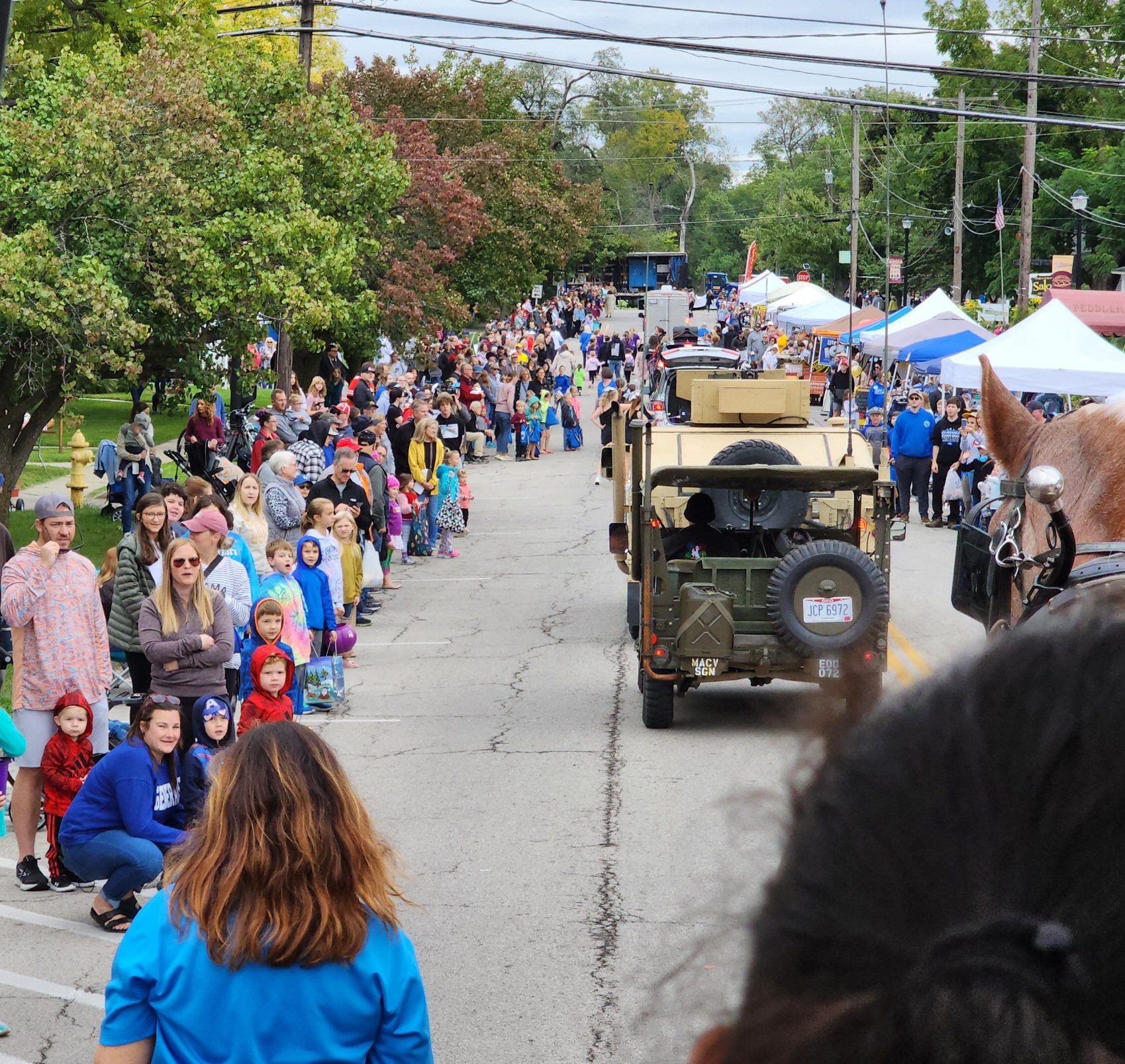
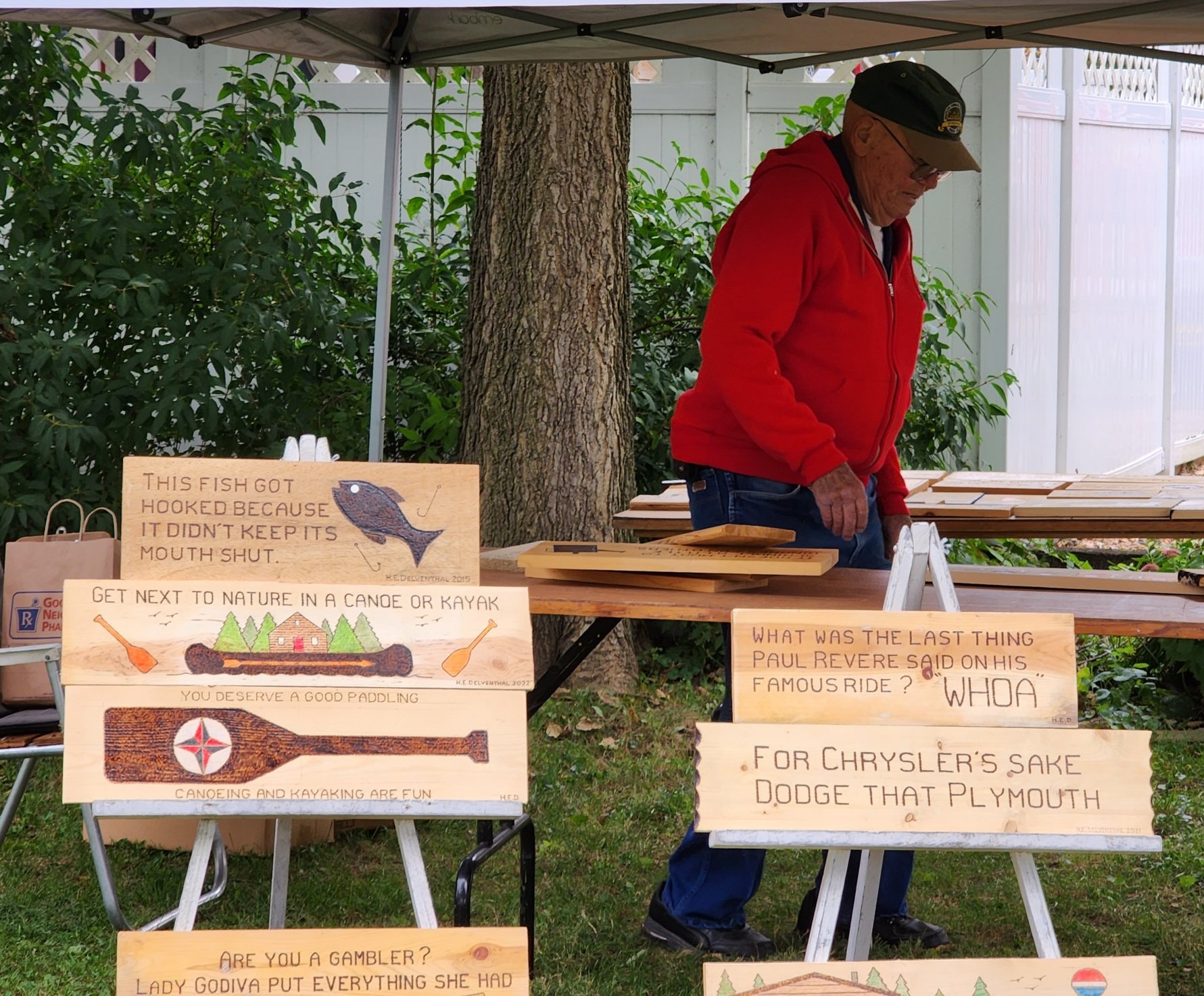
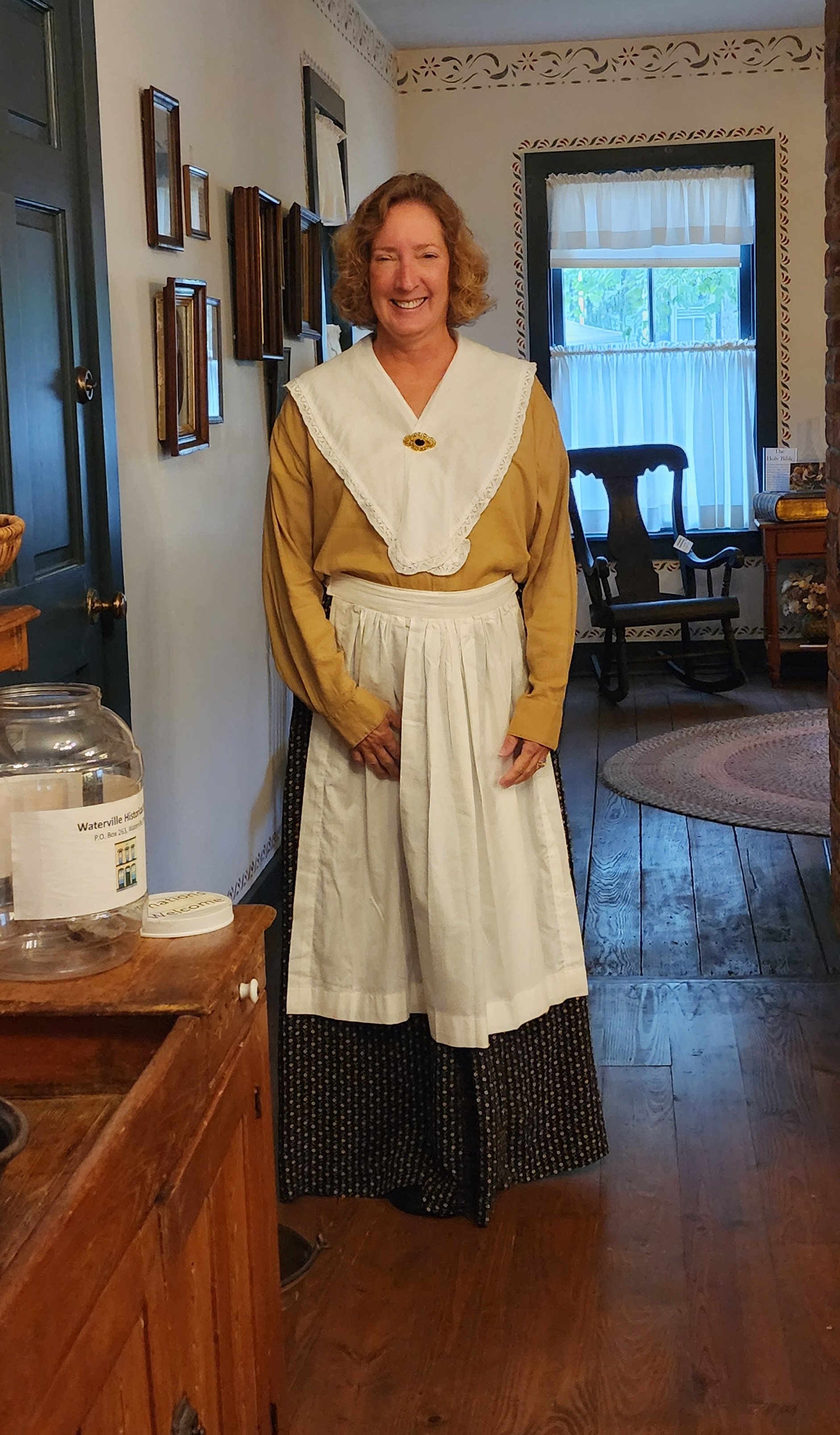
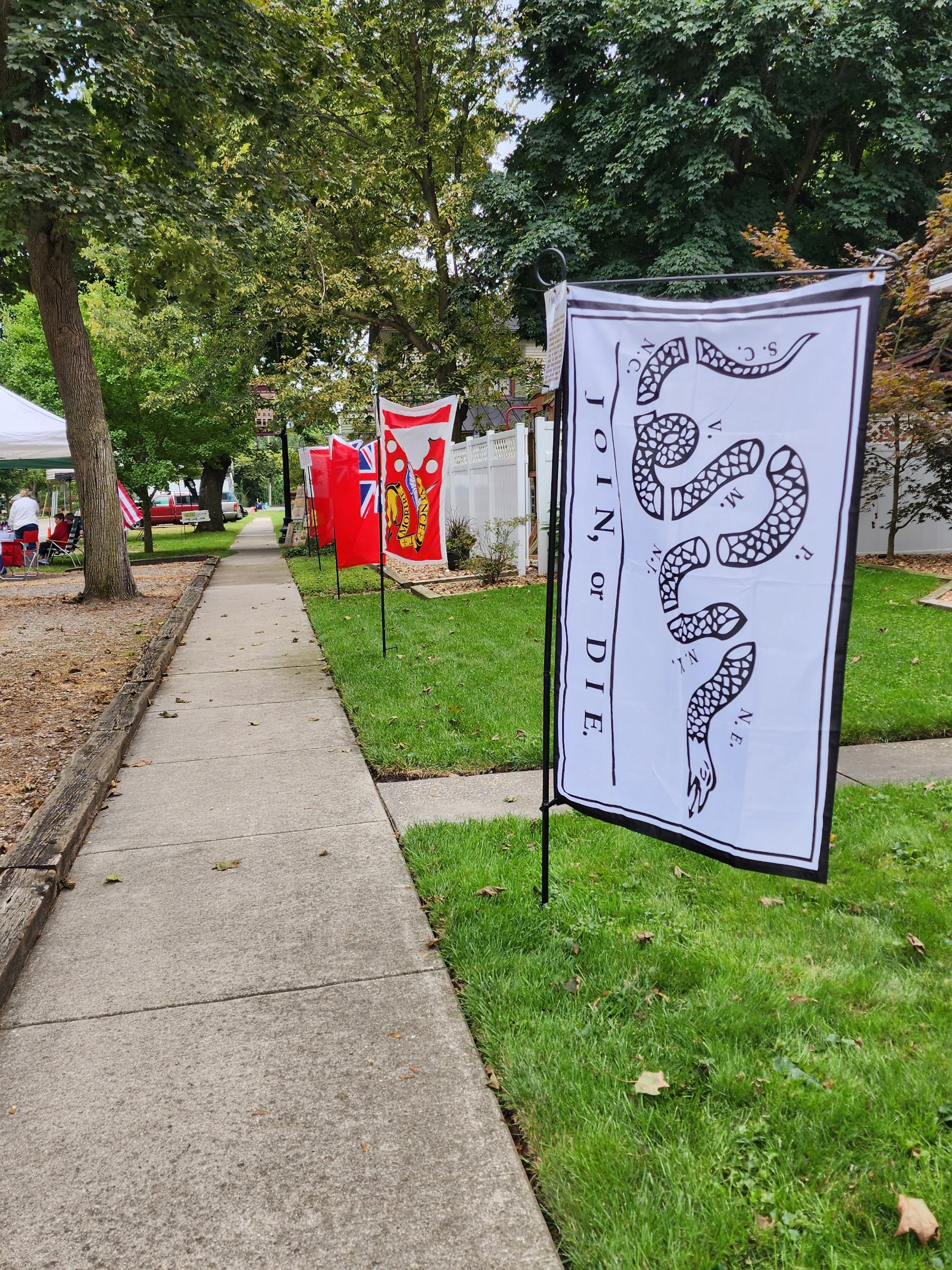
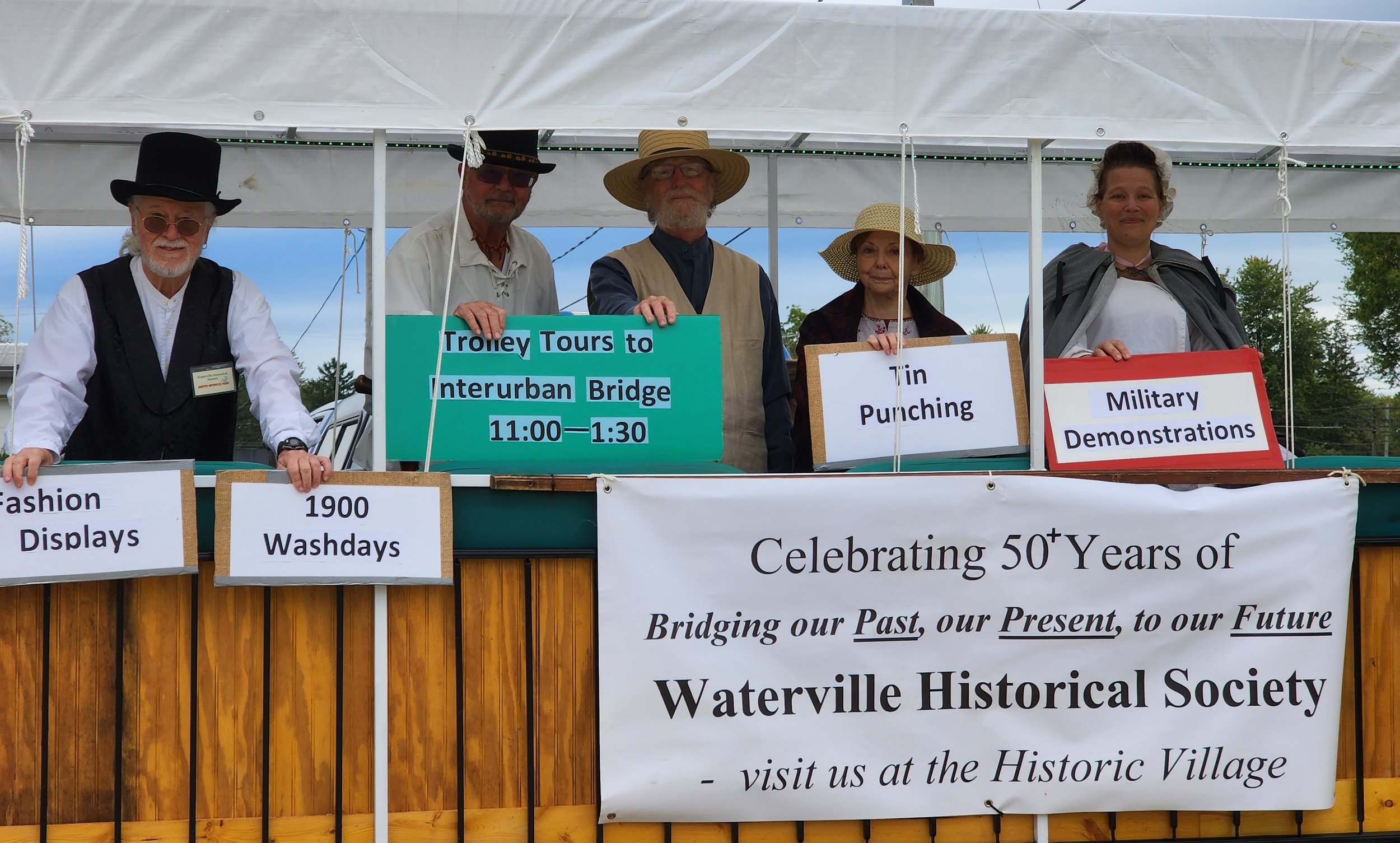
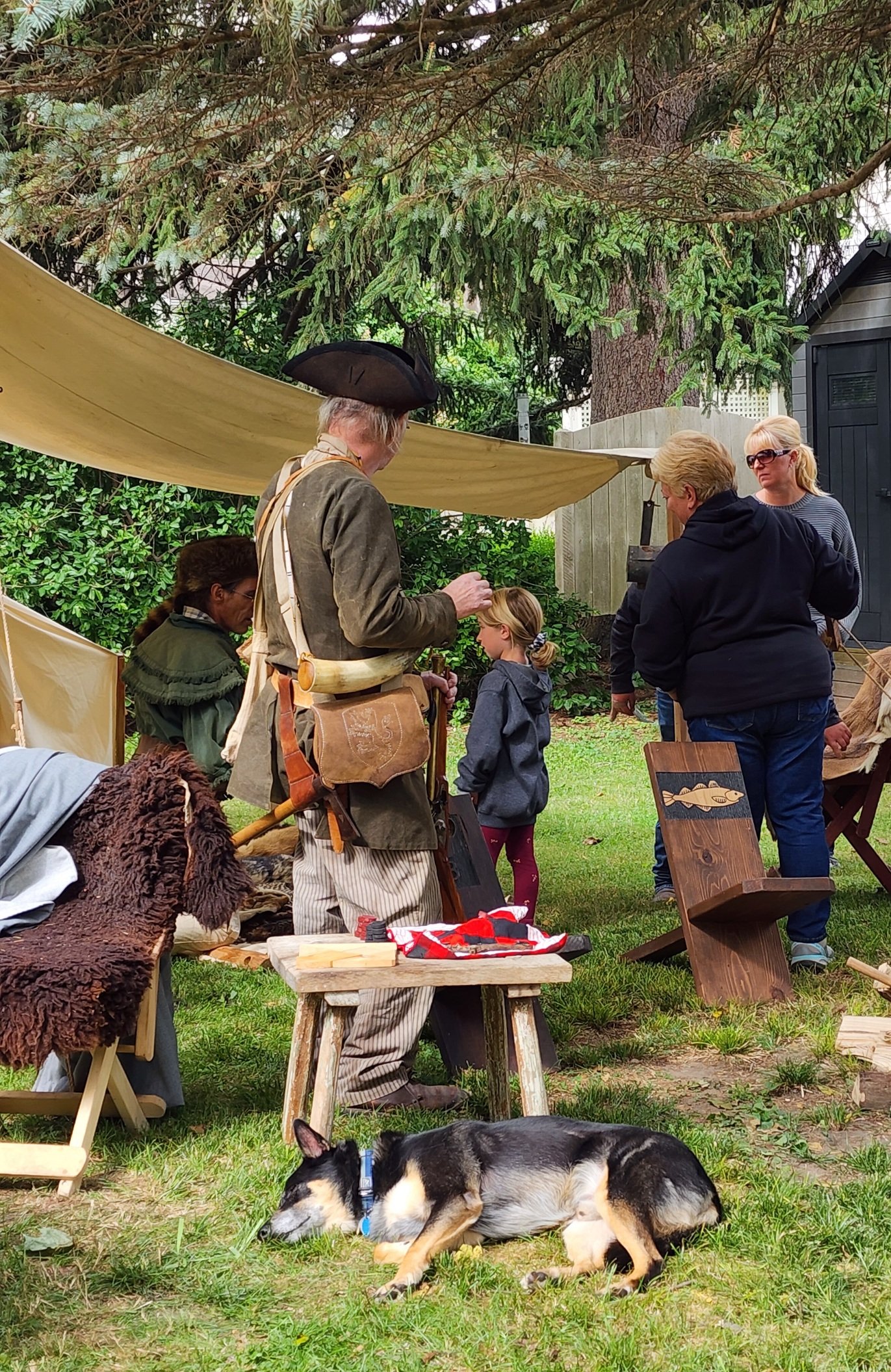
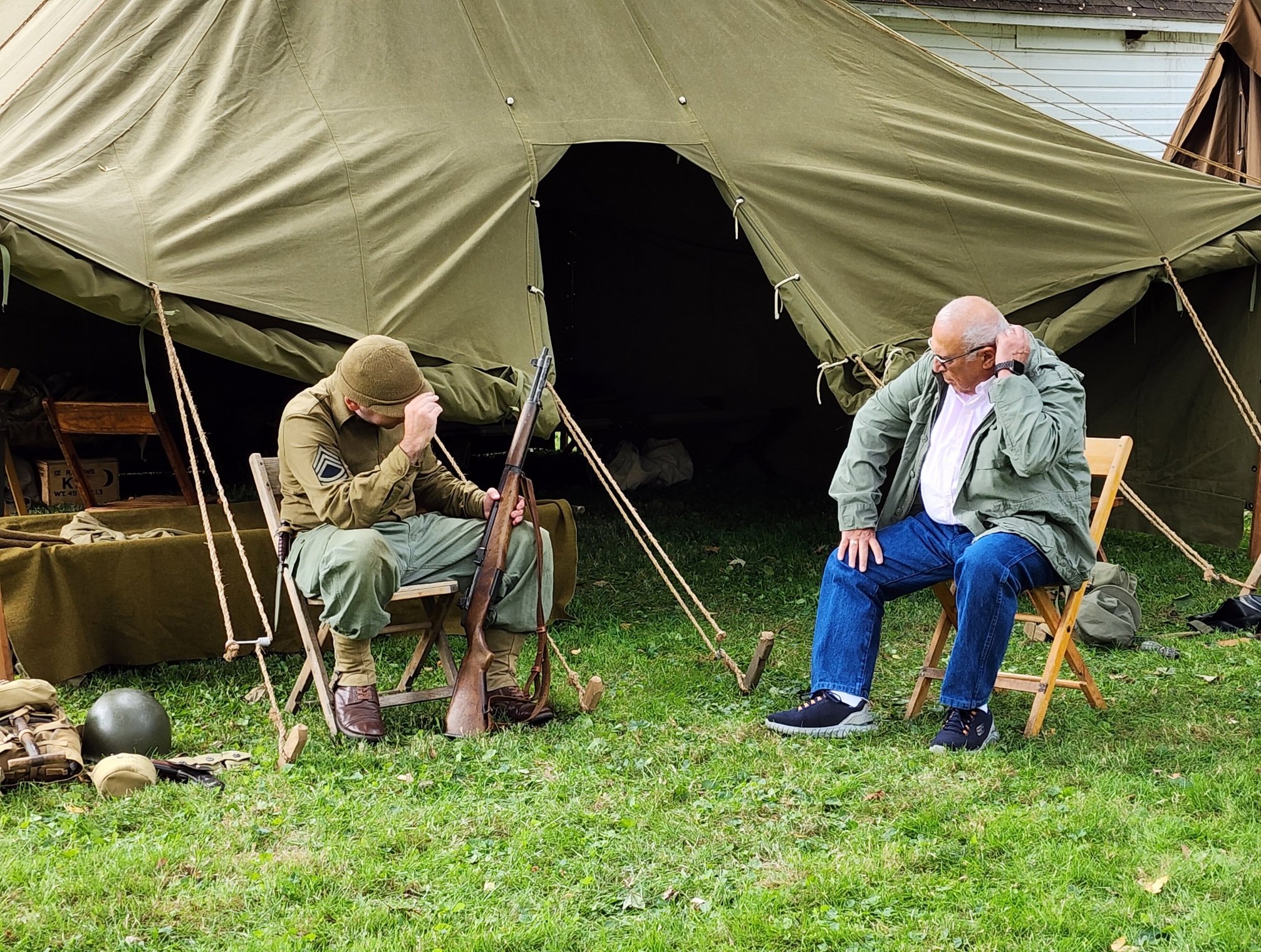
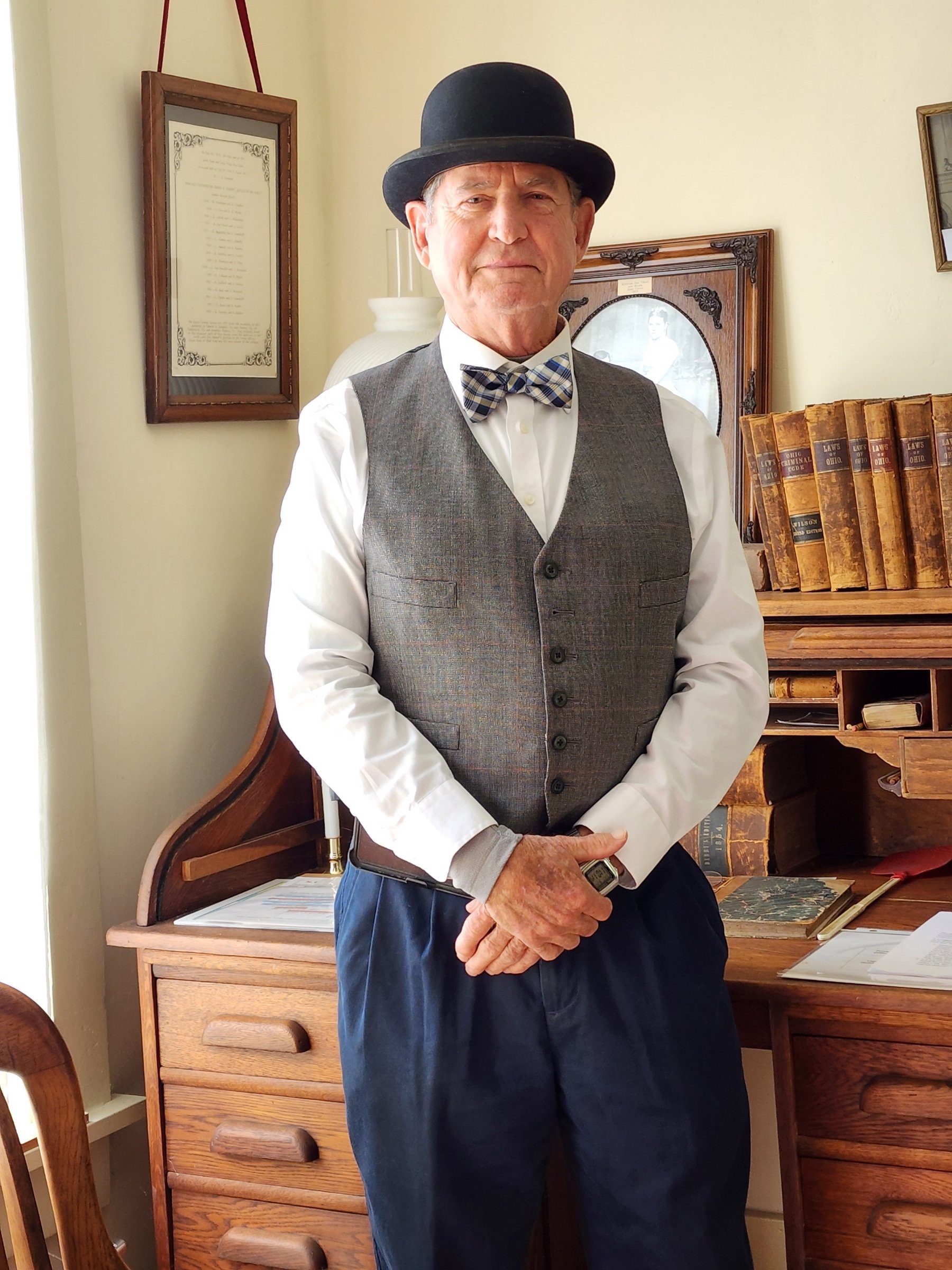
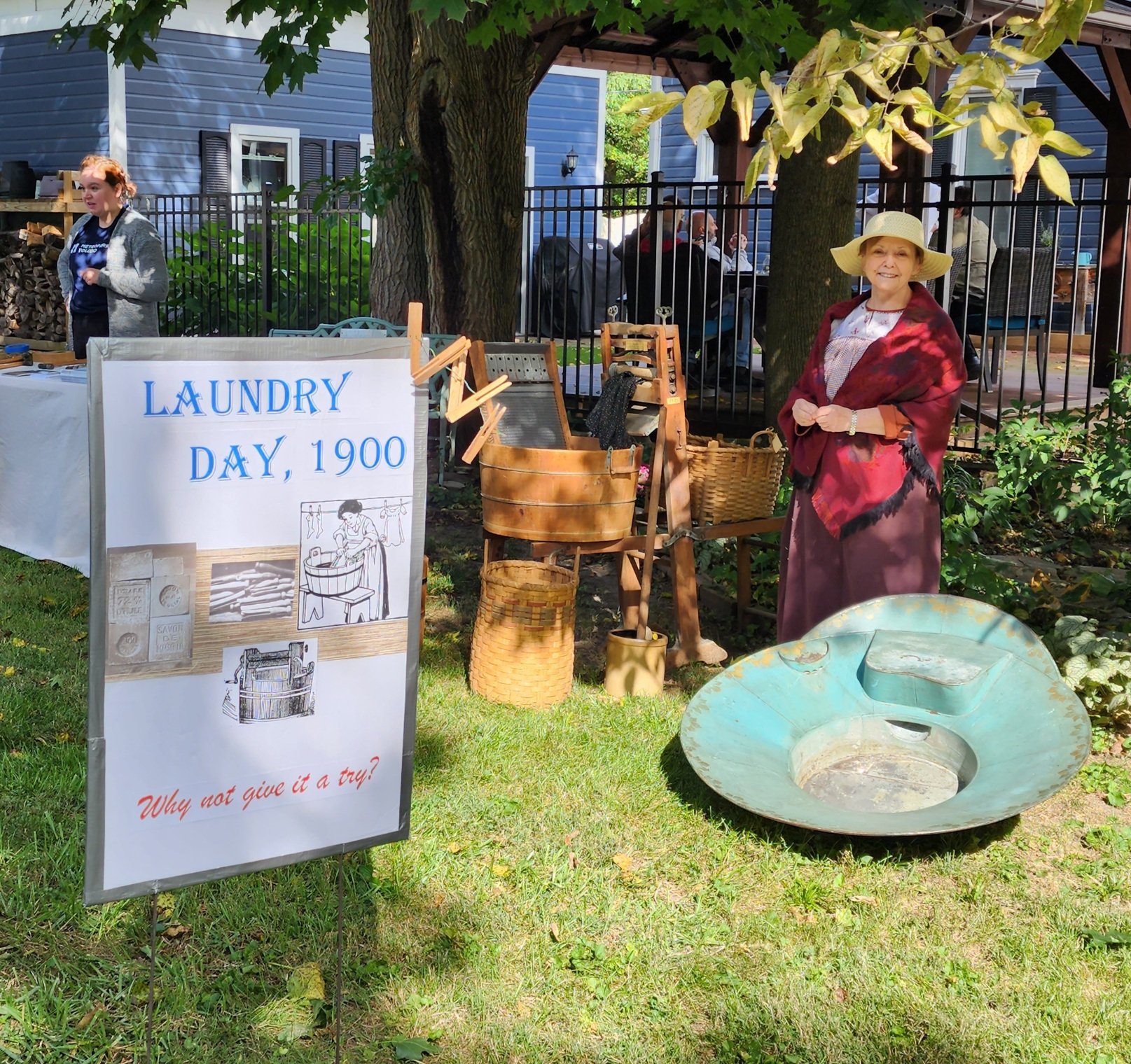
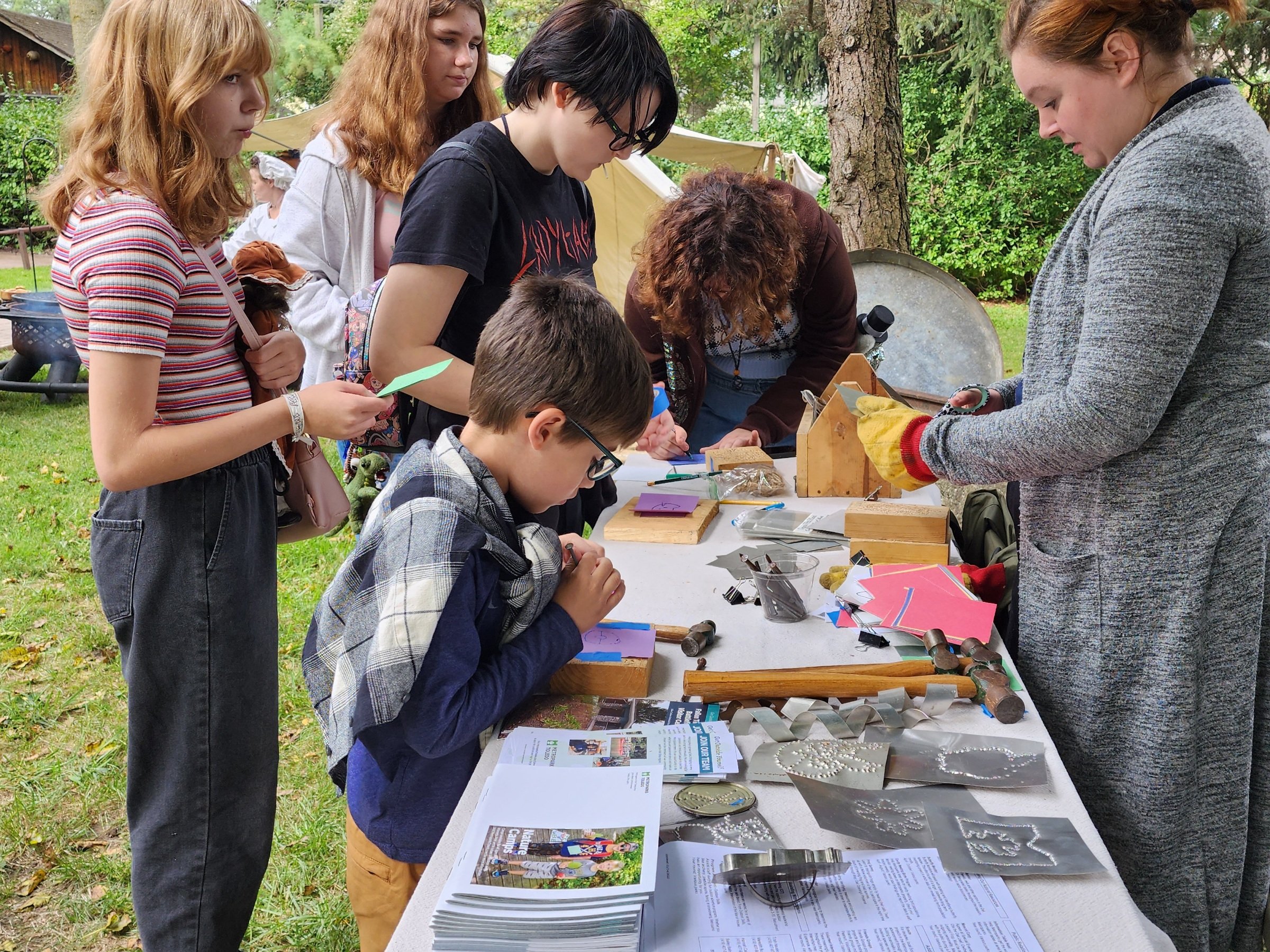
The Waterville Historical Society was a major participant in the town's festivities for RDB. In addition to historical figures tossing treats to children from a horse drawn trolley in the parade, a variety of activities were held on the River Road campuses.
Replicas of historic flags fluttered down River Road. Children were given chances to create their own punch tin designs. Docents, indoors and out of the museums shared vignettes of lives lived in the 1800's. Reenactors of 19th and 20th centuries set up camps on the lawns and artists sold their wares. Even the ghosts participated. A paranormal investigator shared some of his experiences of local sightings and held a search for spirits in the Robbins House in the evening.
Finally, trolley rides to the Waterville Interurban Bridge were available with master storyteller Jim Conrad on board to tell of the Bridge's involvement in Waterville history.
A Map with a Story to Tell
Residing quietly on a shelf in the Wakeman Archives in the Military Corner is a map of the Civil War prison on Johnson’s Island in Sandusky Bay. The map was put there years ago just to show the layout of the prison. A recent inquiry about this map made me, as an archivist at Wakeman, realize that this map has a story behind it’s existence -perhaps several. Since I put the map there, I will try to tell the story.
The map was created by Joseph Kern of Romney, VA who was a Confederate prisoner there from June 14, 1863 until October 30 1863 when the prison became an officer only camp. The map is widely known as the best map of the Johnson’s Island prison in existence and has been widely copied and published. My copy came about because Joseph Mason Kern was my Great Grandmother, Mercy Jane Kern Dye’s youngest brother, therefore my Great, Great Uncle. Joseph kept an almost daily diary of all his Civil War experiences including his map or drawings of the prison and vivid descriptions of prison life. His diary, drawings and papers are held at the University of North Carolina, Chapel Hill, Southern Historical Collection University Archives and were obtained by inter-library loan. The diary itself is another story. For those who are curious, John R. and Mercy Jane Dye moved to live with his father in Hancock Co., Ohio before the war. The Kern family were all strongly Confederate but the Dye clan, who lived only 30 or 40 miles from Romney in northern Virginia were, all strongly Union and helped create the new state of West Virginia. Obviously this was a torn family, but the marriage survived and John R. never had to join the war and fight his in-laws.
So what has all this to do with our local history? Many of our local men served at Johnson’s Island, building the prison and fortifications both on the island and in Sandusky, and guarding prisoners. Most of these men served in the 128th O.V.I which was formed in December of 1863 from four existing companies from 1862 known as “The Hoffman Battalion.” The 128th was expanded by six more companies in January 1864 when the command grew increasingly nervous about southern attempts to free the prisoners by invasion from Canada. These men endured the biting cold winter doing heavy construction work on new fortifications while still doing guard duty. Some of our local men we have on record serving with the 128th OVI are: Jacob Disher and Royal C. Jones buried in Rupp Cemetery at the corner of Weckerly and Cemetery Road. Henry R. Winslow buried in Winslow Cemetery on Winslow Road near Weckerly Road. William Bird buried in East Swanton Cemetery on Scott Road #107. James B. Aumend, George W. Williams, Pius L. Shepler, Jacob C. Myers, John Foster, Conrad Miller, John W. Bradley, John M. Jones, William K. Knight, Francis M. Heath, William K. Burnett and John A. Mayer buried in Whitehouse Cemetery on Cemetery Road between Weckerly and Route 64. There are probably more. That makes our near-by landmark the Confederate Cemetery and the few remains of the prison on Johnsons Island an important part of our local participation in the Civil War. If you have never visited Johnson’s Island you should, especially after Memorial Day.
If you have never visited the Wakeman Archives and viewed our Civil War collections please consider this article an open invitation. We are open every Wednesday from 10 A.M. until 2 P.M. and the last Saturday of April, May, June, July and August from 10 A.M. to 2 P.M. We are located in the upstairs of the Wakeman Hall.