
HIGH SPEED RAIL --100 YEARS AGO
It was in the late 1800s that our technological age began. The age of steam began to yield to other sources of power. We learned how to generate and harness electricity as one of these. Powerful electric motors were invented and quickly put to use for locomotion. Electric streetcars and railroads began to appear on the landscape in the 1890s. The first decade of the new century saw investors and entrepreneurs crating new electric railroads at a feverish rate and the interurban rail lines were built. For the first time in history the rural folks in the countryside and the people in cities and major towns were generally less than an hours comfortable ride apart. Farmers could go shop in the city and be back home on the same day. The farm produce and perishables could reach the city market in hours. These speedy little rail cars were built as luxurious passenger carriers or to handle freight. Some did both. Some had top speed near 100 mph – on a straight run of course.
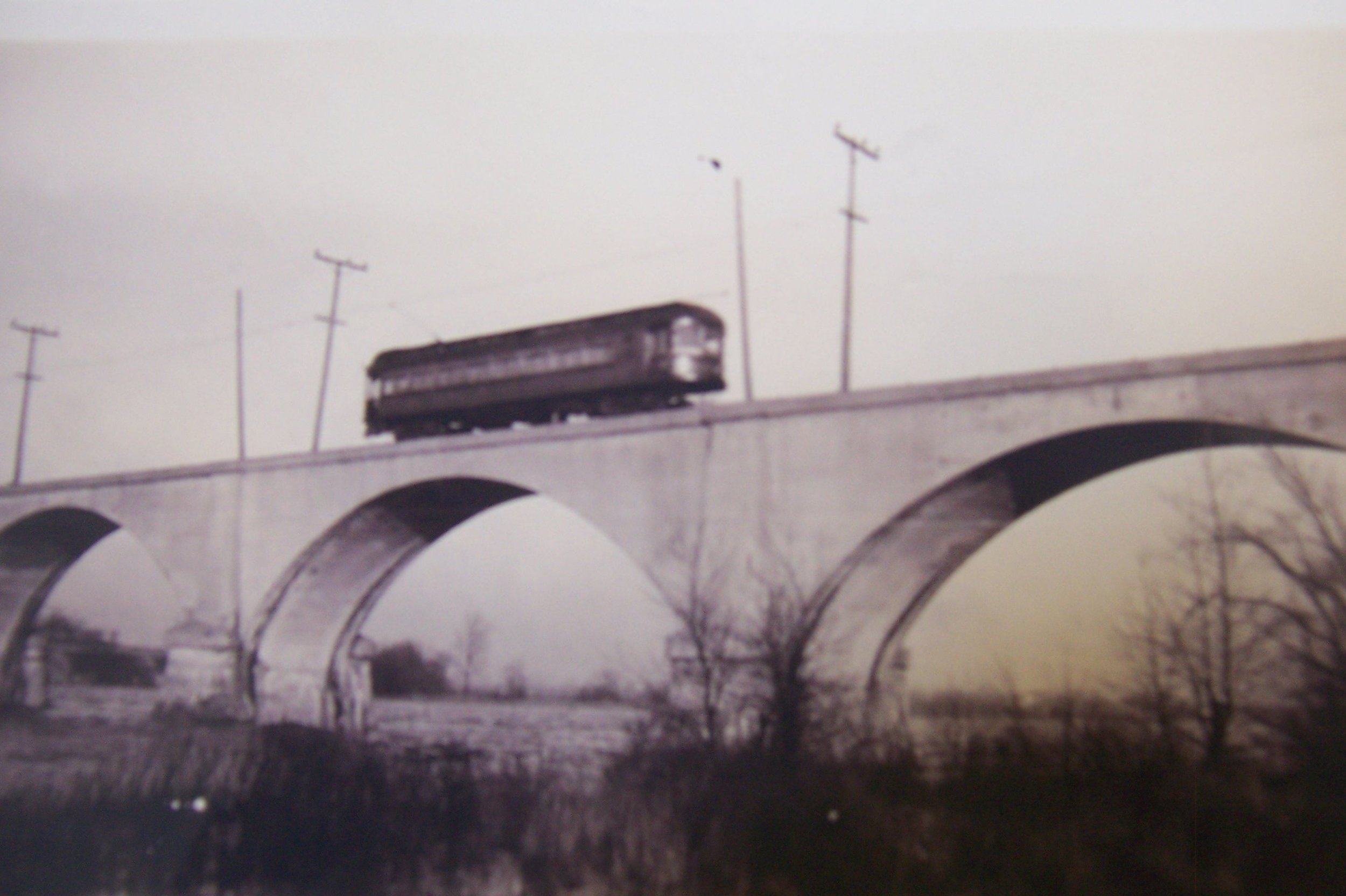
Our experience in Waterville with electric rail came early on. In 1901 an interurban line was built between Waterville and Maumee, with the intention of extending to Napoleon. This extension was never built and the line ended abruptly at River Road and Mechanic Street. This ill-fated line was built extensively in the flood plain and close to the river, so experienced frequent wash-outs and occasionally the trolly was trapped in ice during spring breakups. Nicknamed the Pumpkin Vine due to frequent twists and turns the line was finally abandoned by 1913. Still the ride to Maumee with connections from there to Toledo or other places was appreciated by Watervillans. Our greatest claim to interurban fame came in 1907-1908 when the Toledo-Lima Electric Railroad built the famous Roman arch bridge across the Maumee River at Roche de Boeuf. This bridge, the subject of so much recent controversy and now scheduled by O.D.O.T. for demolition, carried the interurban cars over the river, through Waterville and on to Toledo. This line was soon taken over by Ohio Electric Co. and service extended all the way to Cincinnati and the Cincinnati and Lake Erie (C & L.E.) Line was born. This was the longest service route in Ohio and perhaps the longest lasting, finally out of business in the 1939.
Most electric railway lines had a very short existence and very few made a profit for their investors. So why did this wonderful invention go bust? Blame that on the other great technology that grew up at the same time. That would be the internal combustion engine and the rise of the automobile in the 1910-1920 decade. The motorcar was not tethered to a wire and track and the owners could make their own schedule. They were not as fast as the interurban car but didn’t need to make frequent stops and went directly to the driver’s destination. Public demand for better roads made motor travel easier and motor trucks took on the freight. So that is where we are today. Crowded highways clogged with trucks and traffic jams, but we are married to our automobiles. Perhaps sometimes we survey our situation and wish we had that speedy luxurious little interurban car to whisk us to Lima, Columbus or Cincinnati around all that traffic.
Authors Note: To help preserve the many interurban bridge pictures that the Wakeman Archives has in their collections, we have received a grant from the Ohio Historical Records Advisory Board to buy a new computer, scanner and update our PastPerfectOnline to be able to put our pictures on the internet. Look for them in the coming year as we update our files. We thank them for our grant and are looking forward of putting even more of our collection online.
20th ANNIVERSARY OF WAKEMAN ARCHIVAL RESEARCH CENTER
The Wakeman Archival Research Center is celebrating it 20th year as a repository for family history and local history of this area. We have much history of the founding of the village of Waterville until it was finally made a city when the census recorded a population of over 5000. John Pray founded the village in 1831 and we have much history on this family and his relatives along with other families that have donated their genealogy to us. We are always looking for information in the paper and donations to make this one of the best genealogy research places for Waterville residents. Of course, genealogy isn’t the only thing we have, as historical research of the area is also very much in evidence at the archives
In 1997, Waterville Historical Society bought the Wakeman Masonic building at the corner of Farnsworth and the Anthony Wayne Trail to prevent Rite Aid from buying it and tearing it down. After extensive remodeling we were able to make a small replica of a Canal Store in the front of the building and a meeting room downstairs plus remodeled the kitchen. Upstairs we decided we wanted an Archives for all of the paper-based items the historical society owned. Members brought things that had been stored in their homes and from the Robbins and Sargent House Museums upstairs to the Wakeman. An antique table was lengthened to make a place for organizing the many pieces of paper and items. Desk were donated by the Waterville Bank, bookcases donated by BGSU, computer and printers donated and the PastPerfect Museum Software was recommended and donated. The volunteers working were Nancy Myerholtz, Neva Porter, Lora Beckwith, Steve Charter, Phyllis Witzler, Mary Agee, Verna Rose and others. We were up and running now, to go through the many boxes and items piled high on the table. We received two grants to help us learn how to archive the many items and to buy supplies. We had a grant for a college student to work with us inventorying all of the items we own. Our Collection Management requires that the Archive, with their Past Perfect Museum software, are required to inventory and photograph every item that WHS owns in all of our museums and the Archives. That was a big project and John Rose and Adam Tharp took the job on for the Robbins House. Later John would continue, with others volunteering at times, to do the Sargent House and Cobbler Shop. The program is able to place the exact location of the item so if we need it for any reason we can walk to the item and pick it up.
By 2001 we were open to the public by appointment and also answered questions by mail. In 2002 we decided to be open to the public every Wednesday and later we were open on some Saturdays as well. We will open by appointment if someone can’t come on our open days. We continue to be open every Wednesday from 10-2 and the last Saturday of the summer months from 10-2. Any updates on open days will be shown in the website at www.watervillehistory.org . Always look for the open flag or the open sign. We won’t put the flag up if it is raining or too windy. We would love to show you around and come and research your Waterville families. We have information on families that lived in the Waterville area, were buried in one of the local cemeteries, member of a church, were a member of the Masonic family or I.O.O.F. We have information on clubs, miliary members, American Legion, etc. Recreation was big in Waterville and we have records and pictures from them, plus the square dance club, school clubs, school plays from the Waterville High School, diplomas, picture of the school, teachers, and students. We have memorabilia from the Waterville and AW schools, Waterville businesses, Masonic members, scouts, WW I and WW II memorabilia. We have lots of maps and pictures of the building of the Roche de Boeuf Bridge. We also have an extensive photograph collection. We continue to accept items from the Waterville area that fits into our collection policy.
On Wednesday, April 20th we will be having a Program at the Wakeman Hall at 7 pm plus on zoom about the Wakeman Archives. If you want a zoom code contact Julie Wiley by April 19th at jwiley@rcolaw.com
Where is Main Street, Waterville?
John Pray established the village of Waterville in 1831 astride the stagecoach trace between Fort Defiance and Fort Detroit, which naturally followed the earlier Indian trails connecting their villages along the Maumee River and beyond. Naturally then, this part of the trail from North Street to South Street on his early plat became “Main Street” (John, we must remember, was a practical New Englander.) The primary business opportunity for those pioneers who built along Main Street was to cater to travelers along this route. Most of those early buildings built as “hotels” or inns still exist. Pray’s Columbian House, the Pray-Starkweather House built by Oliver Pray in 1837, and the Wabash Hotel, built between 1835-1836 just across the road from the Columbian House all exist today, although the Wabash was moved over to Second Street in the 1850s. Only twelve years later the Wabash and Erie Canal (to later become the Miami and Erie Canal) opened for business. Now a canal boat ride was much more comfortable, more reliable, and probably a bit faster than the stagecoach or horse drawn wagon, so the hotel business declined on Main Street. Businesses grew and thrived on Third Street which ran next to the canal. Stores grew to trade with canal boat captains and passengers. The thriving businesses on Third Street became the main business district even though Main Street down by the river retained its name. Even the blacksmith moved from Main Street up to the corner of Wood and Second Street to be closer to the action (It became Graf’s blacksmith shop in the 1880s.)
Time and history marches on and by 1900 the canal was nearly out of business, done in by the way more efficient railroads. The Third Street businesses were well established and continued to thrive, except for the big Pekin Mill at the north end of Third Street which totally depended on the canal not only for power but to transport its products. The mill was torn down about 1916. People could be transported from Waterville to Toledo in 20 to 30 minutes on the electric interurban railway. The electric railway soon gave way to the rise of the automobile, as people preferred personal transportation over public transport. This development however gave Waterville’s Main Street a second life. Highways carried many more people, now free to travel wherever they wanted to go. River Road was sometimes called the Toledo-Napoleon Road. The canal remained in place until the 1930s in the Toledo-Maumee end and was not filled in through Waterville until 1950, so the River Road through Waterville became Route 24. Route 64 was routed over the Waterville bridge and along Main Street to Wood Street (now Farnsworth Road.) With this highway traffic service stations and restaurants proliferated along our Main Street, from North Street to the intersection with River Road at Roche de Boeuf until 1950 when the newly completed Anthony Wayne Trail carried all Route 24 traffic. At some point we stopped officially using “Main Street” as the name of the street through our town. Today we have no “Main Street” and it is North and South River Road. The street is quiet again and mostly residential. Third Street continues to be our uptown business district and has hosted a great number of business enterprises over the years. Should we miss not having a “Main Street” in our town? John Pray’s original Town Square will soon open again as a riverfront city park.
Note: Information on many of the “Main Street” businesses on 3rd Street and along River Road can be found at the Wakeman Archives.
The Soldier Monument in Wakeman Cemetery

In the late 1800s, just 20 years after the end of this nation’s great Civil War, the survivors of that conflict were just coming to grip with the enormity of what they had endured. They were also increasingly aware of the numbers of veterans who were dying young of illness or injuries received in the war. Nearly every community, including Whitehouse and Waterville, had an active G.A.R. (Grand Army of the Republic) chapter. Now these groups were pressing for memorial monuments and statues to be erected so the sacrifice of so many lives would never be forgotten.
The veterans and prominent citizens of Waterville in April of 1886 met to form what they called the Memorial and Monumental Association. Their primary goal was to have a monument erected in the Waterville Cemetery to honor the Waterville men who died in all wars. Secondarily they would see that proper Memorial Day ceremonies were conducted each May. This group went right to work in a flurry of April and May 1886 meetings, established a constitution and by-laws and, on the advice of a lawyer, incorporated. There were fifty five charter members, each paying an annual dues of twenty-five cents. The first several meetings saw the formation of committees to procure the cemetery lots, donated by the township trustees, for a monument (Lots no. 117, 118, 119, and 120 were selected). Another committee was to decide the size and depth of the excavation for a foundation and to procure stone for the foundation to be donated by John Lansing Pray, Civil War Veteran, then owner of the Whitehouse Quarry. This stone was to be hauled to the site “Tuesday next” according to the August 6, 1886 minutes of the society. In May of 1887 they voted to hire someone to finish the foundation. Many years followed as they tried to raise money to finish the monument. They tried, to no avail, to get government help, to issue bonds to raise money for both Waterville and Whitehouse monuments. Without government help both groups apparently decided to each go their own way, to raise the money by local subscription. This was a long slow process. It was not until May of 1896 that they hired George Williams of Whitehouse to add two courses of stone for the monument for the sum of $40. They also on that date ask H.F. Van Fleet and J.L. Pray to prepare a list of names to be placed on the monument. This list was completed and arranged by committee on May 12, 1900 and the township was ask to contribute $250 from the H.H. Wakeman fund interest to the monument fund. Finally on May 29, 1900 the group accepted a proposal from the Monumental Bronze Co. to furnish the soldier statue to top the monument for a sum of $1085 even though there was only $859 in their fund. A final fund raising drive was successful and the monument as it still appears today was completed in 1901. The M and M Association disbanded and donated the balance of their funds, $66.39, to the J. Fisher Pray Post of the G.A.R.
Author’s Note: 1. The minutes book of the M. and M. Society, with lists of members, may be viewed at the Wakeman Archives, although a bit fragile, by anyone interested in more detail. 2. There is a recently formed organization called the Lucas County Cemeteries Historical Association, or LCCHA, formed to create a database of all of the graves in every Lucas Co. cemetery, cross-referenced to the www.Findagrave.com website, in order to make locating a person’s grave easier. (See The Mirror newspaper Jan. 6, 2022). One of our volunteers is working with this group for the Wakeman Cemetery using the Sexton’s records and the research and book “Walking Through the Wakeman – a reading of the gravestones in Wakeman Cemetery” by John and Verna Rose. This is a monumental task given that most older cemeteries have very poor records. The LCCHA website can be accessed at: http://charles_w.tripod.com/lucascountycemeterieshistoricalassociationlccha/index.html or from the WHS website under the “Links” heading.
MERRY CHRISTMAS TO OUR READERS
The Waterville Historical Society and those of us who try to fill this space with entertaining but historically accurate stories wish all of our readers a very Merry Christmas and a happy, prosperous and healthy New Year. For those of you who have included Mistletoe in your Christmas decorations (or those who wish they had) let me include some information about this lovely plant, borrowed from the December 20, 1978 issue of the Anthony Wayne Herald.

Mistletoe, first of all, is a parasitic plant. It grows in certain hardwood trees where it draws nourishment and moisture from its host. A severe infestation can kill the host tree. It does have chlorophyll in its leaves, so it remains green and is capable of producing some of its own food. Since the ancient people couldn’t figure out how this rootless plant could survive they figured the plant must have magic powers. Many superstitions and myths have developed around Mistletoe over many generations of many cultures. It was thought to have curative powers, to be an antidote for poison, to ward off evil and even to aid conception for barren women. The ancient Druids and Celts considered the plant to be sacred and only a priest could harvest the plant. A kiss under the mistletoe may date way back to Norse mythology which dedicated the plant to the goddess of love. So my friends, in this season and in these times we need all the love we can muster so let’s hang more mistletoe --- or love one another with or without a magic plant. Merry Christmas and a Happy New Year.
IS IT BUTTER OR MARGARINE IN WATERVILLE, OHIO?


One of Waterville’s short lived and little-known businesses was the Waterville Butter Co. The company was located at 913 Farnsworth Road. Waterville Township assessment records show that in 1910, the building was owned by the Waterville Elgin Butter Co., was valued at $2350, and the land at $140. The last book of minutes for the butter company was owned by Midge Bucher Campbell, of Waterville who was a well known Waterville historian. Her grandfather, John Findlay Torrence Isham, was the secretary. The book shows in 1912, the newly elected officers were Peter P. Suter, President, Fred Dose, Vice President, William Haskins, Treasurer, and Mr. Isham, Secretary.
Stockholders were Fred Dose, John Walbolt, James Lytle, Lewis Fausz, John Pfeifer, C.W. Isham, David Studer, Joseph M. Noward, William Lahr, Joe S. Barnes, Henry Miller, Theron Disher, Lewis Ammon, Will Haskins, Peter P. Suter, George D. Heller, and Martin Woodling. John Disher was a wagon driver, collecting milk from surrounding farms for the creamery. Although no one recalls that the creamery ever made ice cream, there are entries for sugar purchased from J. W. Rupp - Sugar for $12.55; from Ostrander - Sugar for $22.76, 6 barrels of salt from the Colonial Salt Co. for $8.88, and bills for vanilla. J.W. Rupp was Herman Rupp’s father, and owner of the Rupp Canal Store.
The old butter company had its business struggles, and in 1912 the business was not predictable. At one time, the directors were exploring the Chicago market as an outlet for their butter, however this never materialized. In 1912, the directors were even trying to find a buyer for the business, due to several entries in the secretary’s book labeled “loss shortage,” one for a sizeable $114.52. They had to hold special meetings several times, to find the money in order to pay the bills. The building had a 7 per cent mortgage at the time. Some of the authorized bills for payment were the telephone, with the high cost of $3 – the average cost of the telephone at that time was $1.65. Bills were paid to the Citizens Telephone Co., which was on Mechanic Street, upstairs over the post office.
Eventually the stockholders followed the recommendations of the board of directors and dissolved the company. They had no buyers for the business. On June 24, 1916, the short-lived Waterville Butter Co. ceased to exist, but this is not the end of the history of the building that Waterville Butter Co. occupied. The building was sold to Albert and Addie Shertzer, and their son, Lee started a garage. In 1933, the Shertzer Garage was listed as Sunoco Gas and Oil Station. If you looked closely in 1978 you could still make out the letters “Shertzer’s Garage,” and underneath that, faintly, the “Waterville Butter Co.” The Shertzer’s were the grandparents of Waterville residents Carolyn Heringshaw and Harriet Metcalf.
The Shertzers built an addition to the east side of the building in the early 1920’s. The office for the Ohio Electric Interurban Railway (Lima-Toledo Railroad) was moved across Farnsworth Rd. to the new addition from the Waterville Machine Co. building. Addie Shertzer operated the ticket office until the Electric Interurban Railway was abandoned on November 19, 1937. Addie died on April 16, 1955 and Albert Shertzer died August 17, 1955.
In December of 1978, Robert Rimer who was president of the Rimer Enterprises of Waterville, then owner of the property, won city council approval for a special use permit allowing him to make three apartments out of the old Waterville Butter building. During the process of renovation the stables used at one time for horses and wagons, were torn out of the garage. There was still an “inside outhouse” toward the rear of the garage. At the time of this article in 2021, the old Waterville Butter Co. building is still three apartments. If anybody was any pictures or information about the Waterville Butter Co. the Wakeman Archival Center would like to see it.
Pearl Harbor Day -----The date which will live in Infamy


December 7, 1941 found Waterville residents peacefully going about their business as were residents of the towns and cities around the nation. Most were still suffering the effects of the Great Depression, which had been lingering for the past ten or eleven years. The news came slowly. After all, dawn in Hawaii is much later in the day in Waterville. Most heard it on the radio, perhaps not until the evening news. Some were not aware until the next day even though most newspapers put out special or extra editions of the paper. News traveled much slower in those days than we are used to today. The Empire of Japan had conducted a surprise dawn attack on our naval forces at Pearl Harbor on the Island of Oahu in the Hawaiian Islands. Much of our fleet was sunk where the ships lay at anchor. One hundred eighty eight aircraft were destroyed, most on the ground and 2,403 Americans were killed. That is more than twice the entire population of Waterville in 1941. Suddenly we were at war and the “Greatest Generation” were not even aware of what they would be called upon to do. The next four years were times of great trial and tribulation and the world would never be the same.
In 1991 the Waterville American Legion through efforts of the Peinert Family received an American flag that had flown over the Battleship Arizona at the USS Arizona National Memorial at Pearl Harbor and the accompanying certificate as shown in our photographs. These artifacts are now kept on display at the Waterville Historical Society Wakeman Archives.
Fire! Ring the Bell

This picture was taken on the east side of 4th Street near Farnsworth Road, the location of the old Fire Hall, now a part of the John Pray Park. The men are: 1. ?; 2. Liberty Fredericks, 3. Charles Wilford, 4. Abe Fredericks, 5..Ulysses Walbolt, 6. Pete Fisher, 7. Alden Walbolt. Men sitting left to right 1. John Myers, 2. Jacob Fredericks, Sr. 3. George Wilson, 4. Jerome Rulepaugh and 5. Vern Maylor
For over 100 years our Waterville predecessors used fire for all creature comforts-light, heat and cooking. Candles, oil lamps and eventually even gas lights to light their homes. The open hearth fireplace gave way to the more efficient wood or coal stove for cooking and heat. Not infrequently, however, controlled fire escaped to cause misery and destruction. When a dwelling or barn caught fire little could be done except throw buckets of water on the fire. This of course required a near-by source of water. A town or village might be able to muster enough neighbors to form a bucket brigade to deliver more buckets of water faster. Large eastern cities had organized fire companies that would bring buckets, ladders and men to fight a fire for a fee or to subscribers only (fire insurance?).
Waterville, like all other communities, operated under this too often ineffective system. The Villagers in 1889 petitioned the village council to pass an ordinance to organize “a company to be called the Waterville Pail and Ladder Fire Company” and to buy a sufficient number of pails and ladders for their use. This petition, held in the files of the WHS Archives, was signed by 27 of Waterville’s best known citizens, The council apparently not only agreed with the petitioners but sought to do even better. We were, at this this time in history, well into the mechanical age. Water pumps of many kinds were available. Just a month after the petition was received, the village had an agreement (also in WHS file) for the purchase of a “piano style Fire Engine” manufactured by Rumsey and Co. of Seneca Falls, N.Y. This was a manually operated water pump mounted on a horse drawn wagon. Also include was a one axle hose cart with a reel to hold 250 feet of hose and 1000 feet of fire hose and couplings. Total cost quoted for all this was $1350. This was a huge sum for a small village and there seems to be a hole in the available records beyond the above. We would suppose that the village would have to create and sell bonds to buy expensive equipment. The photo with this article shows that eventually the above was purchased. The published history of the Waterville Fire Department by Lucile Conrad states an organization date of June 1902. We would speculate that something was done in 1889 to 1890 to answer the people’s petition. Pails and ladders were cheap and there is an undated list of 37 men who volunteered to serve as firemen. The records do show that in September 1892 the Village paid Asher Demuth $50 for a ladder wagon, $5 for eight ladders and $33.30 for 11 days and 1 hour of teaming. September 1895 they paid Charles Graf $9 in rent for keeping the fire wagon. October 1896 they paid William Snyder $2.00 for a fire alarm and 50 cents to A.J. Taylor to put up the alarm. These documents show that some kind of a fire company existed before 1902. The 1902 Fire Department was organized as a fire company as was the custom, with elected officers, a written constitution and by-laws (copy in WHS files) and regular monthly meetings. For those who want to know more, the Wakeman Archives has an extensive file on the history of the Waterville Fire Department.
Ghostly Encounters
Kathy Saco, Fred Goodell, Jim Conrad in front; Kathy Dowd; Abram De Lisle; Jim Herzberg; Kris Goodell; Aggie Ault; Liem Eichelaub; and Alex Bielski
Waterville Historical Society presented another interesting and well-received Ghostly Encounters program. The spirits of residents past talked to current Waterville residents, and others, about the health problems that beset former residents. Doctors Paris and Welcome Pray, our earliest doctors, talked of Ague or Swamp Fever (Malaria) and primitive methods of treatment. They also discussed outbreaks of Cholera which wiped out the towns of Miltonville and Providence. School teachers spoke of caring for all kinds of student ailments and injuries. Dr. Daniels spoke of Civil War surgeries, ignorance of sanitation and the spread of disease among the soldiers. Dr. Babcock also discussed how the same spread of disease killed more soldiers in the Spanish American War than were killed in battle and how the dreadful flu pandemic of 1918-1919 was spread through the ranks and brought home to the U.S. population by returning soldiers from W.W. I. Dr. Waldo Suter and nurse Mildred Barnett talked of making house calls for childhood diseases, the need to quarantine for some serious diseases and of the fearful polio outbreaks. Finally Dr. Suter mentioned how heavy smoking led to his own early demise. The program had an attendance of 137. After the program the Waterville Presbyterian Church invited everyone there for refreshments and to meet the cast.
The following cast portrayed the past residents:
Characters and who played them:
Mattie Lyon: Kathy Saco; Dr. Welcome Pray: Fred Goodell; Dr. Waldo Daniels: Joe Dowd;
Amanda Eastwood: Kathy Dowd; Dr. Harry Babcock: Jim Herzberg; Private Emery Christman: Abe De Lisle;
Charlotte Hutchinson: Kris Goodell; Mildred Barnett: Aggie Ault; Dewey Longstreet: Liem Eichenlaub;
Resident String Section: Alex Bielsk; Jim Conrad: Dr. Paris Pray and Dr. Waldo Suter; Stage Crew: Jim
Stoma and Scott Duncan; Membership Chair: Steve Lauer; Cemetery Sexton: Rory Hartbarger
FILL THE TANK, CHECK THE OIL IN WATERVILLE, OHIO -----PART FOUR


In the earlier years of gas stations they were a service station, there to assist the customer. They would ask you if they could fill your tank up and check the oil and always washed your windshield. Many gas companies would have secret customers to make sure you did a good job and even gave gifts to the persons at the station. Today you fill your own tank! We will be doing a series of articles about the gas stations in Waterville that has been researched by Randy Studer.
SCHEUB GULF STATION @ 702 and 704 S. River Rd. - Gulf Oil Co. bought the property on February 20, 1956 from Dick Farnsworth and built a Gulf gas station and bulk plant on the property. It was operated by John Scheub from Grand Rapids, Oh. In August of 1961, Rolf Oberhaus was the new manager of the station and John Scuheb continued to be Gulf dealer and bulk distributor in the area. In 1964, it was listed as the Coss Gulf Station. On January 31, 1967, Lorraine Oil (Sunoco Oil) from Bowling Green, Ohio bought the 702 and 704 S. River Rd. parcels from Gulf Oil. They used the bulk plant behind the old Gulf station for their customers with oil, gasoline, fuel oil needs in the area. Ernie Blauvelt was the farm service representative for Lorraine Oil in Bowling Green, Ohio and had a Sunoco Station at 37 N. River Rd. Both properties were sold to France Stone Co. on October 23, 1973. The old gas station buildings are now being used by Gerken Products.
C&O TRUCK STOP # 1 – TEXACO – PHILLIPS STATION @ 10110 South River Road - The C &O Truck Stop and Restaurant got its name from the middle initials of the two who built it, Arthur C. Richardson and Kenneth O. Garmenn. Later on Richardson sold out his half to Carmenn. The fuel pumps and station building opened in 1954. The restaurant opened in 1956. In April of 1961, the station was rebranded to Phillips 66 products. The station was still open December of 1990. Date that it closed is unknown. The former restaurant is a gun store now and the garage was demolished years ago. There was another C&O Truck Stop #3 that was located on Rt. 6 Weston, Ohio.
J.L. METCALF OIL CO. & CONRADS GARAGE – BARNSDALL - CITIES SERVICE – CITGO – SUNOCO STATION @ 815 Michigan Ave. - In 1929, Jesse L. Metcalf started a successful business as a bulk station operator and delivering gas and oil products in the area. Metcalf purchased some property at 815 Michigan Ave., with an existing block building on the property. It was converted into a Barnsdall service station which was operated by Roy “Barney” Boggs (1934), Frank Sullivan (1938). Metcalf formed a partnership with Wilbur Klatt in the early 1930’s and it was known as Metcalf and Klatt Barnsdall Service, but later on Metcalf bought out Klatt’s interest in the company in the 1940’s. Starting on June 3, 1946, A.R. “Pete” Launder operated the Cities Service Station and garage. J. L. Metcalf died in March of 1947. His son Bill Metcalf took over the bulk gas and oil delivery business. In 1936, Carl Conrad went to work for the Graf Brothers Garage. In 1951, Carl Conrad bought the business but not the property and moved it to 209 Farnsworth Rd. behind Shepler’s Meat Market. In 1963, the building was sold to Robert Memmer (dba Memmer Ford.) Also in 1963, A.R. “Pete” Launder moved his business from 815 Michigan Ave over to behind his house at 307 South St. in a new building and it was a Gulf gas station. So in 1963, Conrad moved his business over to the J.L Metcalf Oil Co. building on 815 Michigan Ave. Conrad now operated the CITCO Gas Station and garage. Carl Conrad retired in December of 1978. The garage was sold to Richard Wiles. Bill Metcalf retired in 1982. In 1985, Waterville Bodyworks bought the property for their body shop.
Preserving History: The Story of the Interurban Bridge
The Waterville Historical Society has entered into an agreement with Satolli Glassmeyer, founder and producer of History in Your Own Backyard, to produce a video documenting the history of the Ohio Electric Interurban Bridge. Links to the finished video will be sent to all school districts in Lucas and Wood Counties as well as all communities in those counties and 137 other counties throughout the Midwest, and to all historical societies. The video will also be uploaded to the History in Your Own Backyard YouTube Channel which has 11,400 subscribers and 2.25 million total viewers.
The bridge, which links Lucas and Wood Counties, has been in the news recently because of plans announced by the Ohio Department of Transportation to demolish it.
Given both its historic and interesting history, WHS decided that its story had to be preserved. The bridge’s unique design and construction, it service to the surrounding community and its present-day appeal to both photojournalists and artists demand that its significance be documented.
While this is not a fund-raising venture on the part of WHS, considering the interest generated by recent events, WHS would like to provide bridge enthusiasts the opportunity to be involved in this video preservation.
History in Your Own Backyard is sending out appeals for sponsorships to area businesses and governmental agencies and is outlining various categories of sponsorship…however, any donation, no matter the amount, would be appreciated.
The two flyers that accompany this article spell out all of this information and more, including how to contact History in Your Own Backyard should you wish to donate.


FILL THE TANK, CHECK THE OIL IN WATERVILLE, OHIO -----PART THREE OF FOUR


In the earlier years of gas stations they were a service station, there to assist the customer. They would ask you if they could fill your tank up and check the oil and always washed your windshield. Many gas companies would have secret customers to make sure you did a good job and even gave gifts to the persons at the station. Today you fill your own tank! We will be doing a series of articles about the gas stations in Waterville that has been researched by Randy Studer.
RAY’S SOHIO – BP – SUNOCO STATION @ 300 Farnsworth Rd. - Ray’s Sohio gas station opened on August 25, 1961, it was operated by Ray Mathewson from 1961 – 1976. Mathewson moved from 37 N. River Rd. to operate the new Sohio Station owned by Standard Oil of Ohio. Starting in 1976, Dolores and John Weinrich were the operators of the Waterville Sohio Service Station. It was rebranded as BP (British Petroleum) and converted into a BP gas and convenience store. It was a Gas and Go Station. It is a now a Sunoco gas and convenience store now.
GRAF BROTHERS GARAGE INC. – MOBIL STATION @ 205 Farnsworth Rd. – The Graf Brother’s Garage had its beginnings as a blacksmith shop in 1840. It evolved into the C.L. Graf and Son “Brick Garage” automotive repair shop, machine shop, Ford, Chevrolet, and Willys-Overland (Willys-Knight) dealership and Mobil gas station. Later on Ernie Graf would take over the business. The business closed in 1951, Carl Conrad who worked for Ernie Graf since 1939, purchased the business of the Graf Brothers Garage and moved it to 209 Farnsworth Rd. behind Shepler’s Meat Market. A few companies leased space in Graf’s Garage over the years like Shop of Siebert Company, Waterville Machine Co. and Toledo Rubber Products Corp. In 1962, Principal Business Enterprises, Inc. opened for business in the location and in 1969 they bought the building. On October 10, 1975, Ferd Seiple and Ron Martin dba Buckeye Associates bought the buildings from James Mitchell (Principal Business Enterprises, Inc.) and remodeled the buildings into Peddlers Alley with small retail shops with a restaurant.
LAUNDER & SONS GULF STATION @ 307 South St. – This was the new location for Albun R. “Pete” Launder & Sons (Darrel) Gulf Gas Station, which opened in May of 1963. His old location was at 815 Michigan Ave, the old J. L. Metcalf gas station building. Ed Peske (former operator of the Ed’s Shell Station) leased the building and business in May of 1973, dba Ed’s Sales and Service. He did automotive repair, used car sales and sold Gulf Products. Later it was operated by Scheub Oil. Then it was Lloyd Brothers Off Road Center and then the building was sold to John Spilker in 2014.
ED’S SHELL STATION – PENNZOIL STATION @103 Anthony Wayne Trail – The Shell Oil Co. built and opened a service station in November of 1960. It was operated by Ed Peske. At some time (late 1960’s) the station was remodeled into the Shell rancher design. A third bay was added to the station. In that bay was a front end alignment machine. In April of 1973, Ed Peske went out of business. Kevin Enright leased the station from Shell Oil then it was Kevin’s Super Shell. Later on it was Kevin’s Pennzoil Gas Station, Barneys Convenience Store and now it is a Circle K convenience store and gas station.
OHC Grant and Donations to WHS Fund New Wakeman Hall HVAC
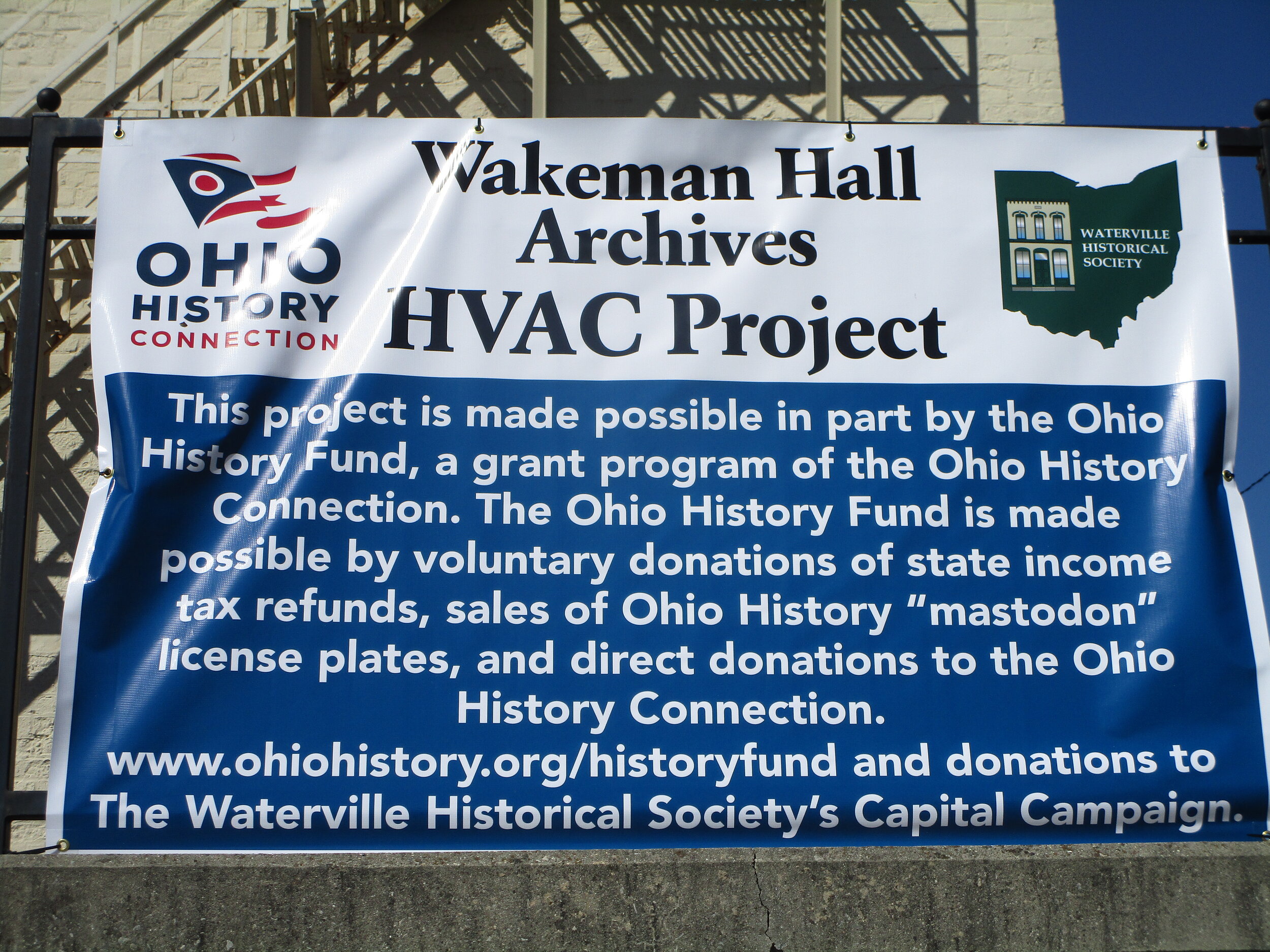
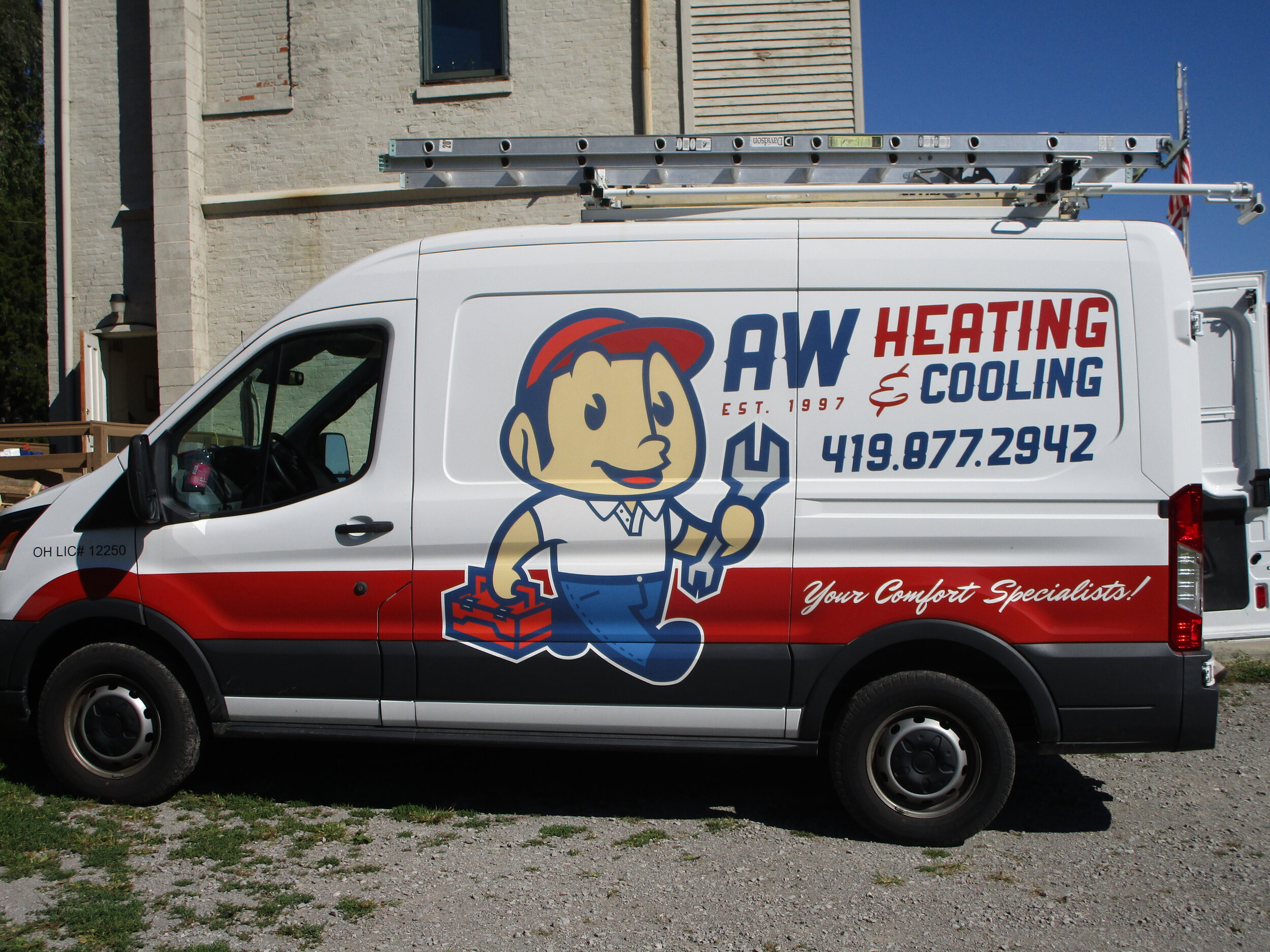
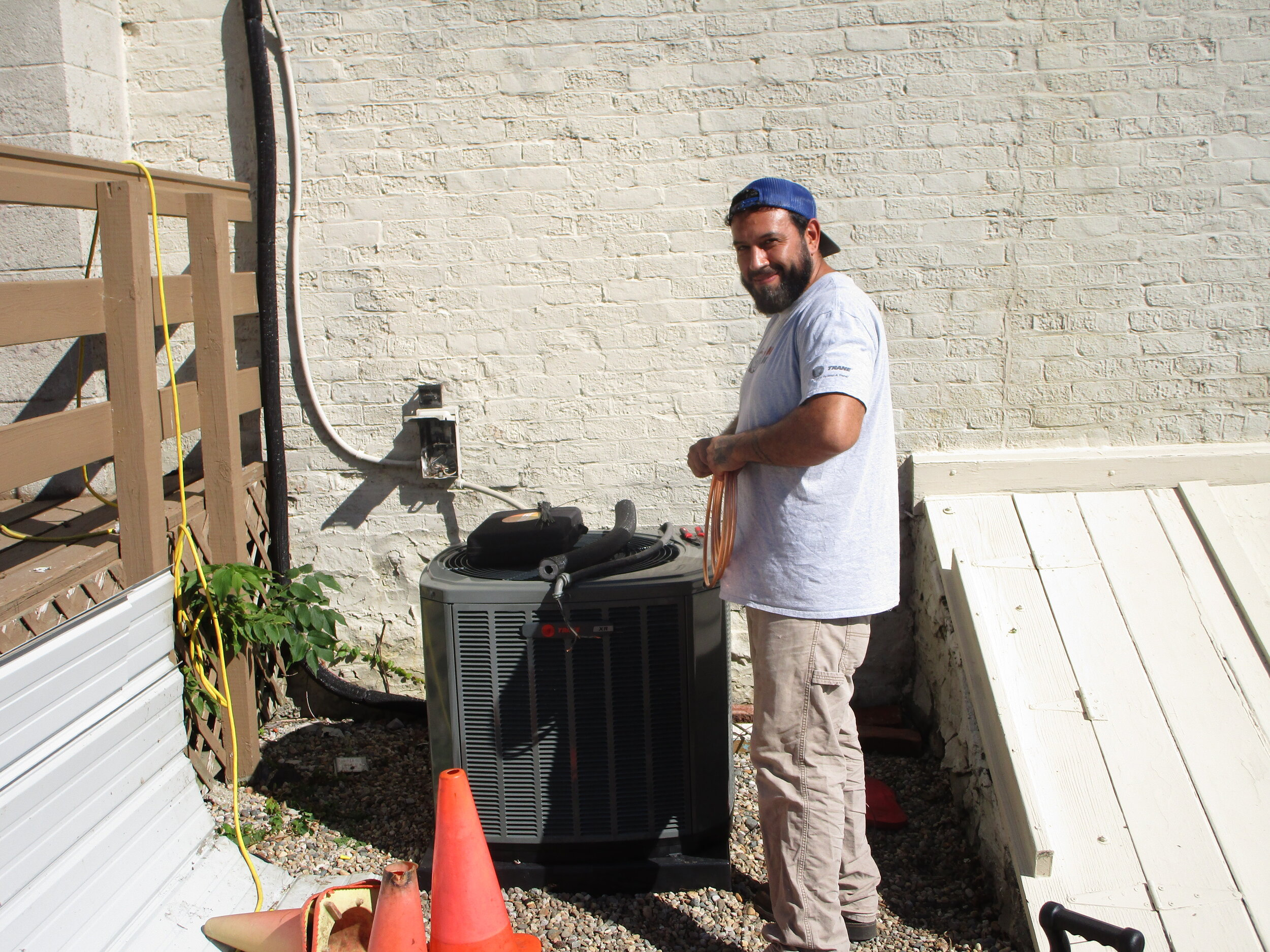
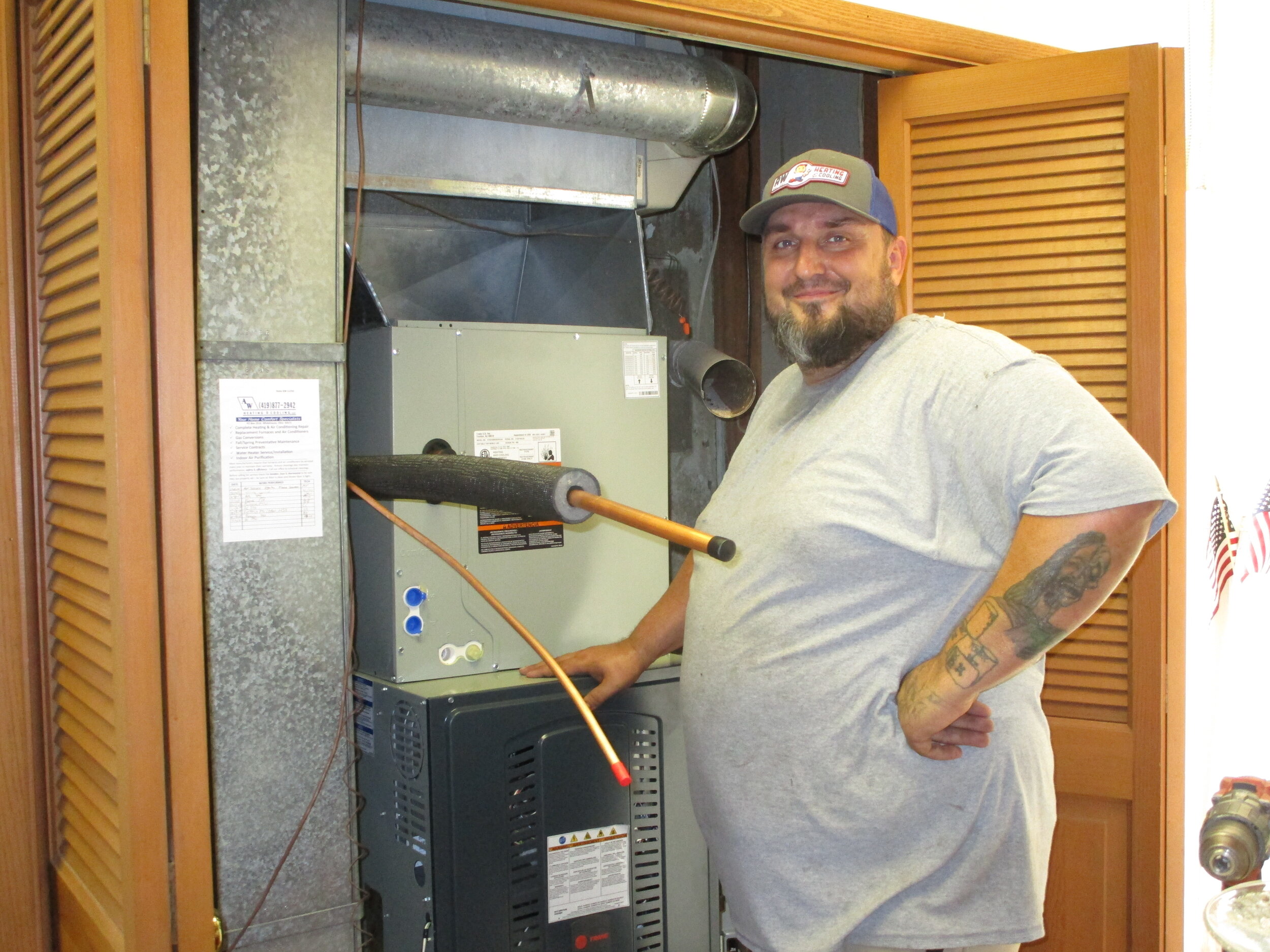
On September 16, 2021 a new HVAC system (furnace and air conditioner) for the WHS Archives was installed. The Archives is located on the second floor of Wakeman Hall.
This project was made possible in part by the Ohio History Fund, a grant program of the Ohio History Connection. The Ohio History Fund is made possible by voluntary donations of state income tax refunds, sales of Ohio History “mastodon” license plates, and direct donations to the Ohio History Connection. www.ohiohistory.org/historyfund
OHC received 49 grant applications and awarded grants to 14 recipients. The OHC grant will provide $3,867 towards the project with the balance coming from donations to WHS’s Capital Campaign. On July 10 Requests for Proposal were sent to six area contractors with three proposals being received by the July 31 deadline. On August 4 AW Heating & Cooling was awarded the project. AW was the low bidder with a quote of $7,462.00. Our sincere thanks to everyone who made donations to the WHS Capital Campaign and to OHC for making this much needed project possible.
Memorial Sidewalk


The Historical Society is pleased to announce a new garden feature at the Robbins House on River Road. Financed in part by donations in memory of MaryAnn Parker and other deceased members of the Historical Society, the feature includes a handicap accessible sidewalk leading around to the back of the Robbins House and terminating in a patio in front of the Cobbler Shop. The new sidewalk and patio allows the society to expand its' area available for programs. Access will be provided back to the Cobbler Shop without having to walk thru the grass. It will also highlight our need for donations to be able to revamp the shed back to its original use as a cobbler shop. Future plans include the possibility of expanding the walk between the rear of the Robins House and the Cobbler Shop over to the Sargent House and outside displays in front of the garage.
FILL THE TANK, CHECK THE OIL IN WATERVILLE, OHIO -----PART TWO OF FOUR
In the earlier years of gas stations they were a service station, there to assist the customer. They would ask you if they could fill your tank up and check the oil and always washed your windshield. Many gas companies would have secret customers to make sure you did a good job and even gave gifts to the persons at the station. Today you fill your own tank! We will be doing a series of articles about the gas stations in Waterville that has been researched by Randy Studer.
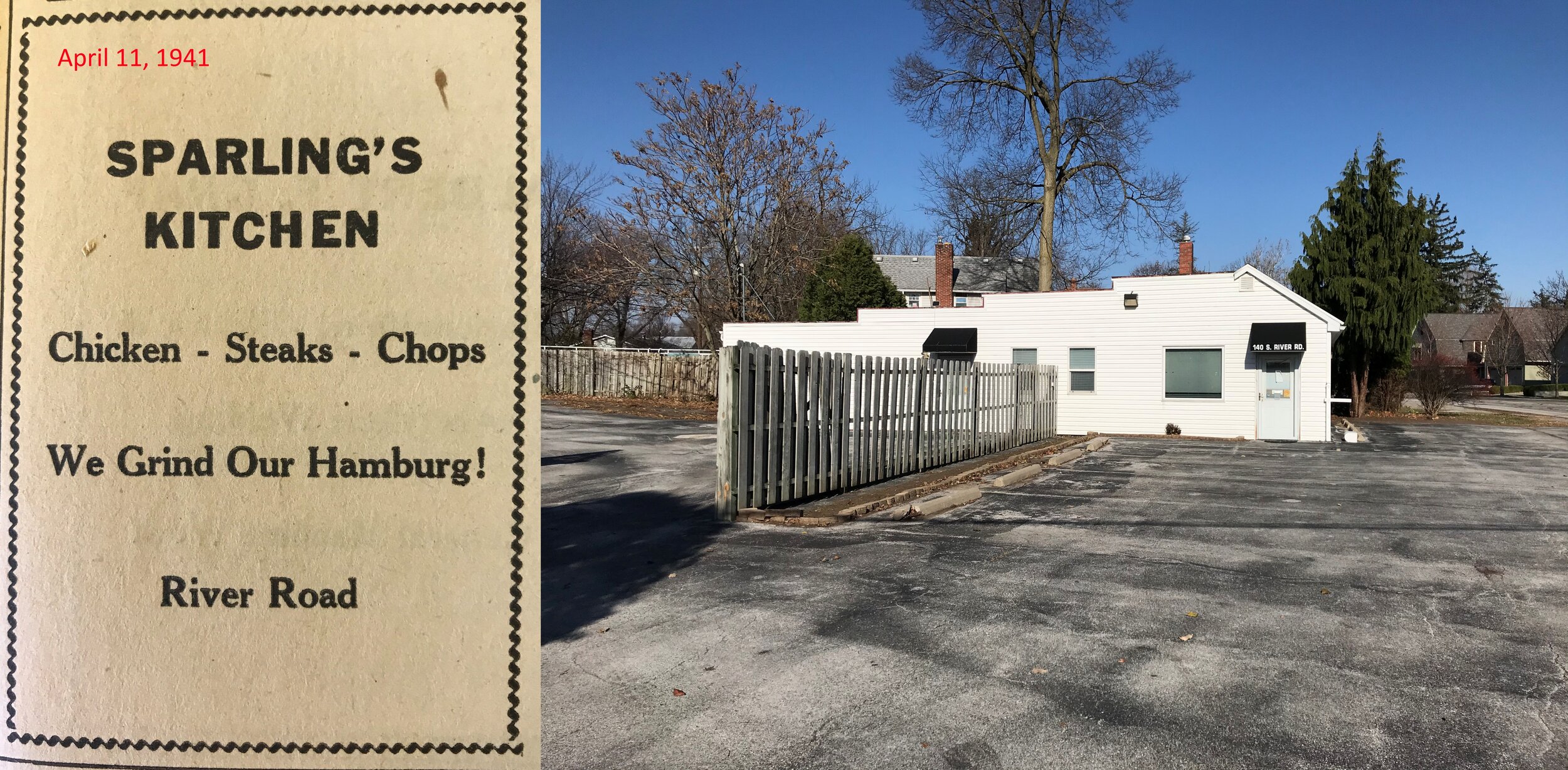
SPARLING’S SUNOCO STATION @ 140 S. River Rd. - G & B Sparling had a Sunoco Gas Station at this location along with a restaurant. In 1937, Sparlings added a lubritorium (20 X 30 feet) to their station. They handled Sunoco and Texaco products. In 1938, they were a Hudson dealership. Not much is known about Sparling’s Gas Station. Later on the building would be Chanady’s/Opperman’s Village Kitchen, A.W. Standard Building, Canal Race Antiques, Ruby Baker’s Beauty Shop, Canoe Shop, Mayflower Beauty Salon and the office of Dr. Steven B. Dood M.D.
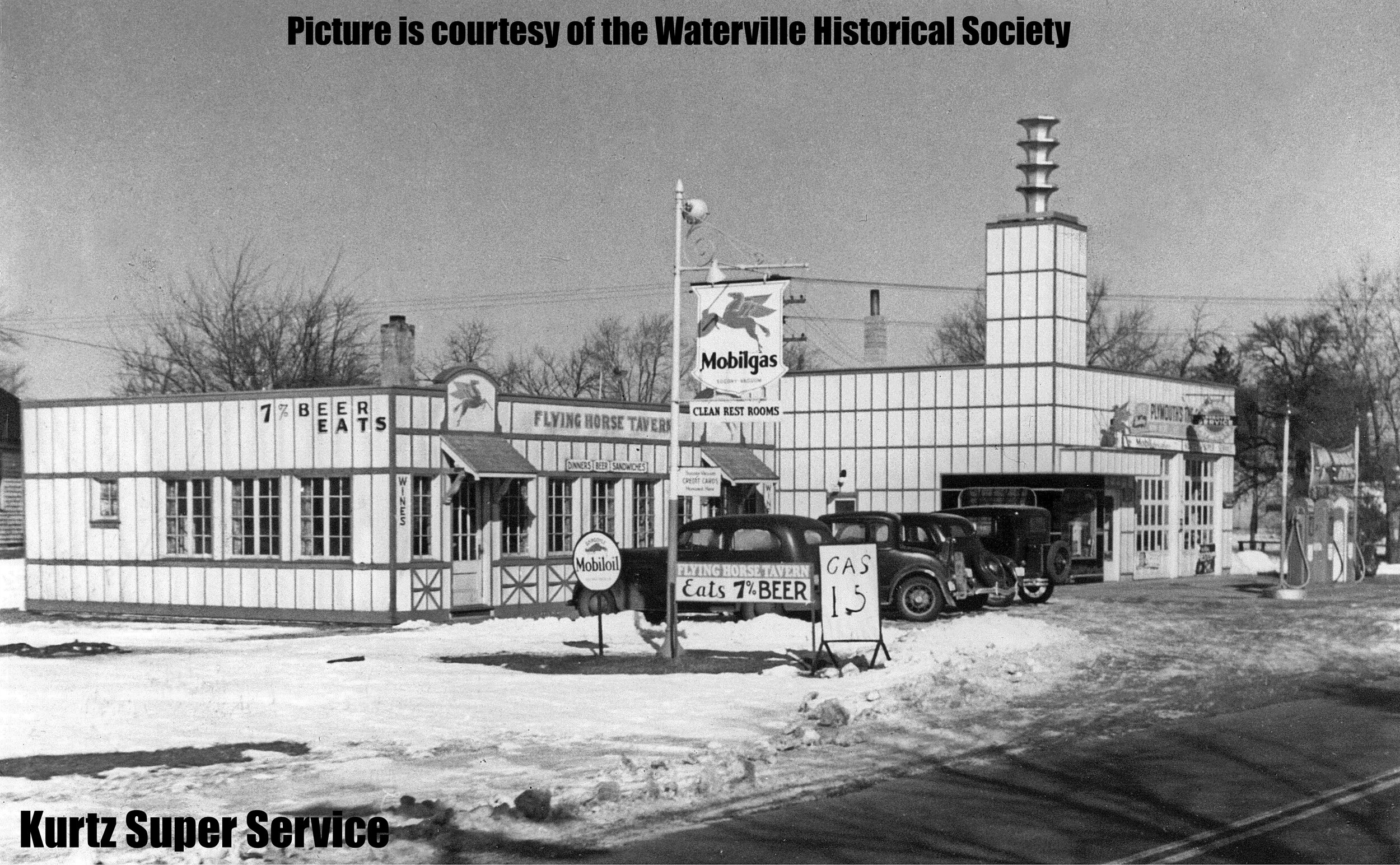
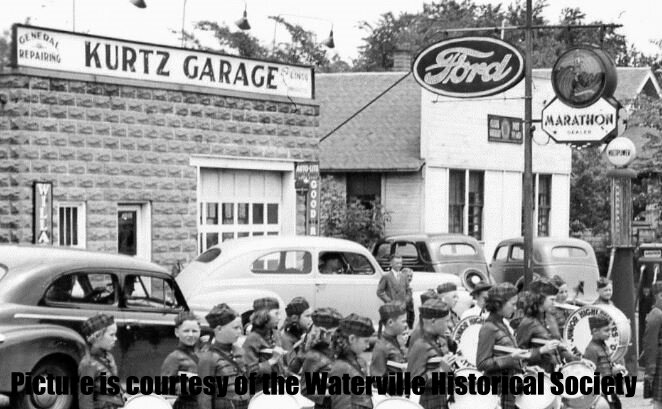
KURTZ SUPER SERVICE – MOBIL – FLEET WING STATION @ 144 S. River Rd. – William (Bill) Kurtz and the Mobil Oil Co. built a service station on the property ca. 1937. Kurtz was also a De Soto and Plymouth dealership. It was later rebranded as a Fleet Wing Service Station. In 1954, it was Hatcher’s Fleet Wing Service. Later on it was the River Road Lauderama, Laundry Village, Waterville Police Dept., Dance Studio and Triax Communications. It was then remodeled into apartments.
KURTZ MARATHON - LINCO STATION @ 210 Mechanic St. - George Kurtz opened up a Ford dealership (date unknown/early 1930’s?) and also was a Marathon/LINCO (Lincoln Oil Refining Co.) dealer. He also did general auto repairs. (Date is unknown when he closed.) When the new Marathon Oil Co. station opened up at 214 Mechanic St. ca. 1941 (next door) he quit selling Marathon gas? George is Bill Kurtz’s brother who had a gas station on River Rd. George Kurtz died in 1957. This building became part of the former American Metalcraft Co.
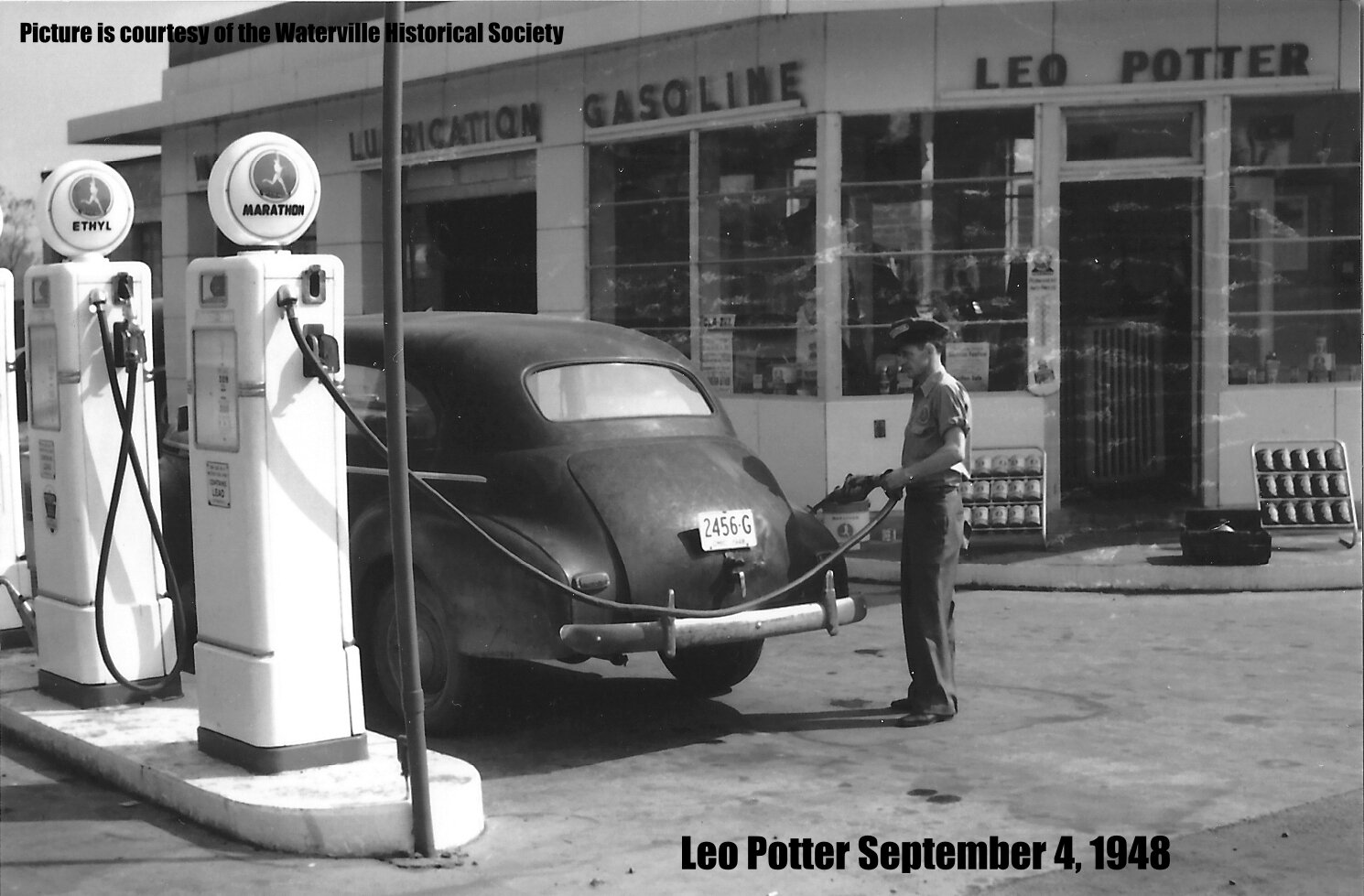
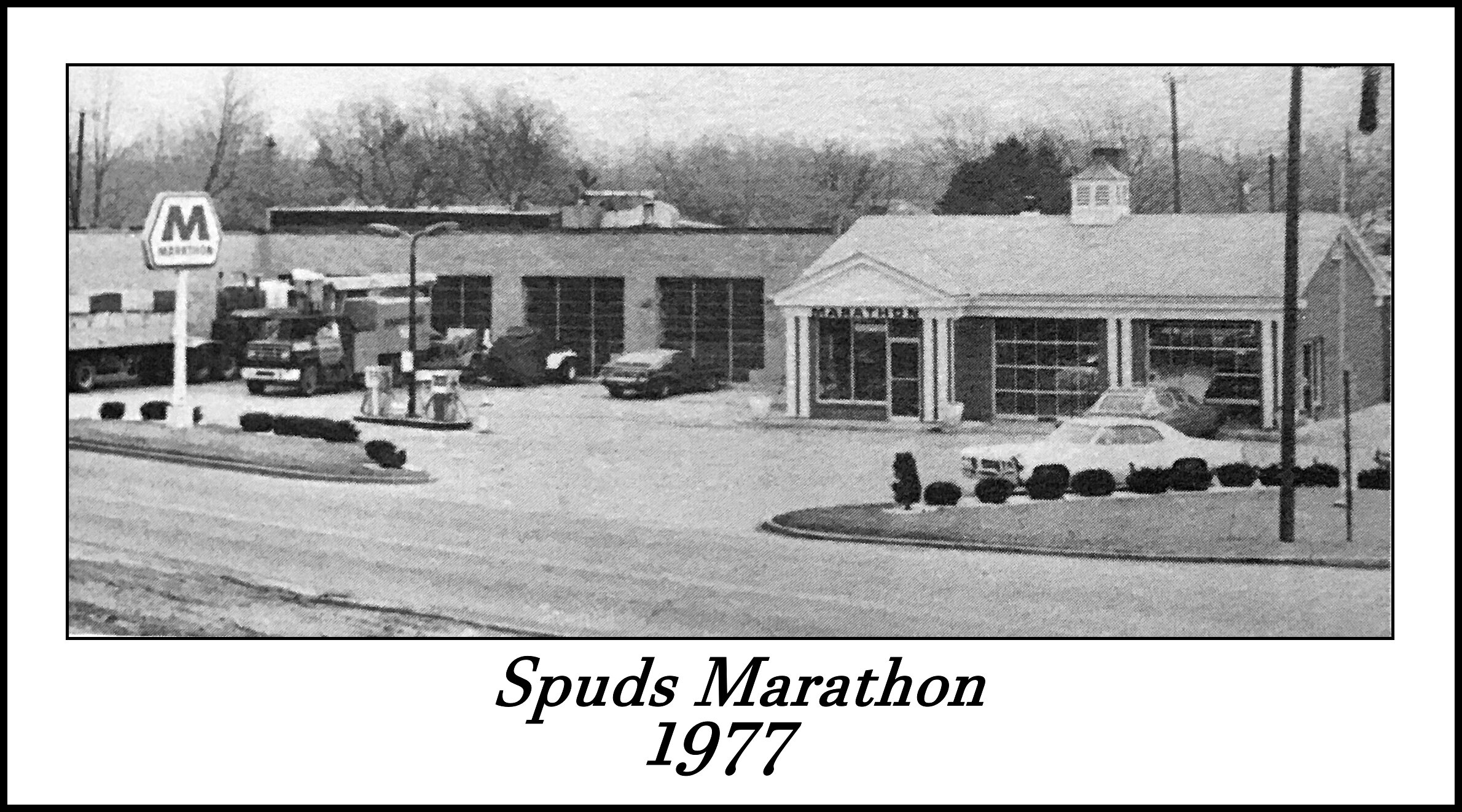
MARATHON GAS STATION @ 214 Mechanic St. - I believe the first Marathon station building on the parcel was built ca 1941. The station was operated by Pete Launder for Grover Lehman selling new Chevrolets. WW2 put an end to that so Wentz Lehman (Son) surrendered their lease in February of 1942. Pete Launder and Elmer Hartman were transferred to the Lehman Motors Sales Garage in Whitehouse. The new lease holders to the station were John Webster and Leo “Stub” Potter. The station had several operators over the years. It was John Webster’s Marathon ca. 1942-1948, Leo “Stub” Potter 1948-1955, Sawyers Marathon 1955-1966. The first Marathon station building was replaced with a Marathon modern ranch station building in the late 1960’s. Then it was Bingham’s Marathon (Lonnie Bingham), Kevin Enright, Spud’s Marathon (Spud Louy). The ranch station building was demolished and a new small building was built on the north side of the lot ca. 1980-81. It was now a convenience store and self-serve gas station. It would be operated by Gastown (Marathon Oil) Speedway, Rich and Valero. The station closed June 3, 2019.
FILL THE TANK, CHECK THE OIL IN WATERVILLE, OHIO --------Part 1
In the earlier years of gas stations they were a service station, there to assist the customer. They would ask you if they could fill your tank up and check the oil and always washed your windshield. Many gas companies would have secret customers to make sure you did a good job and even gave gifts to the persons at the station. Today you fill your own tank! We will be doing a series of articles about the gas stations in Waterville that has been researched by Randy Studer.
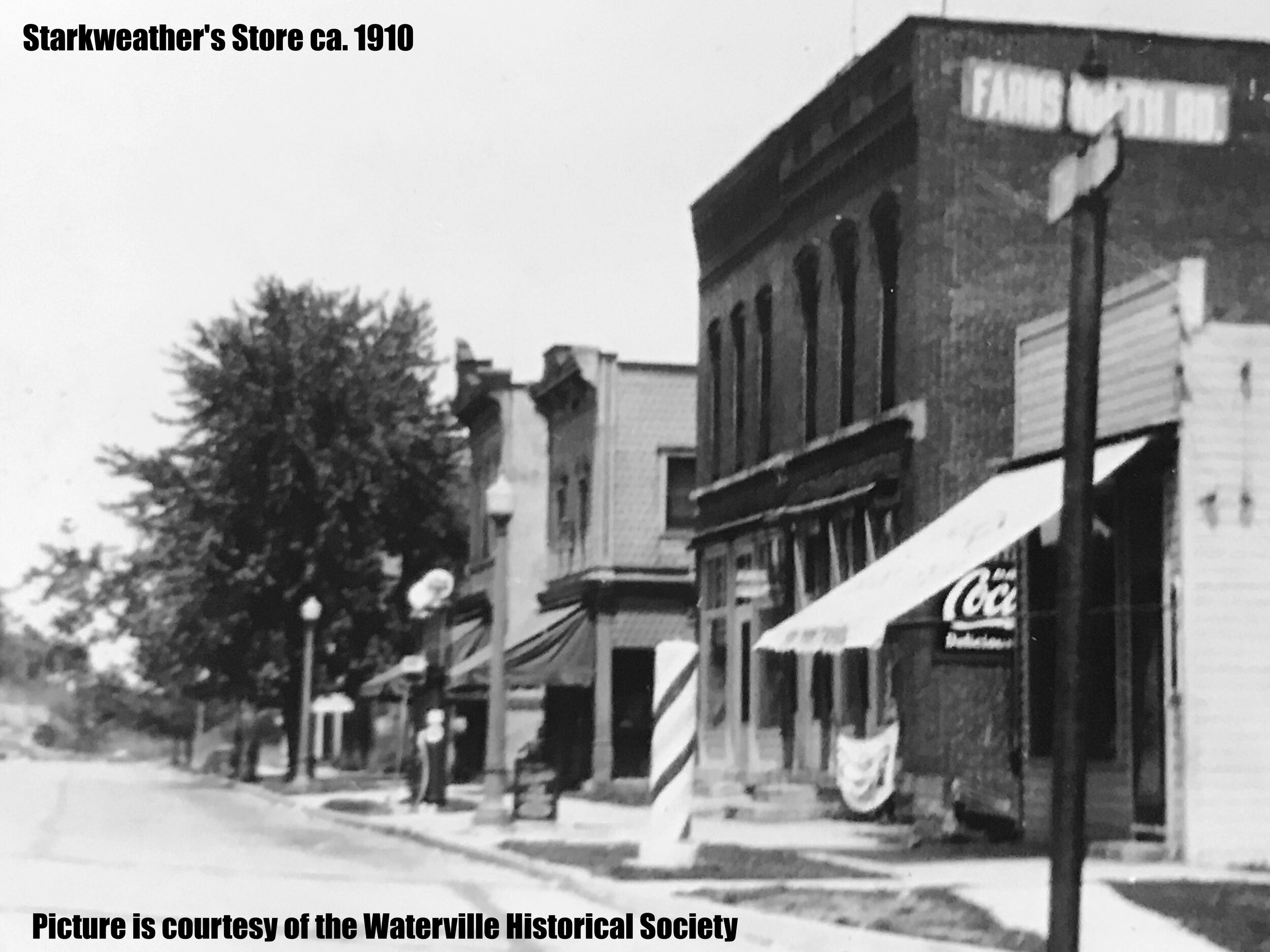
STARKWEATHER’S @ 12 N 3rd. St. - From what we know one of the first gas stations in Waterville was located at Fred Starkweather’s grocery store at 12 N 3rd. St. ca. 1910. It was a curbside station with two visible gas pumps in front of his store. The gas brand is unknown.
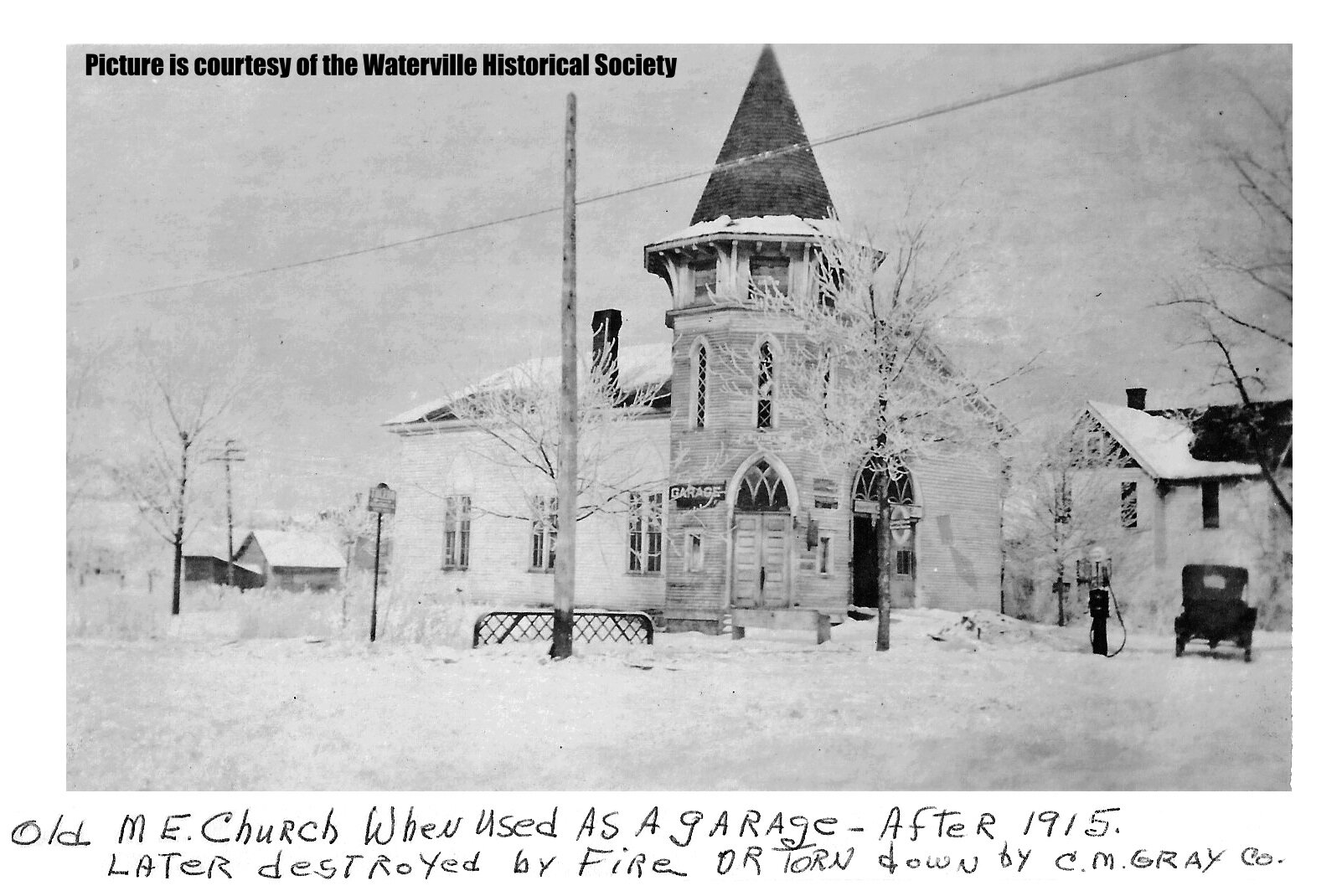
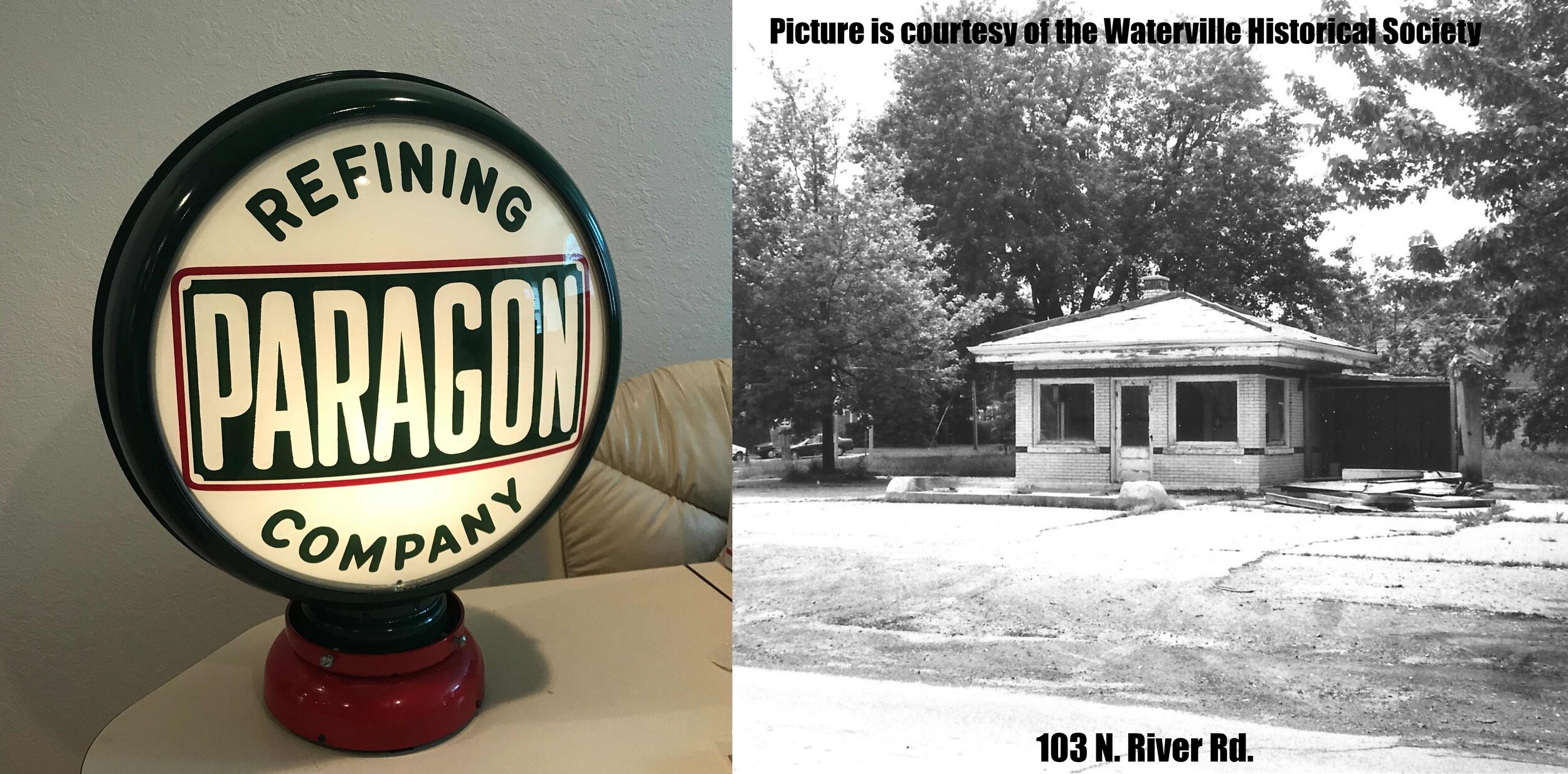
PARAGON REFINING – GULF STATION @103 N. River Rd. - The old Waterville Methodist Church which was abandoned after a new church was built. It was used as an auto repair and gas station by Jake Disher and W. Wittenmyer ca.1915. It was demolished by 1920’s. At the same location Paragon Refining from Toledo, Ohio would build a new gas station. In 1930, Gulf Oil bought out Paragon Refining and the station was rebranded to Gulf. Some of the operators were Dunn & Kronberg in 1936, John Webster, Sid Perry, Dick Monroe, Paul Frantz and Lehman Motors Sales from Whitehouse. It closed after Rt. 24 was rerouted to the Anthony Wayne Trail. Later on it was the Canal Race Gift Shop, Waterville Pizza Shop and a bait shop. It was demolished and an office building was built on the site.
Side Note: Paragon Refining had a bulk storage plant beside the railroad tracks in Waterville at 800 Michigan Ave (Library) to service their gas stations and other rural customers.
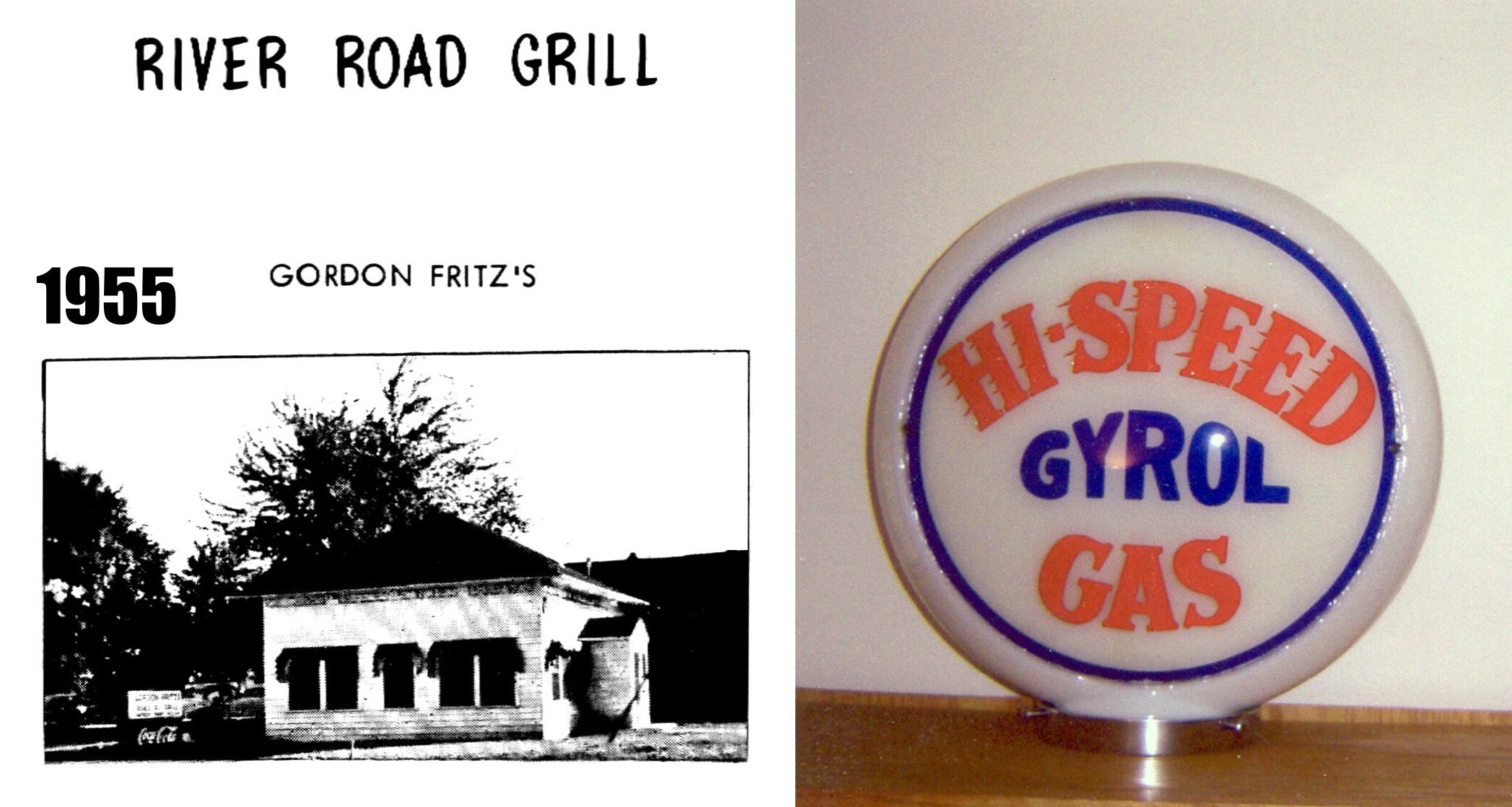
HI-SPEED GAS STATION @ 38 N. River Rd. - In 1929, Christian Haulund dba Greenwalt & Haulund Distributing Co. from Maumee, Ohio built a Hi-Speed Gas Station in Waterville. Haulund had three other Hi-Speed Gas Stations, two in Maumee and one in Grand Rapids, Ohio. Hi-Speed Gas was the brand name of gas and oil products from Hickok Oil Producing from Toledo, Ohio. The station was operated by Fritz Sullivan, H. Rasmussen (1933), W.C. Schroeder (1935) and Grover Johnston. The station was closed because of gasoline rationing and shortages during WW2. Later on in 1949, the building was remodeled as a restaurant. Over the years it was Neely’s River Road Grill, River Road Grill, Village Inn, Lee’s Restaurant and the Kam Wah Chinese Restaurant. It was demolished in 2018 for the approach to the new Waterville Bridge.
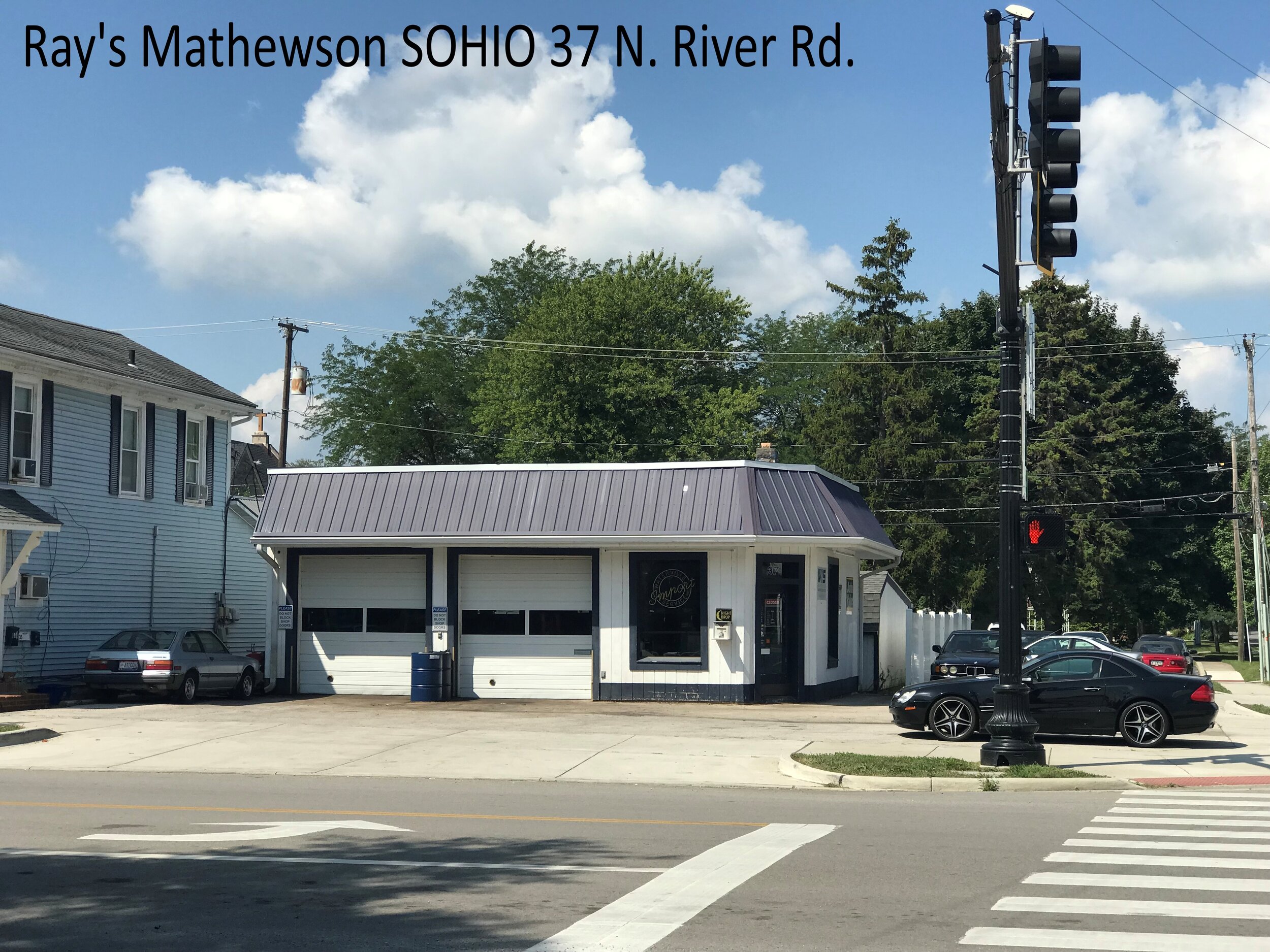
RAY’S SOHIO - SUNOCO STATION @ 37 N. River Rd. - In 1937, Standard Oil Co. made a contract to build a SOHIO gas station on the corner of River Rd and Mechanic which was occupied by the Mathewson Home and Restaurant. So the building was moved next door to 33 N. River Rd. The station was built and opened in the spring of 1937. It was operated by George Mathewson, Ray Mathewson, John Webster and Sid Perry. In 1962, Standard Oil wanted to build a new station at 300 Farnsworth Road since Route 24 now followed the old canal bed through Waterville. So in 1962, Ray Mathewson moved to the new SOHIO station as the operator. The old station got rebranded to a Sunoco Station operated by Dennis Roach (1963) Lorraine Oil, Ernie Blauvelt, Brown’s Sunoco, Byron Cox and Jud Mathewson. It is now Waterville Import Auto Service operated by Chris Straube.
THE BIRTH OF ANTHONY WAYNE SCHOOL
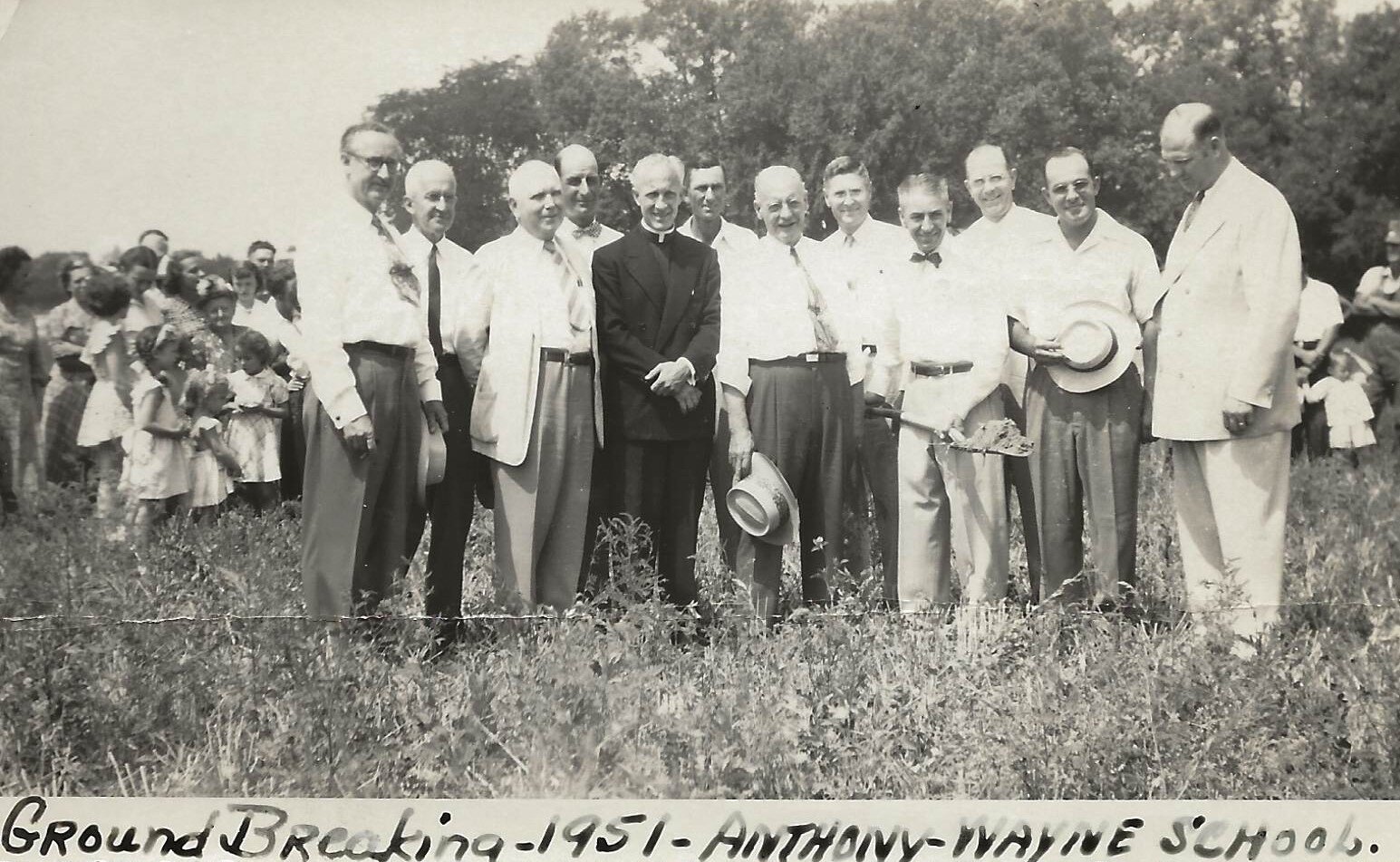
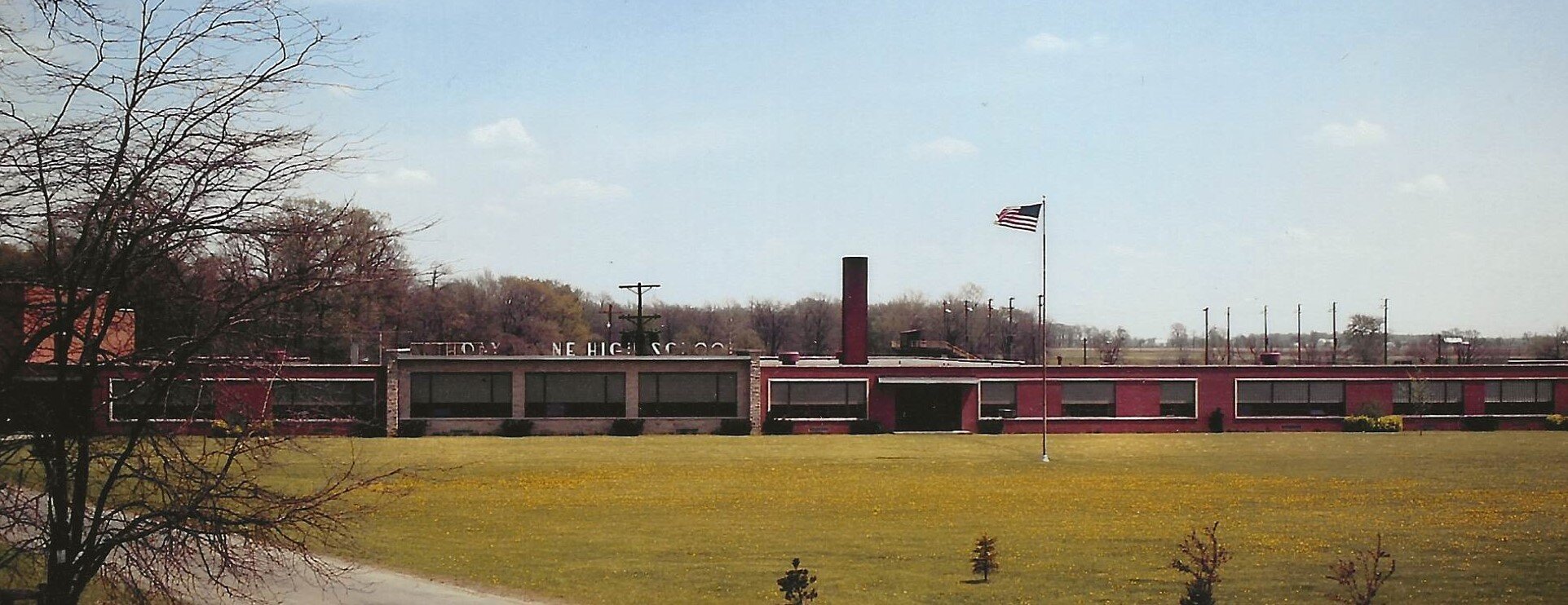
In 1950 the local school districts of Waterville, Whitehouse and Monclova were all facing the same problem. Their student population was rapidly increasing and the existing building were overcrowded. They each needed to go to there voters asking for money to build new buildings. There were progressive thinkers in each community who realized that much duplication of effort and savings could be realized if they combined their efforts as a combined district to build one new high school building. The idea of consolidation was born. It was a hard sell but common sense prevailed.
The local school boards of Whitehouse, Waterville and Monclova each had to request from Lucas County Board of Education to consolidate their schools district with the other. Then on July 6, 1950 the new Board of Whitehouse, Waterville and Monclova took office.
On November 7, 1950 Monclova, Waterville and Whitehouse went to the polls to vote for a Proposed Consolation of the three schools into one high school building and a bond issue for a new high school building. The building was to be located on a rural area within reasonable proximity to the three towns. The issue passed and land was bought with 20 acres from Sam Studer and 15 ½ acres from Daniel Studer on Finzel Road south of Weckerly and north of Rupp Road for a total of 35 1/2 acres.
Ground was broken on August 14, 1951 and building was accepted for occupancy on December 24, 1952. Also in 1952, the Neapolis School District decided to become part of the Anthony Wayne system as before that time they paid tuition to attend Whitehouse. On January 19, 1953, it was the big moving day to move things from the other schools to the new high school. On April 19, the new Anthony Wayne High School was dedicated. Even though we were not in the new school, the first commencement was held in the Whitehouse Football Stadium on May 25, 1951 and the following year the graduation was held in the Whitehouse Auditorium on May 23, 1952. At the time of the dedication of the school the enrollment was 375 pupils but the school was designed for a capacity of 600-650 students. I doubt former students would recognize the new building that stands today that has a student enrollment of 1358 in grade 9-12 and claims to be the 90th largest public high school in Ohio.
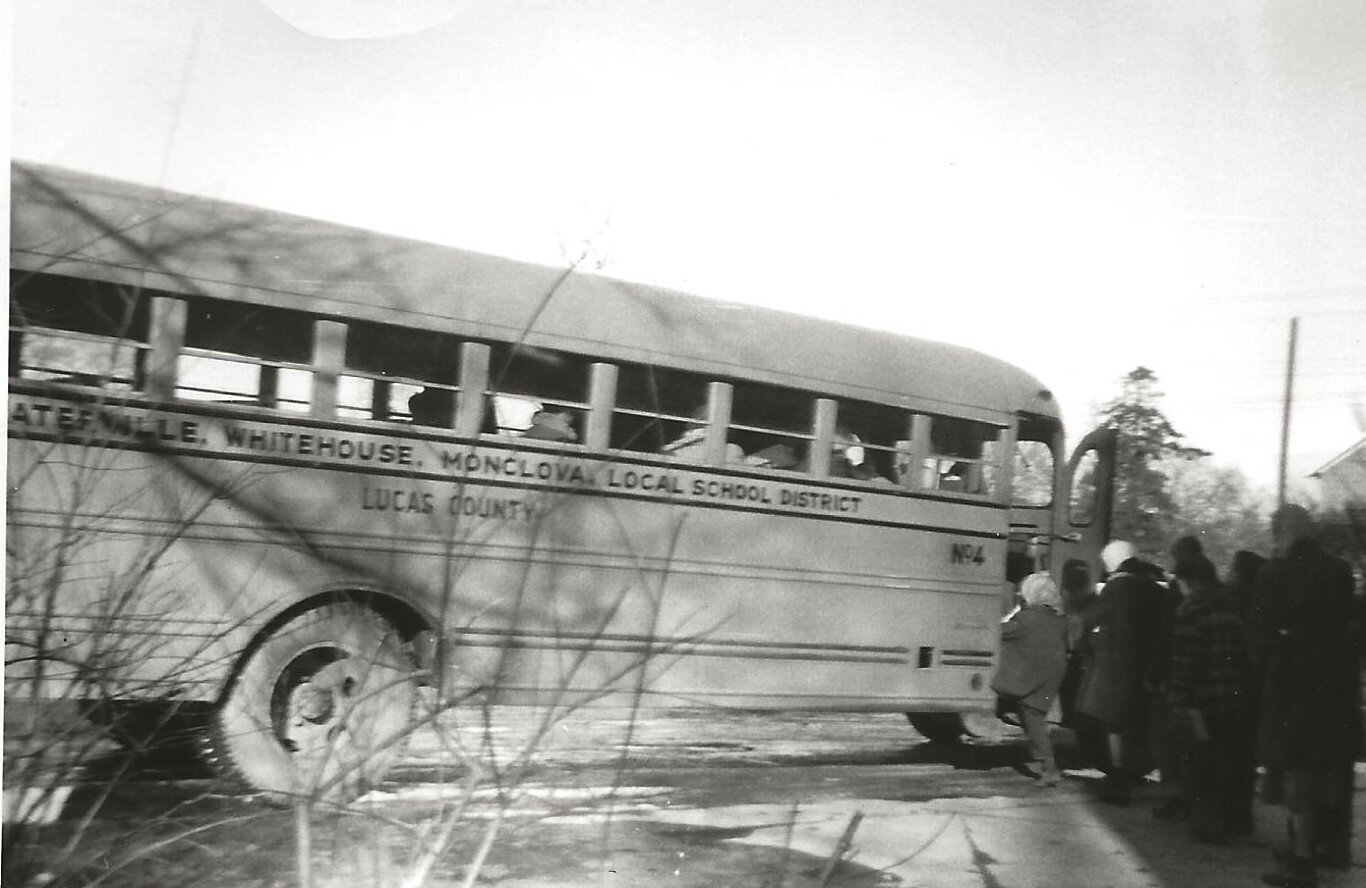
Originally the school buses had on the side of the bus “Waterville, Whitehouse, Monclova Local School District” but later the name was changed on the buses to the “Anthony Wayne School District.” They felt this name was appropriate. The school board had appointed a committee of three women: Mrs. Thelma Hammon, Mrs. Margaret Van Gundy and Mrs. Nellie Thomas and names were submitted by the public. They felt that the name Anthony Wayne was widely accepted and was appropriate with the Anthony Wayne Trail passing through the district and the Anthony Wayne Memorial nearby. It was approved the day before the election to build the school and the mascot name “Generals” followed naturally.
The new high school colors were decided to be blue and white but the school colors would remain the same for the three community schools. The colors were chosen since they were the colors worn by the Anthony Wayne Legionnaires.
Note: An interesting piece of history is that the Adams Twp. Freshman and Sophomores came to Anthony Wayne High school during the 1955 and 1956 school years. They transferred back to their new Rogers High School for the 1957 school year as juniors. Adams Twp. had to pay tuition to send their students to other schools until their new high school was built.
From the December 6, 1978 AW Herald it list the men in the picture from left to right: Howard Manor, Superintendent Dudrow, Senator Cramer, Willard Schaller, Rev. Buehler, member of AW Board of Education, H.E. Ryder, county superintendent, John Rudolph, Bob Shelton, Mr. Grimm Clerk, Rodney Boyer, and “R.W.”
CITIZEN TELEPHONE COMPANY
Have you ever been annoyed by your cell phone being out of power or not finding a tower? Think of your great grandmother who had no phone at all. The late 1800s invention that allowed voice communication over a wire was an amazing technological marvel, one of several advances that made dramatic changes to the lives of all Americans at the beginning of the 20th Century.
Here in Waterville telephone service arrived with the new century. Delmar Farnsworth, a brother of W.W. and W.G. Farnsworth, the orchard Farnsworths, had become fascinated with the telephone since his childhood days of tin can and string. He started his own telephone company in 1900 in the hardware store building on Third Street that he owned since 1893. (The building was in the same location that now houses Waterville Hardware. The original hardware building burned down February 1, 1955) His labor force consisted of Fred Murray and Floyd Bennett who set poles, strung the wire and installed the telephone. They also were switch board operators. This business operated 24 hours of the day, so by 1901 Lilly Fredericks Lederer was hired as the day operator. This was a 12 hour shift. In 1901 there were all of 25 telephones in the village. Two years later there were 300 telephones and growing. The list of operators manning the switch board also grew, relieving the work crew to try to keep up with this rapidly expanding system. These ladies were Emma Eastwood, Leah Murray, Leah Conrad and Ruth Bennett. The monthly rate for a telephone was $1.00. Just for comparison a 1900 dollar would equal about $32 today. A toll call to Toledo was 10 cents for three minutes.
The home or business telephone was a box on the wall and a turn of the crank would signal the central operator who would talk with you and perhaps exchange some choice gossip then connect you to the person you wanted to call. When the operator would ring a particular phone all phones on that line would ring so others could choose to “listen in” or even join the conversation. Of course telephone technology advanced rapidly and “central” eventually became automated. The telephone company soon moved to a new building around the corner on Mechanic Street with the Post Office downstairs and the Telephone Company and “Central” upstairs. This was probably in 1903 since that year William Witte, who now owned the hardware store, expanded his building by using steel from a washed out section of the 1881 bridge to add a second story. This became Witte’s Hall, which is another story. In 1907 Mr. Farnsworth took his growing company public. He sold stock shares to farmers, expanding phone service to rural areas. The newly formed company was called Citizens Telephone Company, which it would remain for many years as the Waterville and area telephone company. The cost for a 12 party line in the country was $2.50 per month to offset the cost of placing and maintaining miles of posts and wire and yet the miracle of voice communication was worth the expense to village and rural residents alike. As always, technological advances improved telephone systems. In 1941 the Citizens Telephone Co. built a new building on the west side of Second Street between Mechanic and North to house new automated switching equipment and updated its lines and all telephone equipment. Operators were only needed for long distance assistance. “Central” was replaced by rotary dial phones (anybody remember those?)
Delmar Farnsworth died in 1925 at age 51 but the company he founded lived on for many years. In 1960 a new telephone office to serve the public was built at 207 N. Second St., just a block north of the old Citizens Telephone automated switching building. The new office even had a drive-up window. Eleanor Wittes, according to the 1964-1965 AW Directory was a cashier there. Many other local people worked for Citizen Telephone over the years. Eventually like many corporations, mergers and buyouts swallowed up the small local company and became part of a multistate operation. The building on 2nd Street is still there but is no longer a public building. It still houses switching equipment and maintenance for Century Link, which became Lumen Technologies, a local wired telephone service just last year.
Today, in the digital age, all of this is obsolete. Your phone is in your pocket, wireless and does far more than allow you to talk to someone not at your location. However for you folks who wish to rebel against all technology, the tin can and string telephone still works.
THE FIBERGLASS CITY?
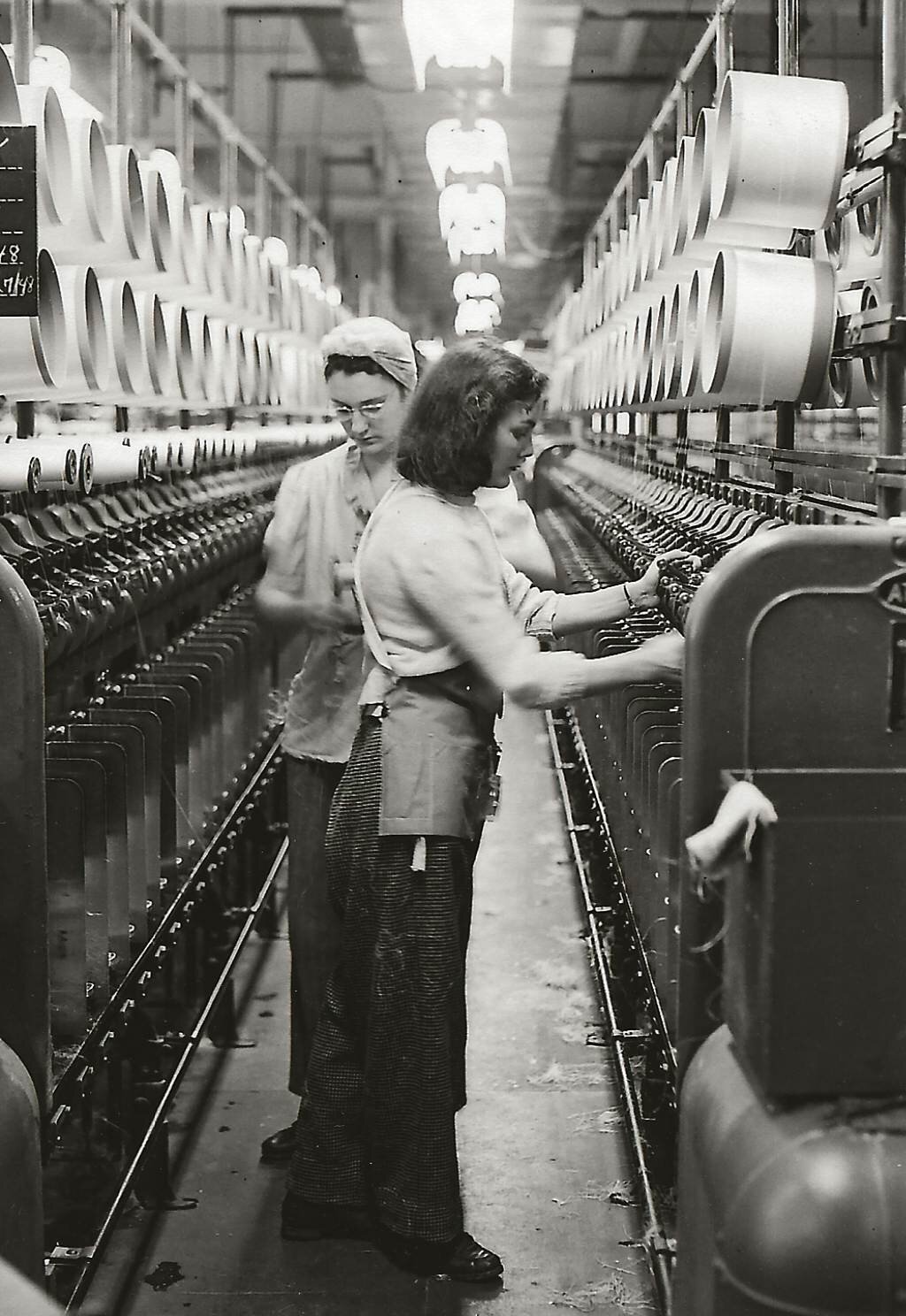
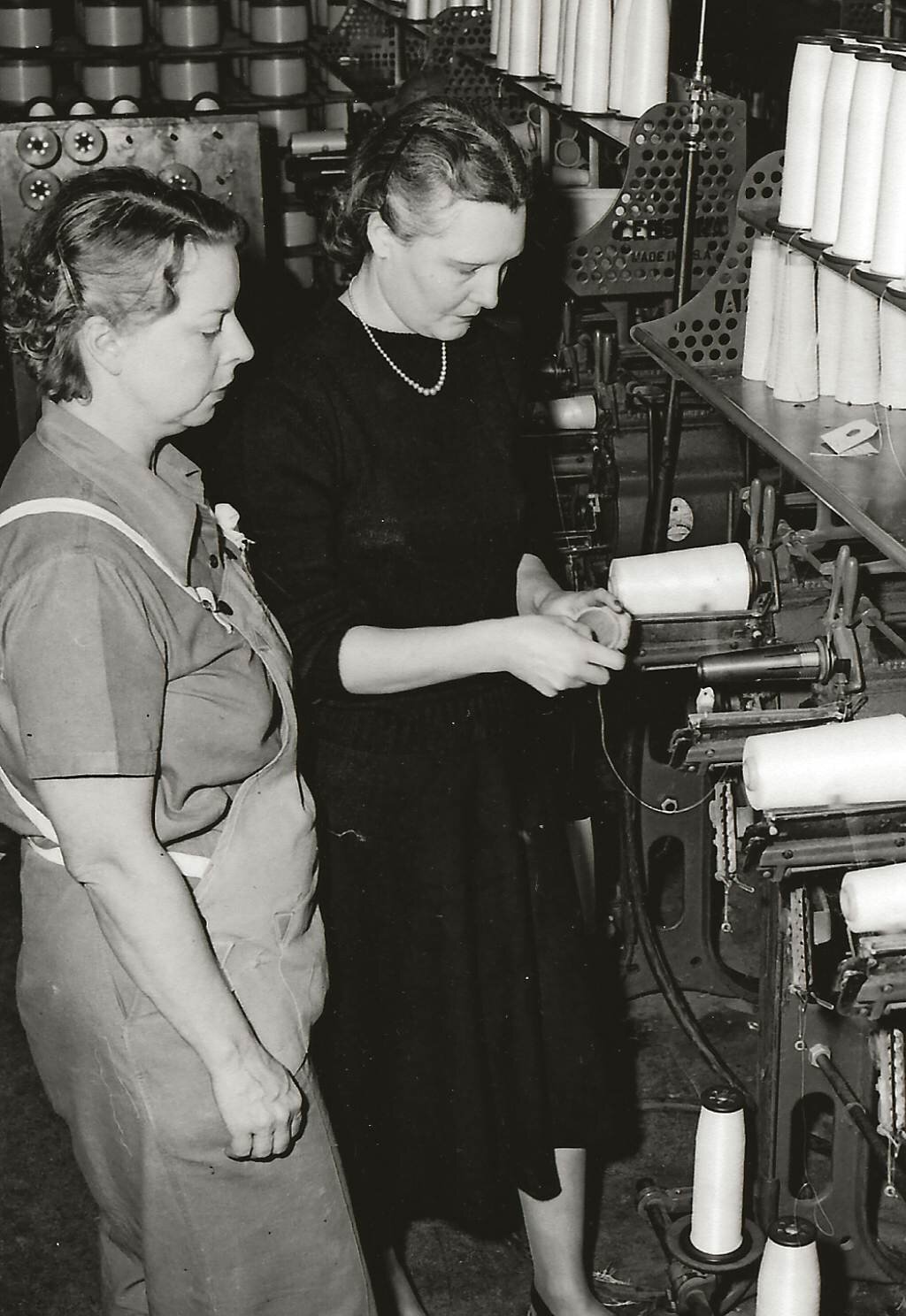
We might be. The production and commercialization of glass fibers began right here in Waterville. The idea of producing a flexible fiber from glass began with Owen Illinois Glass Company as early as 1931. During the next 10+ years, the manufacture of glass fibers was limited to rather short, coarse strands suitable for insulation, but unsuitable for the manufacture of glass cloth which required very thin fibers of unlimited length. I suppose WWII got in the way, but in 1944 Randolph H. Barnard, Dominick Labino and several others separated themselves from the Owen-Illinois Corp. to pursue the commercial production of glass fibers. They formed a corporation called Glass Fibers, Inc. with Barnard as President, several other ex-O-I people as corporate officers and one or more New York investors. Labino was the technical man. He was a well-known glass researcher with many patents, experimenting with glass formulas and production methods and he became Director of Research. A research facility operated in Toledo to perfect the process and design equipment to produce ultra-thin fibers from glass. By 1946 they were ready to go into production. A modest, modern building was built just north of Waterville at River Road and Stitt Road. The building was complete in February of 1946 and machinery, much of which was custom designed and built, installed by June. As production began, many local people were employed at this plant which was running three shifts, seven days a week. One hundred people were employed in 1946 with plans to expand to a least 150. A list of those employees, with address and hire date, is held in the Wakeman Archives.
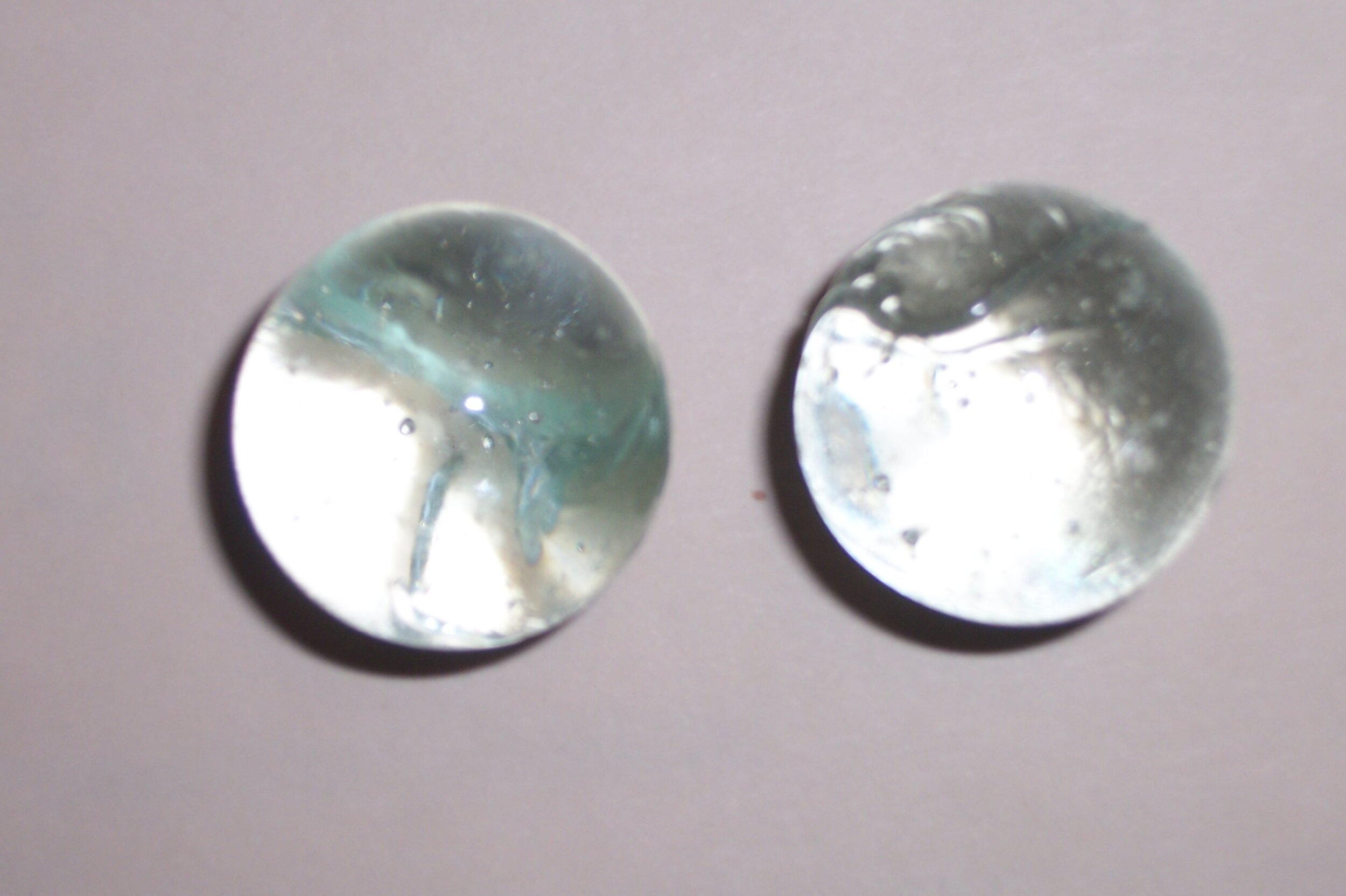
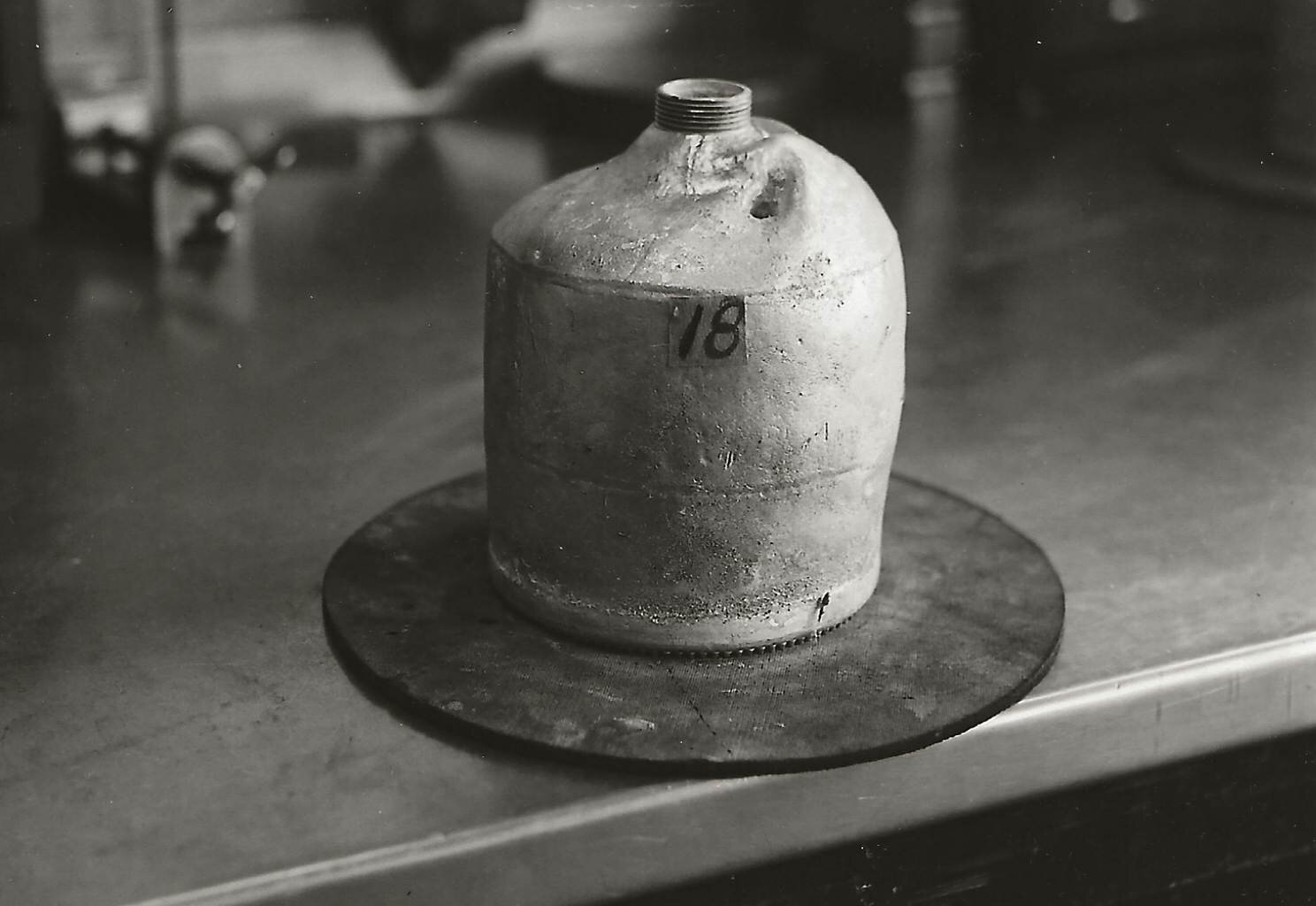
The process involved making small batches of molten glass by melting a Labino formula of easily melted glass marbles in a platinum pot and forcing small threads of glass through holes in the pot. These threads are then stretched into a very small diameter filaments which can be twisted into a yarn of the desired diameter. These glass marbles are the raw material for fiber glass yarn and insulation to this day. This flexible glass fiber is known as “E-glass” and differs in chemical composition and manufacturing process from the fiberglass insulation produced for home insulation.
The Waterville plant only produced and sold glass yarn to manufacturers of a great variety of materials. It could be woven into electrical and pipe insulation, mixed with other fibers to form non-flammable material and was (and is) bonded with plastic resins to make anything from boats to car parts and many other uses.
Glass Fibers, Inc. later merged with a division of Libbey-Owens-Ford to form L.O.F. Glass Fibers that was sold in 1958 to Johns Manville, a worldwide corporation, who expanded fiberglass production and products around the globe. Dominick Labino stayed on as Vice President and Director of Research until retirement in 1965. He would continue as consultant another ten years. The local factory was expanded and continues to employ many local folks. In 1971 Johns Manville built a new headquarters building on Dutch Road along with an expanded research center. Today, that location also has a production facility.
One of the products produced only here in the Waterville facility and a direct result of Dominick Labino’s research are the insulating tiles, made from ultra-thin light weight silica fibers, used in the Gemini and Apollo spacecraft and the space shuttle reusable spacecraft to protect them from the searing heat of re-entry.
Dominick Labino is well-known and remembered in this community more for his work in starting and promoting the art glass movement than for his many patents and innovations in the glass and fiberglass industry. Many local people treasure their Labino glass art object. Labino died at age 76 at his Grand Rapids, Ohio home on January 10, 1987, and is buried in St.Patrick’s Cemetery in Grand Rapids.
Note: The photographs for this article were taken by Dorrance Talbut for the Standard newspaper in 1948. We would like to thank Gary Franks for his help with this article.